






DEER LAKE, Canada — Geologist Kirsten Oravec is in her element. "This is a walk on the Earth's mantle. These are wonderfully strange rocks," she says, marveling at the Tablelands in Gros Morne National Park.
The Earth's mantle, normally hidden deep beneath the Earth's crust, is the middle layer of the planet.
The collision of continents "almost 500 million years ago" catapulted the interior to the surface, Oravec says.
"This rock in the Tablelands lay 40 kilometers deeper, beneath an ocean," she says of the UNESCO World Natural Heritage Site.
Nor is this the only remarkable feature in Canada's wild east, where the Earth tells its own story in distinct and dramatic chapters.
'Haven for geologists'
Here in Newfoundland's high plateau of the Tablelands, the 2-kilometer Tablelands Trail leads from the hiking car park south-west of Woody Point into the U-shaped glacial valley of Winter House Brook Canyon.
People are also reading…
We see trickling streams along the way. The wind moves through arctic cotton grass and insect-eating plants that faintly resemble roses. Then the scenery changes.
Even if you do not have a researcher's eye, you notice that the rock masses of the plateaus and mountains are unlike anywhere else. They are not green. The Tablelands ahead are shades of orange-brown, rust-red and ochre-yellow.
"The rock is hyperbasic and full of metals that are toxic to plants. That's why almost nothing grows here," says Oravec.
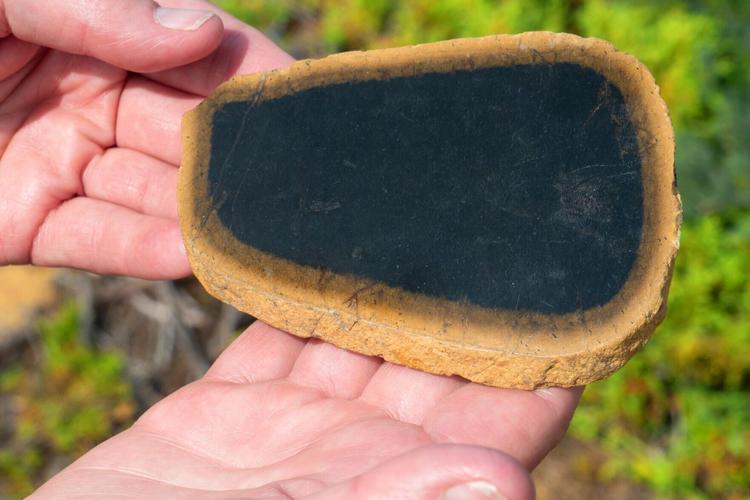
She holds up a split stone. It is orange-yellow on the outside and pitch-black at the core. The black interior is a deep rock, a peridotite, she says. "This is a Mecca for geologists and the best proof of the theory of plate tectonics."
From the canyon's viewing platform where the Tablelands Trail ends as a wooden boardwalk, it is hard not to gaze for hours. The bare, barren landscape of the Earth's mantle radiates a quiet magic.
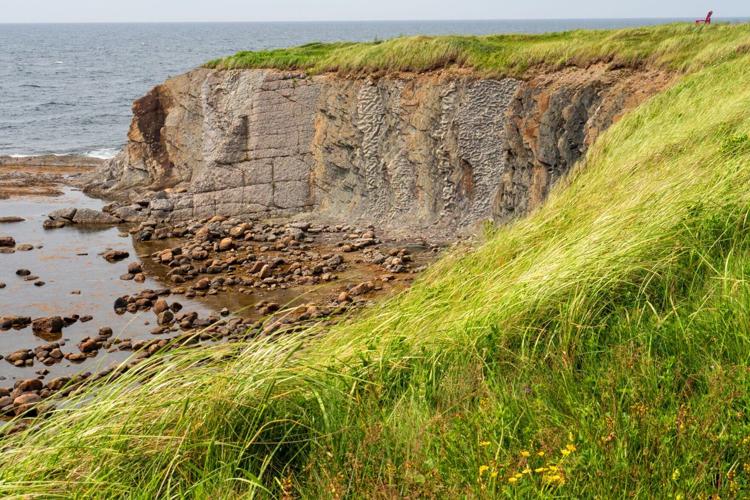
The geological formations in Gros Morne National Park differ idly. Turning to the coast at Green Point, you stand before cliff faces bearing strange patterns. There are rocks that look as though they were shattered and glued back together, threaded with pale streaks. Some patterns resemble the work of sculptors, or corrugated roof tiles.
Once, all of this was part of the ocean floor. In the collision of the continents, it was pushed upward, "as if with bulldozers," says ranger Josh Penney. Scientists use fossil finds here to distinguish the transition between the geological periods of the Cambrian and Ordovician, he says.
That it took several million years for the coastal rocks of Green Point to form would normally be a footnote in Earth's history - but Penney says this place is unusual. "The layers of limestone and shale do not lie horizontally, but at an angle of 110 degrees. And as you walk past them, every step you take corresponds to 100,000 years."
Once located at the equator
Those with a keen eye for the extraordinary in these sparsely populated expanses will spot remarkable features in multiple places.
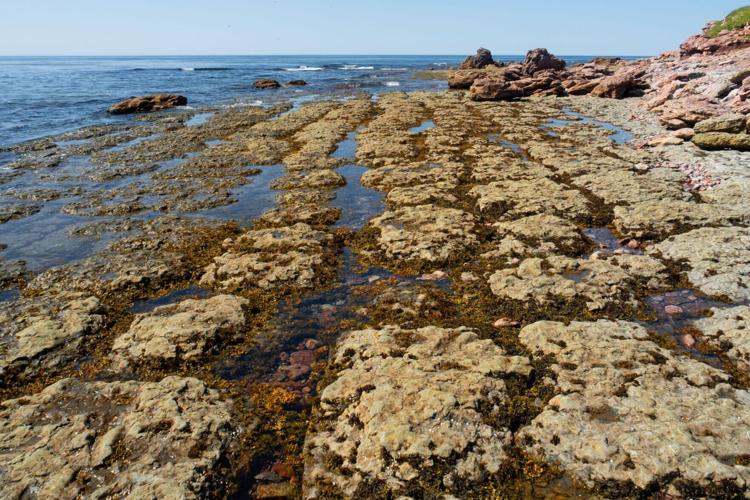
In Labrador, the patch reef below the Point Amour lighthouse which is 530 million years old shows "that this region was once a warm, shallow sea near the equator," the information board says.
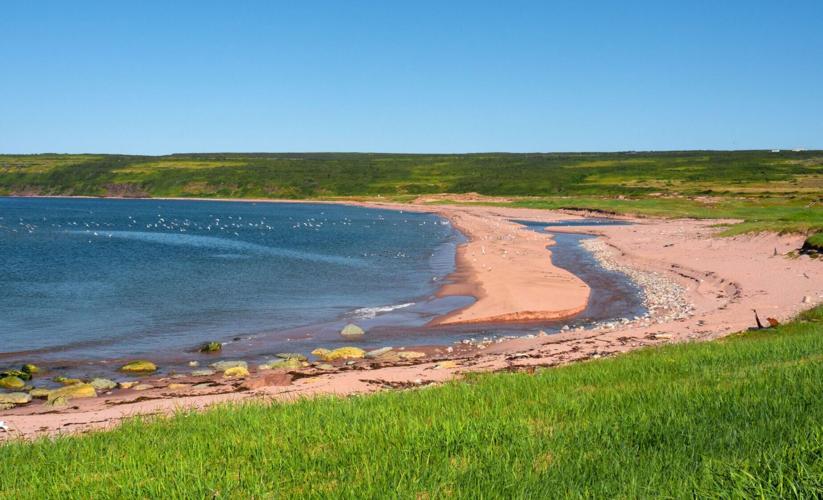
There are also Labrador's pink beaches at Forteau and L'Anse-Amour. No one knows exactly how they came about, with theories ranging from the erosion of mountains containing rose quartz to sediments washed out at river mouths.
What is sure here is that even in summer you share the beaches only with seagulls, with water temperature of around 3 degrees Celsius.
Further phenomena on Newfoundland include the frost-patterned ground in the Burnt Cape nature reserve. Nature guide Ted Hedderson spells out how this came about. "It comes from the spring thaw, when water freezes and melts. It pushes the larger rocks out of the ground." The result is stone circles with hollows in which small plants find sheltered spaces.
The purest water on our planet
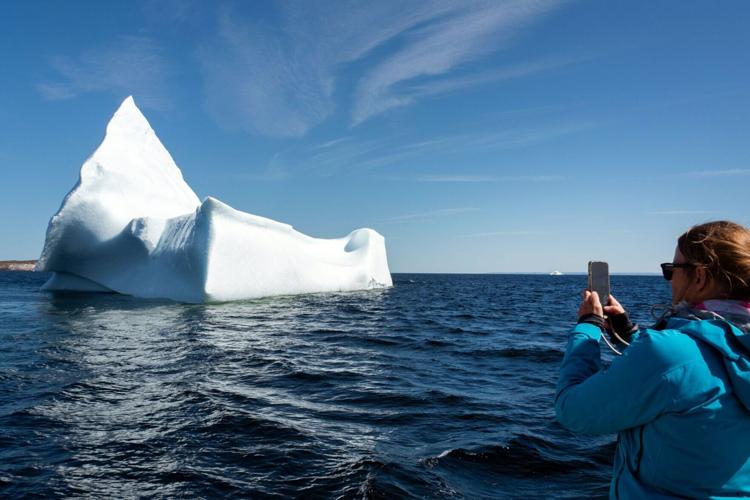
Tourists interested in geology mainly come from spring through July for iceberg season when the towering shapes drift along the coasts. These vast white giants are like ghosts, and people come on boat tours or from the shore to see them up close.
Geographer Randy Letto, on board during one such tour, says the icebergs have long journeys behind them.
"Icebergs come from glaciers in Greenland. In summer, temperatures rise and they calve into the ocean. Currents carry them into the western Arctic, where they freeze again in autumn. Then the next spring comes, and the ice drifts south on the Labrador Current," he says.
"This ice is around 10,000 years old and the purest water on our planet," says Letto. Icebergs glide past, shaped like giant mushrooms, whale humps or dolphins' heads. The sun catches the glittering sheen and blue veins glow through the ice.
Eastern Canada's natural magic leaves visitors speechless. It is humbling, too, from the fleeting wonders of the icebergs to those frozen for eternity like the Tablelands.

