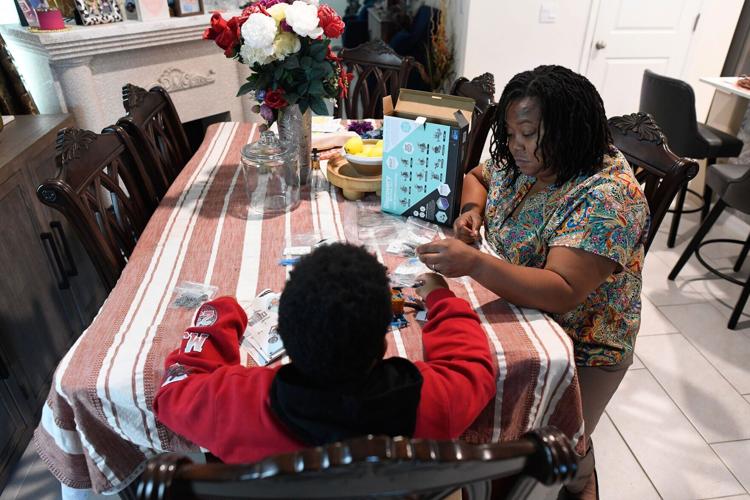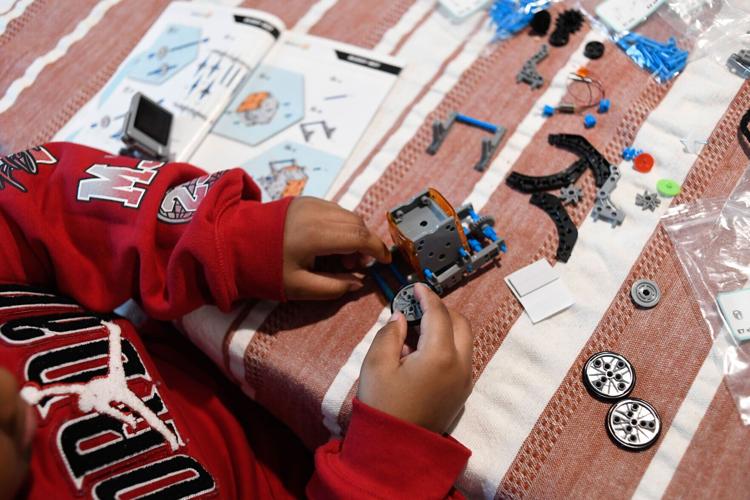




At Chain of Lakes Elementary School in Winter Haven, Florida, Josette Smith’s 9-year-old son, Ethan, gets to do what he loves most: crafts, math and science.
That is, when he isn’t pulled out of class.
Ethan has attention-deficit/hyperactivity disorder and was diagnosed with autism in kindergarten after he paced, flapped his arms and became consumed with highly specific interests, such as Martin Luther King Jr. and dachshunds.

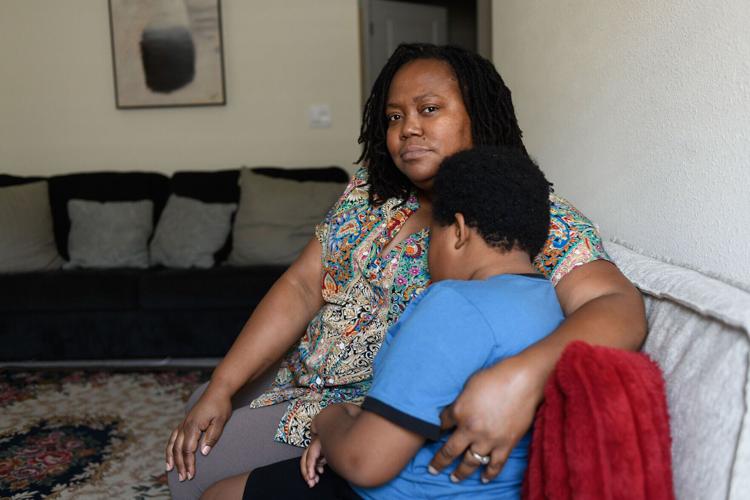
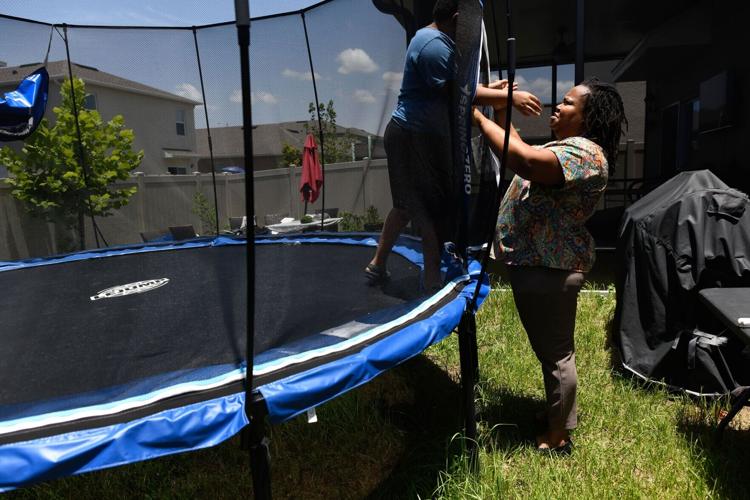
Josette Smith's son, Ethan, has autism and attention-deficit/hyperactivity disorder, and he needs additional supports at school.
In a meeting with school and district officials to develop his individualized education program, a legal agreement that outlines the support Ethan requires, the team agreed he required a trained paraprofessional to help him regulate his emotions and remain in class, according to complaints Smith filed against the school. However, the complaints alleged, administrators were unwilling to provide the dedicated aide.
People are also reading…
Instead of implementing the supports her son needed, his school repeatedly removed him from instruction, suspended him and called police on him when he was in third grade, Smith wrote.
The seventh grade science teacher said she first filed complaints with the school district and the state with these allegations. When problems persisted, she turned to the U.S. Department of Education’s Office for Civil Rights, the federal agency tasked with resolving complaints like hers.
Her federal complaint included the same account and alleged the school discriminated against her son because of his disability and race, including deploying pressure tactics to push her Black son out of the public school. In May, the office said it would investigate several of her allegations.

Josette Smith filed a complaint with the federal Department of Education’s Office for Civil Rights alleging her son Ethan’s Winter Haven, Fla., school discriminated against him because of his disability and race.
Families who believe their child’s rights were violated based on race, disability or gender in school often turn to the federal agency. But the White House cut its offices and weakened its ability to follow up with cases, as well as slashed funding to research on disparities that people of color face in getting diagnosed and attaining resources for disabilities.
About 1 in 31 U.S. kids by age 8 were diagnosed with autism spectrum disorder as of 2022. A recent study from the State University of New York at Albany’s Institute for Social and Health Equity found race, gender and socioeconomic gaps persist.
Among fourth graders from 2003 to 2022, students of color, girls, low-income students and multilingual learners were less likely than peers to be identified with autism in school, even as diagnoses rose among children from historically marginalized groups, the study found. A large forthcoming study by the same researchers found the biggest gaps among overlapping identities. Black and Hispanic girls were especially unlikely to be identified.
Meanwhile, President Donald Trump’s second administration put autism in the spotlight. In August, Trump signed an executive order to whittle down routine immunizations for kids while falsely tying vaccines to autism. He presented it as a personal priority and one of “the most alarming public health developments in history.”
Health and Human Services Secretary Robert F. Kennedy Jr. in April 2025 called autism a “tragedy” that “destroys families,” and he lent credence to ungrounded claims of autism’s causes, including unfounded links to childhood vaccines and Tylenol during pregnancy.
“This administration is taking us backwards,” said Camille Proctor, founder and executive director of The Color of Autism Foundation.
HHS spokesperson Emily Hilliard said Kennedy’s statements “emphasized the need for increased research into environmental factors contributing to the rise in autism diagnoses, not to stigmatize individuals with autism or their families.” She added the agency changes are “about making federal support systems work better for children and families.”
White House spokesperson Kush Desai and the press office for the Department of Education did not respond to a request for comment.

In March 2025, Trump signed an executive order to dismantle the Department of Education and closed seven of its Office for Civil Rights’ 12 regional offices. This June, his administration largely shifted special-education oversight to HHS and the Office for Civil Rights to the Department of Justice.
“On paper, it’s a reorganization,” said Nancy Potter, a former supervising attorney at the Office for Civil Rights who now runs her own education law firm. In practice, she said, it could leave families whose complaints involve overlapping harms — such as race and disability discrimination — caught between agencies built for different jobs.
In April, a Senate committee report from Sen. Bernie Sanders, I-Vt., concluded the Office for Civil Rights reached a 12-year-low in resolutions to discrimination complaints and had a backlog of nearly 12,000 civil rights cases. A recent Washington Post investigation found the Trump administration “indefinitely froze” many of these cases.

The federal Department of Education’s Office for Civil Rights said it would investigate several of Josette Smith’s allegations on behalf of her 9-year-old son, Ethan, but dismissed others that the state already reviewed.
The White House also vowed to stop “equity” investigations and data collection in areas such as school discipline despite research showing that nonwhite and low-income kids disproportionately face barriers to being identified with autism and attaining resources for the condition and other neurodevelopmental diagnoses.
It also decimated the Institute of Education Sciences, the Department of Education’s research arm, canceling about $900 million in funding for research, including long-standing data collection in schools. The National Institutes of Health and National Science Foundation purged projects referencing terms including “race” and “gender,” gutting research on diversity, equity or inclusion.
“If we’re cutting any data collection that helps us understand the problem, we’re not going to fix it,” said Paul Morgan, director of the Institute for Social and Health Equity at SUNY-Albany, who led the studies on disparities in autism diagnoses. “All we’re doing right now is making the situation worse.”

The nation’s influential federal autism panel also appears to lack prominent scientists and Black members and has fewer autistic self-advocates than before, said Proctor, who served on the panel before the Trump administration took over. The panel also was criticized for including vaccine opponents.
HHS’ Hilliard said the members “bring decades of experience in autism research and clinical care” and are committed to aligning “federal policy with gold-standard science.”
Disability advocates say federal officials are focused on the wrong priorities.
“All of it creates chaos where chaos is not necessary,” said Cameron Lynch, a former policy analyst for the Autistic Self Advocacy Network.

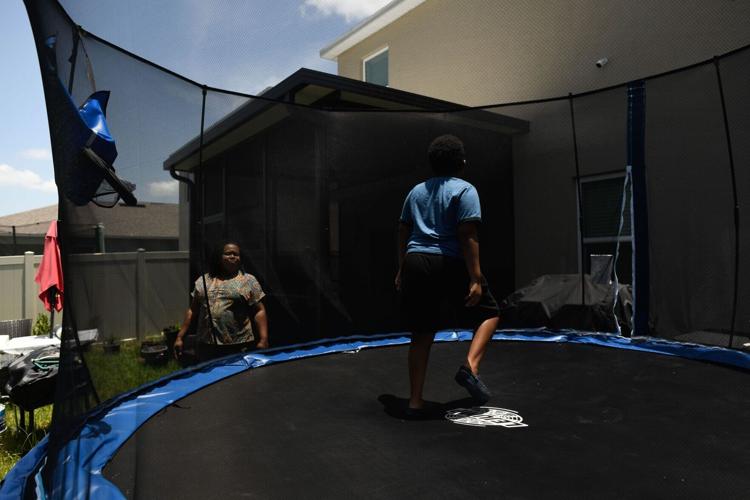
Ethan was repeatedly removed from class, suspended and charged with battery when he attended third grade at a public school in Winter Haven, Fla.
Disability rights advocates fear the changes to special education oversight weaken the federal safety net for autistic students and others with disabilities, making these systems more confusing when families need help enforcing students’ rights.
David Sitcovsky, Autism Speaks’ vice president of advocacy, said families, especially those from marginalized communities, already often lack support for their children to receive a timely diagnosis or services in their school systems.
“The common thread across these issues is access,” Sitcovsky said. “If their child’s rights are not being upheld, do they have a clear path to get help?”
Smith awaits a decision about her federal civil rights case, which she was told could take more than a year. She wants Ethan transferred to a school better equipped to support him. She also requested an expedited hearing for a due process complaint she filed with the state.

Josette Smith has advocated for her son, Ethan, 9, at his public school in Winter Haven, Fla.
The family also is navigating battery charges against Ethan, the first of which was filed in March after the school called police on him for allegedly hitting staff. Police arrived at her door hours after Smith informed the school district that she filed a federal discrimination complaint; she noted the timing in several of her complaints.
A Polk County Public Schools spokesperson declined to comment, citing student confidentiality. The Florida Department of Education did not respond to a request for comment.
“As a Black mom, you dare not complain about anything. Once you start advocating for your kids, it’s a problem,” Smith said. “But it’s not these kids’ fault that they have a disability.”