





Richard Kyte is director of the D.B. Reinhart Institute for Ethics in Leadership at Viterbo University in La Crosse, Wis., and co-host of "The Ethical Life" podcast.
If you drive a car in the United States, chances are you have been recorded by Flock cameras.
There are as many as 140,000 automated license plate reader (ALPR) cameras installed in cities across the U.S. Somewhere between 110,000 and 120,000 of those are made by Flock. But nobody seems to know exactly how many there are.
Here’s one thing we do know: by this time next week, there will be fewer of them.
That’s because resistance to ALPR cameras has been intensifying rapidly. In fact, 93 cities and counties have moved to end their contracts with Flock in the past 30 days, bringing the total number of rescinded contracts to well over 200 in the past year.
Those who want the cameras removed cite concerns about privacy rights and the likelihood that camera footage will be misused.
People are also reading…
Flock cameras use an AI algorithm to upload information into a nationwide database that can be searched by agencies across the country. But there is little oversight of how the information is accessed and used, little consistency in data storage guidelines, and, so far, anyway, little accountability for misuse.
Often, when new technology is introduced, it takes months or even years for regulations to get put in place that protect people from unintended consequences and abuse. Provided we have well-functioning institutions, those concerns will likely be addressed over time. In fact, Flock is rapidly revising many of its guidelines and policies to reassure customers that it takes privacy and accountability seriously.

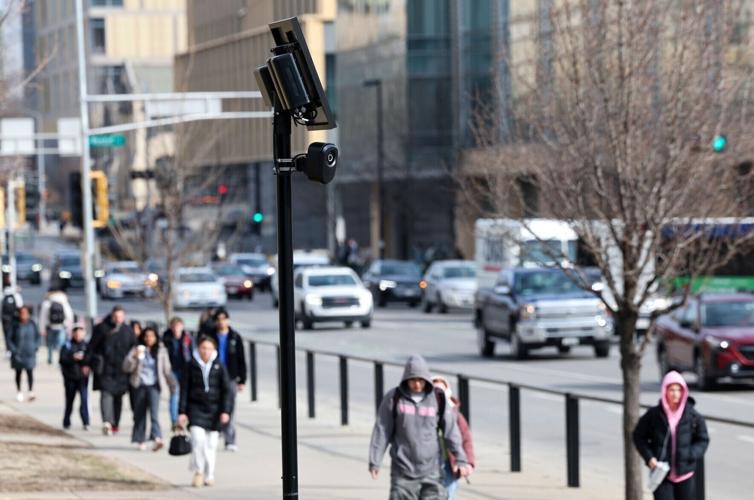
A Flock camera formerly used by the University of Wisconsin-Madison Police Department monitors traffic near campus in March. Campus officials ended their contract with the controversial technology company in June after students and faculty raised concerns about data privacy.
Meanwhile, defenders of ALPRs have some strong arguments. The chief one is that the cameras are highly effective at solving and deterring crime.
According to the Flock Safety website, 700,000 crimes per year are solved with the help of Flock cameras. That’s about 10% of reported crime in the United States.
That means we are all safer because ALPRs have been widely adopted, and there is no question that we will be even safer if even more cameras are deployed.
So, why are so many people still opposed to them?
I think the answer is that most people are deeply suspicious about the rapidly expanding intrusion of AI into their daily lives. We are living at a time when deep suspicion is beginning to translate into anger. And because Flock cameras are prominent and visible examples of AI intrusion, they naturally become targets of resistance.
In other words, people are opposing Flock cameras for the same reason they oppose data centers, but while data centers are being built in a few places around the country, ALPRs are just about everywhere.
People aren’t objecting to the cameras just because they can be misused; they are objecting to their very existence, their purpose. Most people don’t want their every movement recorded and analyzed, even if it will make them demonstrably safer, even if the cameras never make mistakes, even if they are never misused. And I don’t blame them.
At the back of all the concerns over AI — whether we are talking about data centers or security devices — hangs the big question: is AI going to serve us, or are we going to serve it?
According to a recent Gallup survey, only 9% of Americans believe AI will do more good than harm, and only 27% trust businesses to use AI responsibly. The tech companies seem to believe that we will trust them if they deliver results. But they are overlooking a significant feature of trust.
Trust is built through relationships, not just results.
Even if the adoption of Flock cameras delivers on the promise of making our communities safer and even if policies are put in place that increase oversight, accountability and reliability, their increased use will further depersonalize local government agencies, including law enforcement. And that will erode trust.
When I went onto the Flock Safety website to get some information for this column, a message popped up that read: “I'm Flock, your AI Sales Assistant. Saw that you're interested in Flock Safety's privacy and data policies. I'm available if you have questions!” I guess I can talk to a bot about not trusting AI.
The greatest challenge facing our society over the next several years is rebuilding trust in our institutions and in one another.
The tech companies, along with agencies and businesses eager to implement the latest new gadgets, just don’t get it. It’s all about relationships. It always has been.
Richard Kyte is the director of the D.B. Reinhart Institute for Ethics in Leadership at Viterbo University in La Crosse, Wisconsin. His new book, “Finding Your Third Place: Building Happier Communities (and Making Great Friends Along the Way),” is available from Fulcrum Books. He also cohosts “The Ethical Life” podcast.