




Shortly after the first series aired, writer Steven Knight predicted “Peaky Blinders” would end with a movie. That was more than a decade ago.
But when it looked like original star Cillian Murphy might not be available, the boast sounded like a pipe dream.
Murphy, after all, had won an Oscar for “Oppenheimer” and seemed too busy to put a button on a series that gave him a huge boost.
“To come back and come full circle feels lovely,” director Tom Harper says. “It’s the same and it’s different.”
Harper directed during the first “Peaky” season and seemed ideal to helm the closing “episode.”
“He knew what it meant, the kind of DNA of ‘Peaky,’ because he was right there at the genesis of the whole thing,” Murphy says. “We tried to work together in the interim, but it didn’t work out. It felt like the universe was telling us to make this together.”
People are also reading…
Knight, who created the series, said he wanted the story to end in the second World War. And, of course, it would be a film.
“It was very arrogant of me to imagine that would happen, but it’s happened,” he says.
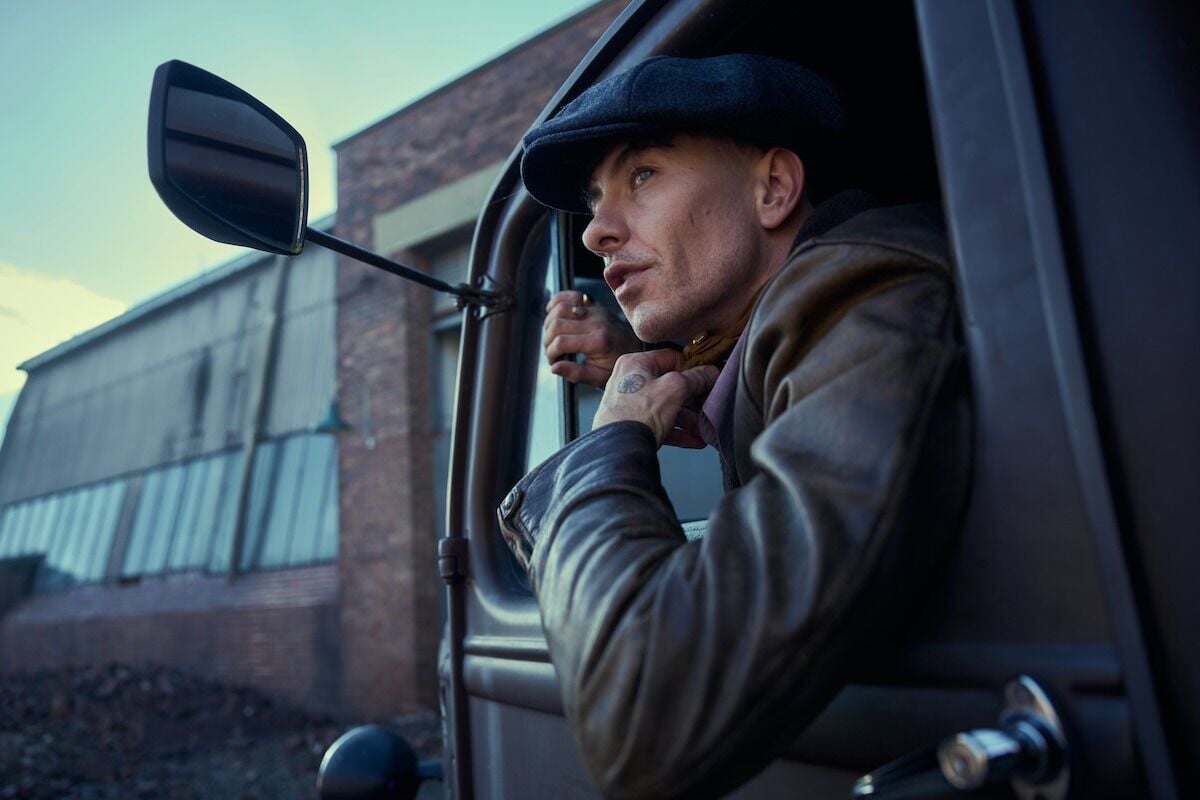
The story of “Peaky Blinders: The Immortal Man” is set in Birmingham, England, in World War II. Bombs are dropped, and Murphy’s character, Tommy Shelby, is urged to stop a Nazi plot that involves counterfeit money. In the process, he’s reunited with his son, Duke, played by Barry Keoghan.
“I’m new to this and it’s iconic,” Keoghan says. “I remember the screen test and seeing Cillian as Tommy Shelby. I asked (the casting director) how I could get in there.” And then, it happened. “It’s such an honor … it’s an incredible thing to be a part of.”
Because “Peaky Blinders” unfolded over six series, the finale had to be special.
“The difference between film and TV now is often quite subtle,” Harper says. “And you have a shorter period of time to tell the story. We had additional budget and time (for the film) and that allowed us to push everything. The heart of cinema lies at the moment in things that make it human. That’s always been the Shelby story.”
“This is the journey of Tommy Shelby, from where we find him to where we leave him,” Knight says. “Knowing that you’re telling this story on a big screen, it does liberate your imagination a bit.”
Unlike many films, “Immortal Man” wasn’t shot with greenscreen. It boasts sets and locations that let the actors feel like they were in the moment, living the story.
“For us to conclude (the series) with a film, it needed to justify itself,” Murphy says. “Ultimately, that comes down to the script. The main sort of thematic drive of the show has always been family. If we made it a father and son story, we knew we were on the right track.”
Keoghan says he leaned into the relationship and realized his character’s choices were cries for help. “There’s the cub, looking for his dad,” he says.
For Murphy, “The Immortal Man” was the right finish to an important story in his career.
“It’s pretty special,” he says. “I feel really, really proud of the work.”