




Soon after she completed “One Battle After Another,” Chase Infiniti got an invitation to audition for “The Testaments,” the sequel to “The Handmaid’s Tale.”
A fan of the original, she jumped in, not realizing how it might be more than just an acting assignment.
The costumes, for example, were very fitted. “You can’t fully move the way that you normally would … and you add on the fact that you’re wearing heels and you’re in a preparatory school where you’re trying to be your best at all points,” she says. That set a tone that played into the series’ concept: young girls being trained to be dutiful wives.

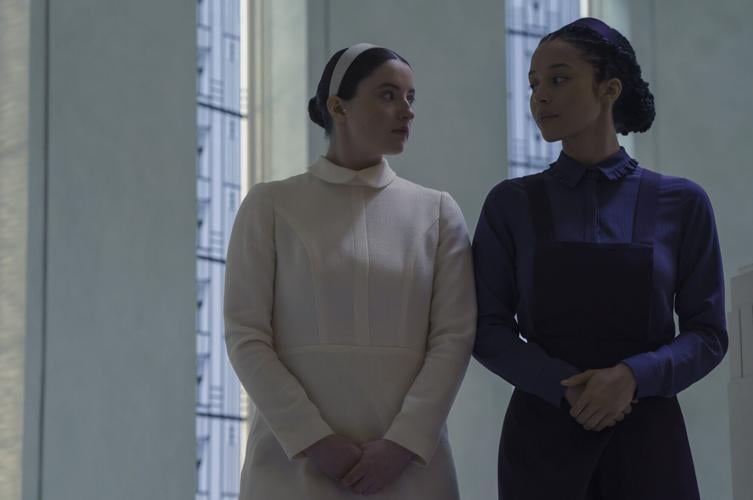
Lucy Halliday, left, and Chase Infiniti star in "The Testaments."
To understand the world of Gilead, the actresses stuck together and leaned on Ann Dowd, who starred in the original series, for advice. She shared the “Handmaid’s” details and, like her character, Aunt Lydia, maintained the world they had entered.
People are also reading…
“She’s a deeply devoted individual,” Dowd says. “She loves those girls — in a deep and profound way.”
Author Margaret Atwood, however, didn’t just want to step back into the dystopian world. She wanted to show how another generation could be architects of change.
When the series begins, Infiniti’s Agnes McKenzie is the school’s top student. She’s asked to mentor a “pearl girl,” or someone from the world outside Gilead. Her charge, Daisy, serves as the audience’s eyes and ears into the restrictive environment.

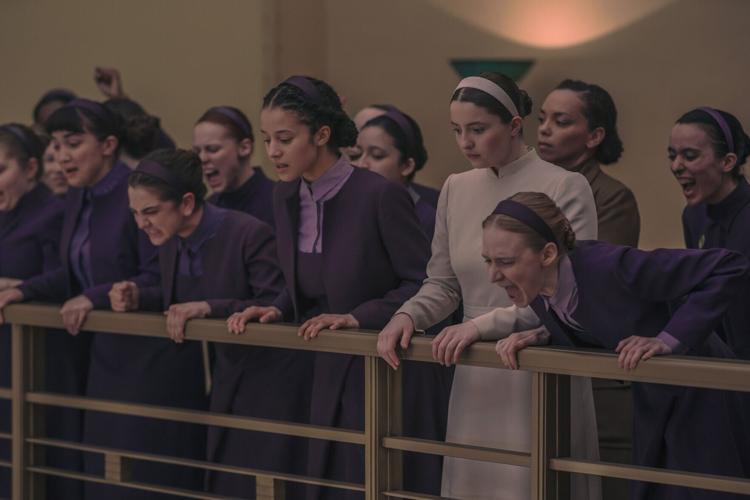
Students yell during an episode of "The Testaments."
“She’s having the same reaction that the viewer would be having,” says Lucy Halliday, who plays Daisy. “She’s thinking, ‘This is nuts. This is crazy and this shouldn’t be happening.’”
Quickly Agnes and Daisy become friends. They’re like two cats put in a room, Halliday says.
“They are, at their core, very similar people. They know that immediately and that’s why there is a bit of grating in their personalities. They recognize the intellect in the other person.”
Halliday says the off-screen relationship she and Infiniti had “enabled the journey that we see onscreen. I don’t think I could have asked for a better onscreen partner.”
As one gets deeper into the world — where women learn domestic chores but aren’t expected to share opinions on larger issues — she realizes how preferable the outside world could be.

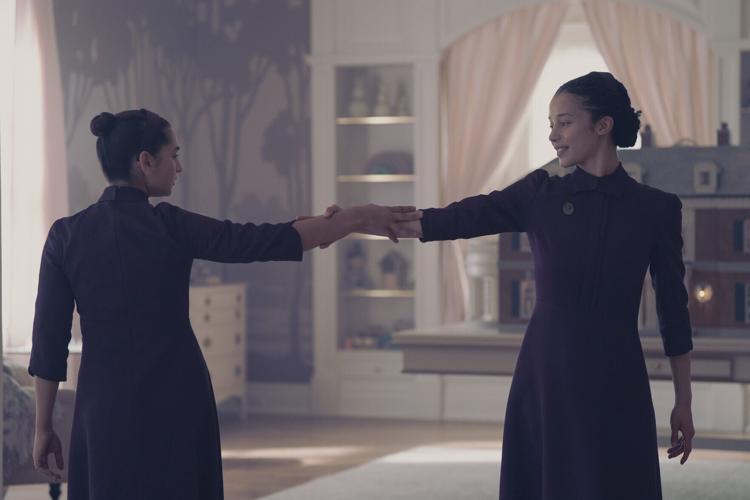
Mattea Conforti, left, and Chase Infiniti in an episode of "The Testaments."
“Looking at the new generation, I feel very hopeful,” Infiniti says. “The strength that they carry is something I find very inspiring. I also feel a strong sense of responsibility from me and the generation above me because we have to be there to support and nourish and protect them in a way.”
“The Testaments” could resonate with a younger generation because there are many touchstones. Viewers may realize “the experience of adolescence is transcendent of location,” Halliday says. “The essence of hope is prevalent in the show.”
Executive Producer Bruce Miller says it was important to do the “Handmaid’s Tale” sequel now because “there’s a need and a voice in this generation that is so strong and loud and thoughtful. Margaret (Atwood) is awfully spectacular at telling us stories that we can listen to when we’re 20 and when we’re 30 and when we’re 50 and when we’re 60. They’re perennially relevant.”