

Two New Yorkers accused of identity theft allegedly traveled around the country obtaining money from banks, including in Lincoln.
People are also reading…
10 steps to protect your identity
Intro
 Photo Credit: Milton Cogheil / Alamy Stock Photo
What is identity theft?
1. Shred everything
Photo Credit: Milton Cogheil / Alamy Stock Photo
Not just last month’s bank statement, but every item that contains your name, your address or any other information that identifies you or a family member can be used by criminals. Every day, the U.S. Postal Service processes and delivers 493.4 million pieces of mail, many of which have personal information. This might include mail from your child’s school, medical bills, and even junk mail. Sort through your mail right away, and anything you are not going to keep, put in a pile for the shredder.
2. Don't disclose your personal information or SSN
 Photo Credit: Ammentorp Photography / Alamy Stock Photo
Did you know that the cable company and the doctor’s office don’t need your social security number, nor do they have a right to require it? You do need to provide it to banks and other financial institutions, but rarely to anyone else. The next time someone asks you for it, find out if your account can be set up without it. If the person says no, verify by talking to a supervisor. In the case of a utility provider, they may tell you that without it they can’t offer you credit and you’ll have to pay a cash deposit instead.
3. Read your mail promptly
 Photo Credit: Brian Jackson / Alamy Stock Photo
You might already check your credit card statements for unexplained charges, but you also need to review any paperwork that comes from your health insurance carrier to make sure no one is getting medical care in your name. When you are away on vacation or business, you should also place a hold on your mail so no one will steal it (and possibly your identity) in your absence.
4. Monitor your accounts often
 Photo Credit: Vera Cepic / Alamy Stock Photo
The smallest inconsistency in your bank account can be a sign that you have been a victim of identity theft. Promptly compare receipts with account statements and log in to your account on your bank’s website often to check for unauthorized transactions. Take advantage of bank/card issuer mobile alerts, which can do a lot of the watching for you and inform you of any suspicious activity. Javelin Strategy & Research estimates that account takeovers tripled over the past year, with losses reaching $5.1 billion in 2017.
5. Place security freezes and sign up for fraud alerts
 Photo Credit: Cultura Creative (RF) / Alamy Stock Photo
5. Place security freezes and sign up for fraud alerts
6. Create strong passwords for all devices and accounts
 Photo Credit: Hero Images Inc. / Alamy Stock Photo
Endure the momentary inconvenience of unlocking your device each time you want to use it. An unlocked device is the equivalent of an open pocketbook when left unattended. The more apps you have connected and passwords stored in browsers, the more critical it is to create a barrier between your data and the casual observer. If a service offers two-factor authentication, set it up. Then, in order to sign into your account from an unfamiliar device, you’ll have to enter your password plus a code that is sent to your cell phone. This prevents anyone from accessing your account even if they have your password.
7. Be smart on social media sites
 Photo Credit: EyeEm / Alamy Stock Photo
Set your social media accounts to private or friends-only and avoid connecting with people you don’t personally know. In November 2017, Facebook announced that as many as 2-3 percent of profiles—more than 200 million—could be fake, which makes caution even more important in this era. Our Facebook profiles are a window into our lives and should only be shared with those we know and trust. In fact, thieves can often find answers to common account security questions—your first car, city you were born, street you grew up on, your mother’s maiden name—on social media profiles. So, be extra careful to not expose this type of information. Additionally, don’t volunteer information about your whereabouts, your family members, your plans, your lifestyle, or your preferences to strangers.
8. Run anti-virus software
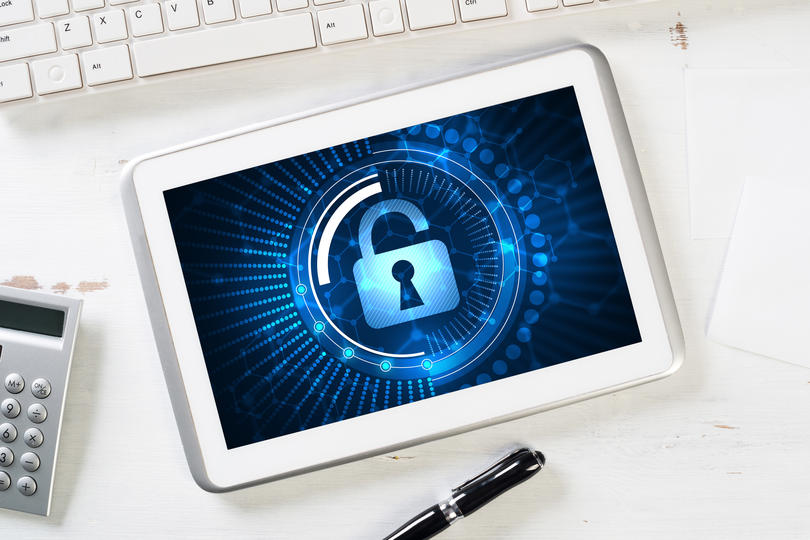 Photo Credit: Aleksandr Khakimullin / Alamy Stock Photo
Your computer can become infected in a click—literally. In its 2018 Security Intelligence Report, Microsoft lists attack methods like phishing, email attachments, and ransomware as some of the biggest threats to cybersecurity. With increasingly sophisticated techniques being used by criminals, unloading the responsibility of cybersecurity to the experts is a good choice. There are many good anti-virus software options on the market. If you need a free one, try AVG or Avast.
9. Monitor your credit
 Photo Credit: Hero Images Inc. / Alamy Stock Photo
You are entitled to a free copy of your credit report every twelve months from each of the three major credit reporting agencies (Equifax, Experian and TransUnion), and you can obtain them at AnnualCreditReport.com. Stagger them so you can receive one report every four months. Mark your calendar so you won’t forget. Periodic review of your credit reports not only allows you to stay on top of your score, but also to see when something appears on your credit history that shouldn’t be there—whether by mistake or by malicious behavior.
10. Respond and report rapidly
 Photo Credit: Andriy Blokhin / Alamy Stock Photo
Even if you take all these precautions, identity theft can still happen to you. If you find that you have been a victim, it’s important to act fast. Set up fraud alerts so credit agencies will need to take extra steps to verify your identity before issuing future credit. In addition, contact any financial, medical, or other institution related to the theft so they can watch for new suspicious activity.


