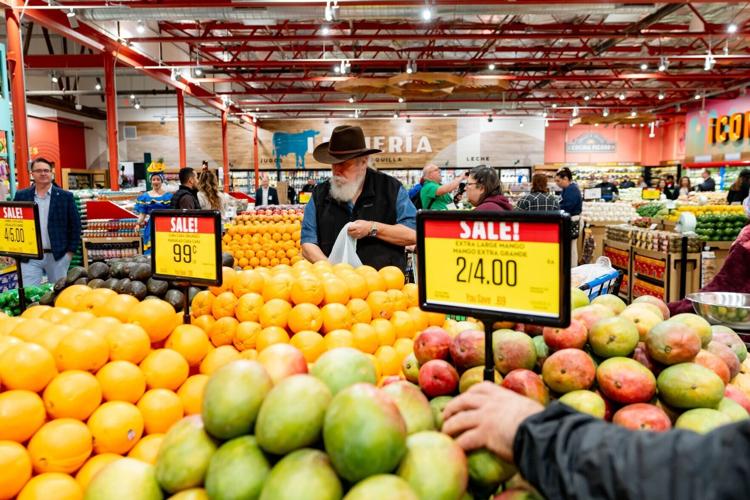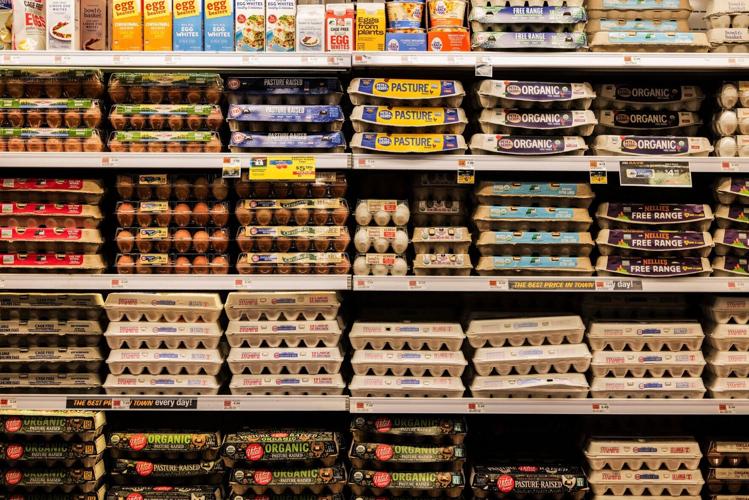





Iceberg lettuce. Jalapeños. Alfalfa sprouts. Eggs. Frozen berries.
For the past several months, these common grocery foods have all landed on food recall lists.
Americans are seeing some alarming food-safety issues that include the nation’s largest recorded cyclospora outbreak due to contaminated iceberg lettuce, hundreds of salmonella illnesses linked to recalled jalapeños and dozens more tied to contaminated alfalfa sprouts.
Thousands of people were sickened by foodborne illnesses this summer.

More than 1.6 million eggs were recently recalled due to potential salmonella risk.
The alerts are piling up, with cyclospora occupying much of the attention this year, as the parasitic infection gave explosive diarrhea to people in 48 states.
But are food recalls actually becoming more common?
It might feel that way, but statistically speaking, not really.
People are also reading…
As of Aug. 18, the FDA classified 860 food reports this year, about 15% below the average for the same period over the previous five years and about 29% below the 10-year average.
On average, the FDA classified 126 food recalls per month during the current Trump administration so far, vs. 135 during the Biden administration and 164 during the first Trump administration, according to a USA Today analysis of the FDA enforcement reports.
The changes at the Department of Health and Human Services under Robert F. Kennedy Jr. have made experts watchful for outbreaks, as the agency cut its workforce and reduced surveillance to just two pathogens.

Food supply safety
A decline in food recalls does not mean the nation’s food supply is getting safer, experts say.
“The number of recalls does not necessarily correlate with the level of surveillance,” said Robert Custard, an environmental health expert who also represents the West Virginia Association of Sanitarians. “Some years you're going to have more than others because of the luck of the draw. This year you may have less total recalls, but the cyclospora outbreak that we had this summer may have the highest number of human cases for any foodborne outbreak in recent history.”
Custard, who worked at the Virginia Department of Health for more than two decades, said cuts to public health staffing and funding can mean fewer people are available to inspect and test possible food-safety problems before they cause illness.
"When you do less testing, you're going to find less problems," Custard said. "When you find less problems, you end up with fewer recalls."
The cyclospora outbreak spread to 48 states plus the District of Columbia, with more than 17,000 lab-confirmed cases, 450 hospitalizations, and two deaths since May.

Thousands of people have been sickened this year by contaminated produce, including iceberg lettuce, jalapeños and alfalfa sprouts.
This cyclospora outbreak is ranked as the third-largest outbreak in U.S. history by the number of people sickened, according to the U.S. Public Interest Research Group. The largest was a 1994 salmonella outbreak linked to ice cream that sickened about 224,000 people nationwide, followed by a 1985 salmonella outbreak linked to milk that sickened 168,000 to 197,000 people.
Sandra Eskin, CEO at Stop Foodborne Illness, a nonprofit organization advocating the prevention of illness and death from foodborne pathogens, said the number of food recalls matters less than the number of people who are getting sick.
Almost all the food recalls, about 99%, were initiated voluntarily by companies that make the products. Only 1% of the recalls were ordered by the FDA.
After a company initiates a recall, the FDA evaluates the situation and assigns a recall classification based on the level of health hazard posed by the product.
The agency took an average of 38 days to classify food recall reports during the current Trump administration. That number was about 49 days under Biden and 53 days during Trump’s first administration.

Every food recall is different
The most serious category of recall, Class I, is determined when there is a reasonable chance that eating or using a product could cause serious illness or death. They accounted for about 44% of all recalls since 2012. Class II recalls, the less serious ones, accounted for about 50%.
“Not all recalls are equal,” said Eskin, who previously worked at the U.S. Department of Agriculture overseeing food safety regulations and policy.
Some recalls, Eskin said, are made after companies’ routine testing catches a pathogen before anyone gets sick, while others involve outbreaks that are already underway and vary widely in size and severity.
In the case of the cyclospora outbreak, Taylor Farms initiated a recall of iceberg lettuce after reports of sickness emerged from across the country. The company initiated a recall on July 17, but the FDA has yet to classify it.
Other major food recalls this year touched nearly every aisle of the grocery stores, including Publix’s frozen berries, more than 1.6 million eggs and nearly 30,000 raw beef products.
Some of the recalls also were tied to foodborne illnesses reported across the country. A salmonella outbreak linked to jalapeños sickened 431 people in 32 states and 57 were hospitalized. An alfalfa sprout outbreak sickened 55 people across 15 states with E. coli and salmonella, with four hospitalizations so far.