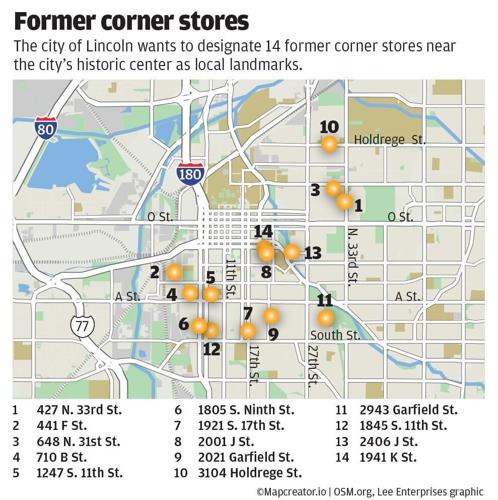
Before the supremacy of Hy-Vee, Whole Foods and Aldi, small and independent grocery stores dotted the streets of Lincoln.

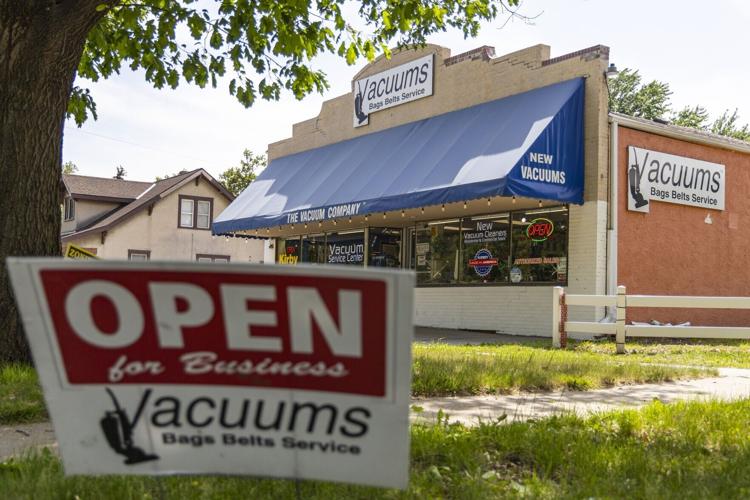
1805 S. Ninth St.: This one-story store is a frame, front-gabled structure with a brick, false front façade and stucco applied to the sides. The parapet is stepped to accommodate disguising the gable with the least amount of brick necessary.
People are also reading…

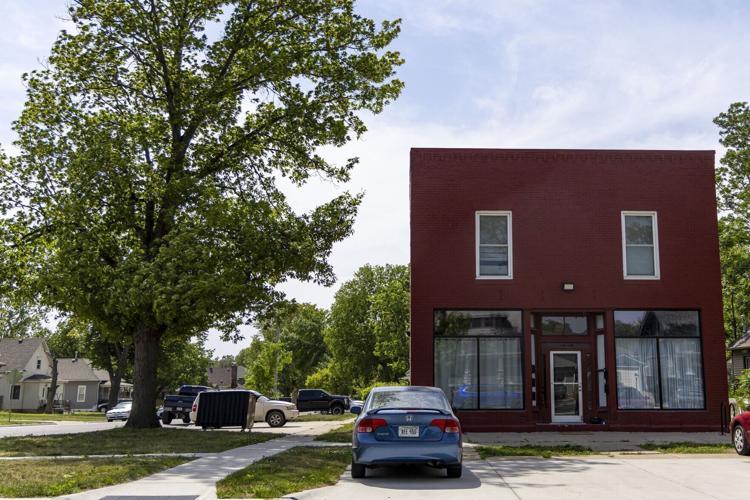
1845 S. 11th St.: Basket Store No. 8, later Yakel Grocery, is located on the northeast corner of the intersection of South 11th and Peach streets. This site was designated a local landmark in 2021. The eastern, main façade is organized in a single bay; a centered recessed entrance is flanked by two large storefront windows. The second floor includes two double-hung windows, and the façade is topped with a modest brick cornice laid in a dentil pattern. The building has a flat roof, sloped east to west, hidden behind stepped parapets on the north and south façades. Bricks are laid in a common—stretcher—bond. The south façade, facing Peach Street, includes a narrow entrance near the west corner and another former doorway that has been enclosed to create a small window. The second story on this façade has five narrow, double-hung windows. This property has already been locally landmarked individually, and will also join this nomination for its contributions to the thematic district.

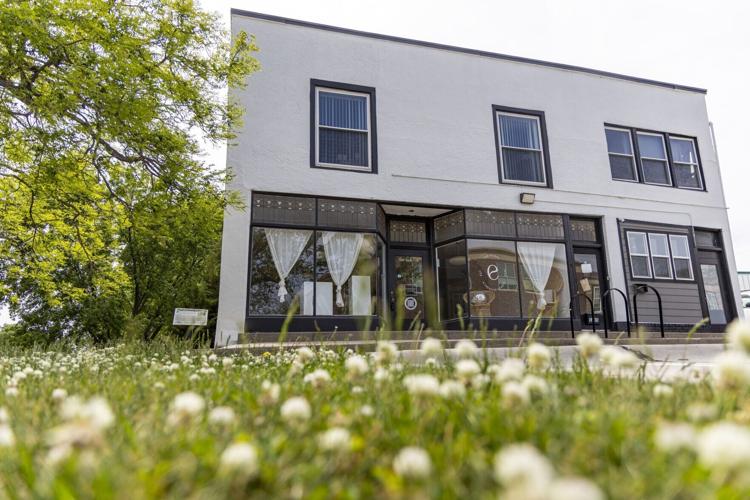
1247 S. 11th St.: The two-story brick building has been covered in stucco painted blue and tan with murals on the north and south facades. On the second story there are 12 replacement double-hung windows on the north façade, five on the front (east) façade, and three on the south façade along with one small horizontal window. On the first floor of the south façade there is one fixed window, shortened in the original opening and two small square windows. The north façade has a half wall in a recessed space at the back corner of the building. The storefront has three bays each with large glass windows and a glass door with wood surround. The southern two bays have transom windows above. The building has a flat roof.

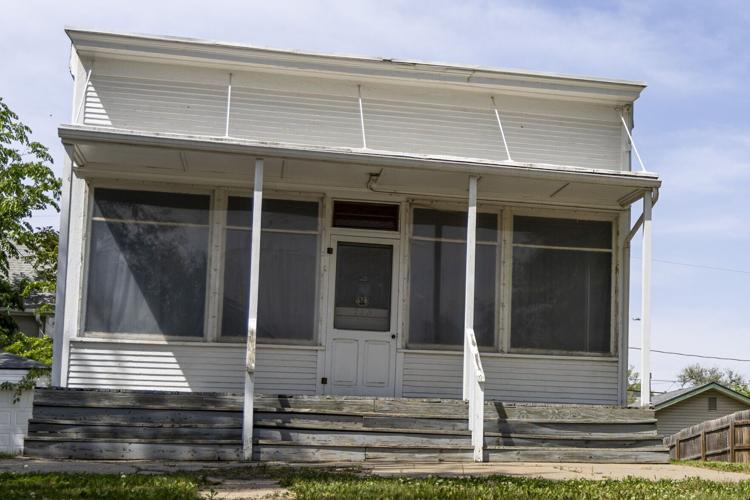
710 B St.: The is a one-story, frame building with a flat roof and a raised parapet. The façade has a central entrance flanked by original broad storefront windows. A flat awning is suspended with tie rods and supported by four square wood posts and covers the porch, which is raised four steps that are as broad as the building.


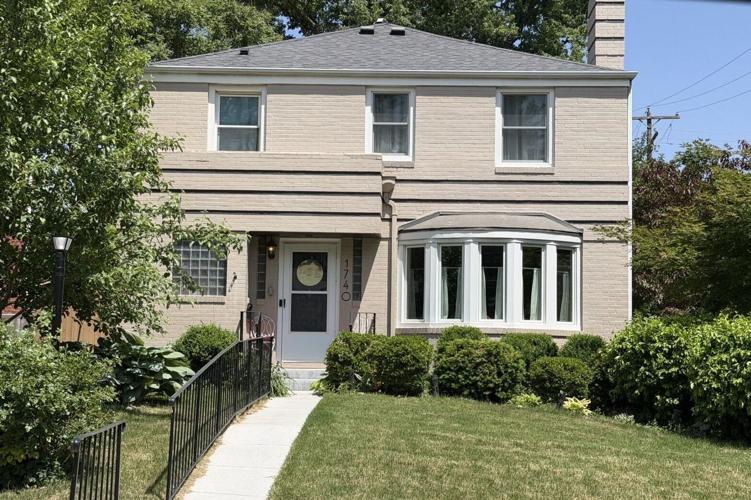
The Lincoln-Lancaster County Historic Preservation Commission unanimously approved a National Register of Historic Places nomination for a home at 1740 High St. in the Indian Village neighborhood. The single-family home — known as the Genevieve Felthauser House and completed in 1941 — was developed by Lincoln-based builder and real estate developer Laura Wood.
A loaf of bread, a container of milk and a stick of butter: Check out these former Lincoln corner stores.

427 N. 33rd St.: This one-story building has a false wood front with asphalt shingle gable roof behind. The symmetrical front façade has glass storefront windows with X patterned transom windows above. The central front entrance is recessed slightly and set a few feet above the sidewalk level. The half-lite glass wood door is flanked by two half sidelights. While the majority of the façade is horizontal wood siding, the base is brick. The north façade has only a small door. The material is a wider horizontal wood panel than what is visible on the front. The south façade is the same siding as the north and has one double-hung window at the west end and a simple brick chimney.

441 F St.: The building is a one-story frame structure with a flat roof that appears to slant toward the rear of the building. It has clapboard walls, and a central entrance flanked by large storefront windows.

648 N. 31st St.: This one-story false-front building has an asphalt shingle gable roof. The front (west) and south facades are large buff-colored brick. The north façade is clapboard siding. The east façade is half brick and half wood. The front façade has four equally sized fixed metal windows with a wood screen door with transom between the first and second windows. Above is a flat metal awning and the original pressed metal “I.G.A. STORES” sign mounted to the wall.

1921 S. 17th St.: This small one-story building has a flat roof with a shingled mansard front parapet wall. The original storefront has been altered with vertical wood paneling with two double-hung vinyl windows in each bay of the symmetrical façade. The recessed entrance has a central modern door. The façade sits above the adjacent sidewalk by one step. The side and rear facades have stucco applied.

2021 Garfield: The one-story frame building has white clapboard siding on the side and rear facades. The front façade is a mix of wood shingles, flat wood boards, and horizontal wood siding. The building has a flat roof with a short wood parapet wall on the front. The storefront is symmetrical with two fixed, four-pane windows flanking either side of the recessed front entrance set up two steps above grade. The main entrance is wood double doors with a large pane of glass, but there are two side entrances also located within the recessed alcove.

2001 J St.: The two-story brick building has a significantly altered storefront. The corner entrance is partially enclosed but does not extend to the top of the entrance ceiling. Horizontal wood boards cover the form large storefront on the north façade. All windows are boarded up. The first floor of the west façade was painted white. The south (rear) façade has a second-floor covered wood deck above an enclosed lean-to on the first floor. The east façade is stucco.

1245 S. Ninth St.: Mr. Alvin V. Downey operated a grocery store in Lincoln at least as early as 1897, located at the corner of Eighth and C streets. In August 1902, he began advertising his new location at Ninth and B streets. The City Directory for 1903 makes it clear that his grocery store and his residence were at the same address. Being both older and more closely located near downtown, the property was built as a two-story brick building with the residence above. He and his son William operated the grocery together until Alvin’s untimely death in 1916 at the age of 57. A series of grocers, including W C Pyle and J C Brehm owned the grocery store between 1916 and 1923. In 1924, Weber and Yost Groceries and Meats opened, eventually becoming owned solely by George Weber. In 1934, the store was purchased by someone named Sell and became a Blackbird Store, however George Weber remained the manager of the grocery. The Blackbird period was brief, with the location becoming an Earl Woods Cash & Carry Dairy “depot” in 1936.47 With locations all over Lincoln, Earl Woods’ shops offered milk, cream, butter, eggs, and eventually ice cream and other dairy products. In 1952, the location was purchased by Dorothy E Smith, who operated a dairy and grocery store in the location, renaming it the Ninth & B Dairy Mart.

3104 Holdrege St.: The one-story vinyl sided building has an asymmetrical gable roof with shed projection to the east. There is no fenestration on the west or north façade and only a small projecting entrance with a wood door on the north. The main storefront on the south façade is asymmetrical with large wood framed windows with three lite transoms on the west end, a recessed entrance with single light glass door to the right. Two smaller picture windows are located to the right of the entrance. The base of this façade is the original brick.

2406 J St.: The Antelope Grocery was designated a local landmark in 1987. The structure is a two-story, Tudor Revival, mixed-use building constructed with a brick first floor and a half-timbered stucco second story. The principal, eastern façade is 105 feet wide and features a steep hipped roof with two large front gables and a tower on its southwest corner. The front gables are pierced with small square windows, and the tower features a pyramidal roof with a miniature gable and eaves projecting from it. This façade has three entrances and two storefronts. Above the storefront windows on this façade are the original leaded art-glass transoms; the central, larger storefront is three bays wide, with a recessed entrance and a transom that reads ‘Antelope Grocery’. The western storefront is smaller, with a corner entrance. The bays on the southwest corner are articulated along with the tower, and project slightly. Above, the second-floor features asymmetrically placed, small residential windows framed by decorative half-timbering. The 31-foot western façade includes a simple entrance to the upstairs apartments, highlighted by a small, bracketed hood and an art-glass lunette that reads "Leroy." The remaining facades, though simpler, continue the brick and stucco treatment, maintaining the building's stylistic integrity. This property has already been locally landmarked individually, and will also join this nomination for its contributions to the thematic district.

1941 K St.: The Zimmer Grocery was designated a local landmark in 2005. The one-and-a-half-story folk-style cottage features a cross-gabled roof, oriented with its primary façade facing north. The dominant roof is the east-west gable, with eave-returns and molding emphasizing the roof line; this façade also includes two double-hung windows with decorative lentils and sills. A secondary dropped roof extends out over a small corner porch on the northeast corner. Giving it its distinctive form, attached to the home is a flat-roofed, one-story commercial storefront connected on the western side. This storefront, believed to be an early 20th-century addition, projects closer to K Street than the original house. The storefront includes a central entrance flanked by large display windows, a flat awning hung with metal brackets, and four gooseneck light fixtures. This property has already been locally landmarked individually, and will also join this nomination for its contributions to the thematic district.
1805 S. Ninth St.: This one-story store is a frame, front-gabled structure with a brick, false front façade and stucco applied to the sides. The parapet is stepped to accommodate disguising the gable with the least amount of brick necessary.
1845 S. 11th St.: Basket Store No. 8, later Yakel Grocery, is located on the northeast corner of the intersection of South 11th and Peach streets. This site was designated a local landmark in 2021. The eastern, main façade is organized in a single bay; a centered recessed entrance is flanked by two large storefront windows. The second floor includes two double-hung windows, and the façade is topped with a modest brick cornice laid in a dentil pattern. The building has a flat roof, sloped east to west, hidden behind stepped parapets on the north and south façades. Bricks are laid in a common—stretcher—bond. The south façade, facing Peach Street, includes a narrow entrance near the west corner and another former doorway that has been enclosed to create a small window. The second story on this façade has five narrow, double-hung windows. This property has already been locally landmarked individually, and will also join this nomination for its contributions to the thematic district.
1247 S. 11th St.: The two-story brick building has been covered in stucco painted blue and tan with murals on the north and south facades. On the second story there are 12 replacement double-hung windows on the north façade, five on the front (east) façade, and three on the south façade along with one small horizontal window. On the first floor of the south façade there is one fixed window, shortened in the original opening and two small square windows. The north façade has a half wall in a recessed space at the back corner of the building. The storefront has three bays each with large glass windows and a glass door with wood surround. The southern two bays have transom windows above. The building has a flat roof.
710 B St.: The is a one-story, frame building with a flat roof and a raised parapet. The façade has a central entrance flanked by original broad storefront windows. A flat awning is suspended with tie rods and supported by four square wood posts and covers the porch, which is raised four steps that are as broad as the building.