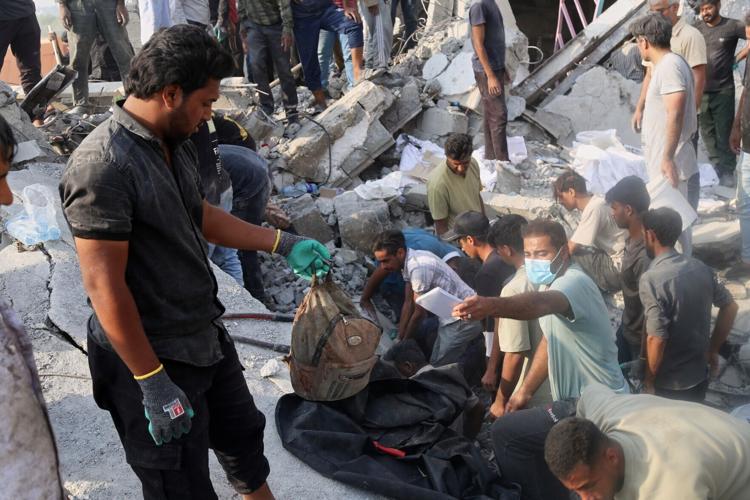
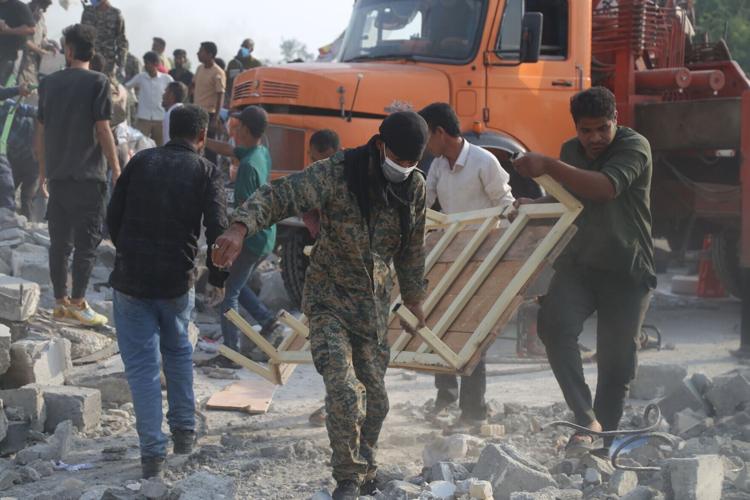
A man hold a children's backpack Feb. 28 as rescue workers and residents search through rubble after what Iranian officials said was an Israeli-U.S. strike on a girls' elementary school in Minab, Iran.
Abbas Zakeri, Mehr News Agency
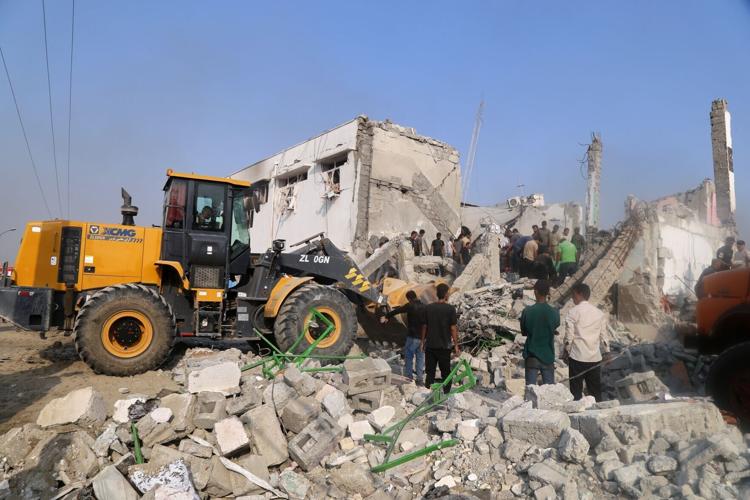
Rescue workers and residents search through the rubble Feb. 28 after what Iranian officials said was an Israeli-U.S. strike on a girls' elementary school in Minab, Iran.
Abbas Zakeri, Mehr News Agency
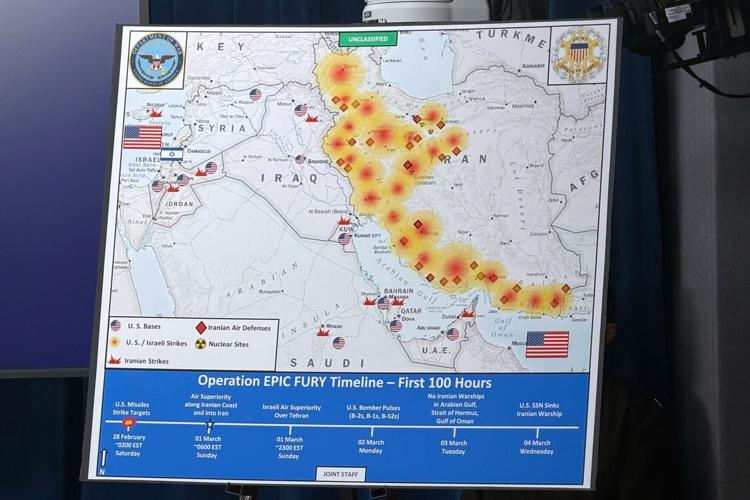
A Department of Defense map titled "Operation EPIC FURY Timeline - First 100 Hours" is displayed Wednesday during a news conference at the Pentagon in Washington.
Konstantin Toropin, Associated Press
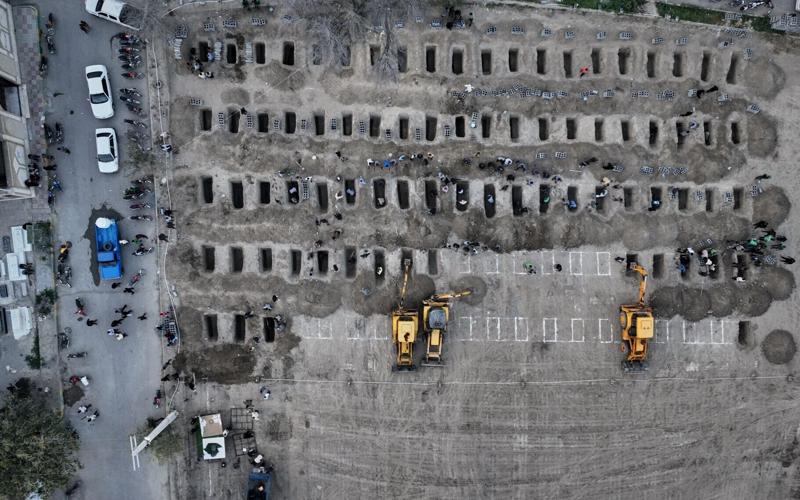
Graves are prepared Monday for the victims, mostly children, of a Feb. 28 strike at a girls' elementary school in Minab, Iran.
Iranian Foreign Media Department
Rescue workers and residents remove rubble Feb. 28 after a strike on a girls' elementary school in Minab, Iran.
JULIA FRANKEL and MICHAEL BIESECKER
Associated Press
JERUSALEM — Satellite images, expert analysis, a U.S. official and public information released by the U.S. and Israeli militaries suggest an explosion that killed scores of Iranian students at a school was likely caused by U.S. airstrikes that also hit an adjacent compound associated with the regime's Revolutionary Guard.
A man hold a children's backpack Feb. 28 as rescue workers and residents search through rubble after what Iranian officials said was an Israeli-U.S. strike on a girls' elementary school in Minab, Iran.
Rescue workers and residents search through the rubble Feb. 28 after what Iranian officials said was an Israeli-U.S. strike on a girls' elementary school in Minab, Iran.
A Department of Defense map titled "Operation EPIC FURY Timeline - First 100 Hours" is displayed Wednesday during a news conference at the Pentagon in Washington.