OTTAWA — For more than 20 years, Diane Hosker lived on Trump Avenue in Ottawa’s leafy west end, a neighborhood with New York City -themed street names including Central Park, Bloomingdale Street and Gotham Private.
Hosker was never a fan of the name, which was chosen when U.S. President Donald Trump was known primarily as a Manhattan real estate developer. Now, amid the worsening trade war and escalating verbal threats, the city council is moving to rename it.
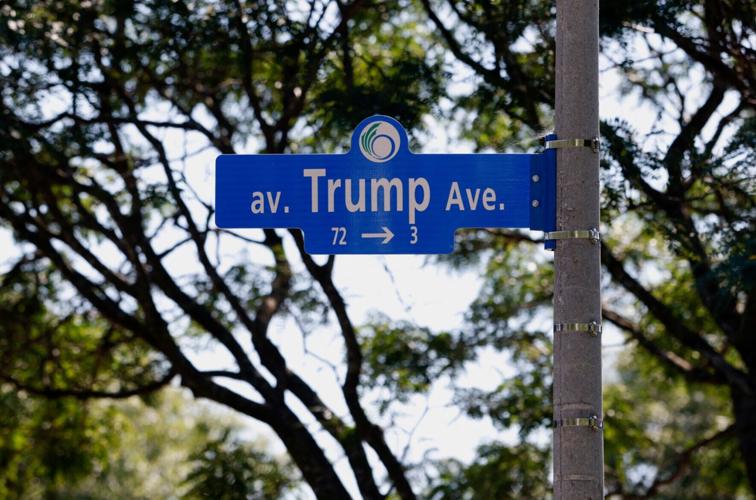
A street sign for Trump Avenue, which some residents want renamed amid the Canada-U.S. tariff dispute, in is seen Aug. 29 in Ottawa, Ontario, Canada.
Trump's latest actions— imposing new tariffs on goods from Canada and signing an executive order renaming Lake Ontario as "Lake America" — triggered a renewed surge of anger and patriotism in a country better known for being easygoing.
Some Canadians boycotted U.S. products and stopped traveling south of the border since Trump returned to office in early 2025. His renewed attacks on Canada prompted what may be a more permanent rupture between two longtime allies. From street names to supply chains to vacation bookings, Canadians are severing everyday ties in ways that could outlast the current trade dispute.
People are also reading…
A sign on Aug. 29 marks the entrance to the Central Park neighborhood, home to streets with New York City-themed names, in Ottawa, Ontario, Canada.
Trump “is just the king of chaos and destroying everything and nothing good ever comes out of this man,” Hosker told Reuters. “I just don’t like the way he makes fun of Canada,” she said, adding she finds it embarrassing to tell people she lives on a street named after him.
Ottawa City Council member Riley Brockington said he’s taking steps to rename Trump Avenue. Some ideas include TACO, a reference to "Trump Always Chickens Out," or naming the street after former U.S. President Barack Obama.
“Street names in Canada’s capital are named after people of honor and integrity and (who) work in partnership, in this case, with Canada,” Brockington said. Trump “does not meet any of those standards.”
The White House did not respond to a request for comment.
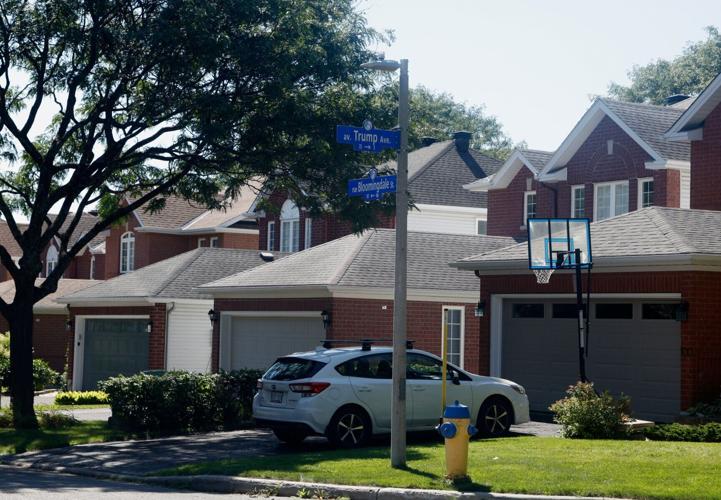
A street sign for Trump Avenue is seen Aug. 29 in a neighborhood in Ottawa, Ontario, Canada.
An Abacus Data poll released last week found more than 70% of Canadians support Prime Minister Mark Carney's decision to suspend trade talks with the U.S., despite the likelihood of job losses and economic uncertainty. Meanwhile, a Reuters/Ipsos poll showed only 20% of Americans support the tariffs on Canadian goods and even fewer agree with renaming the lake.
Some dual citizens deepened their ties to Canada.
Sara Seager, a Canadian American astrophysicist who left the Massachusetts Institute of Technology, was recruited by the University of Toronto under the Carney government's push to attract top academics from abroad.
Seager said when she renewed her Canadian passport, she explained to the officials working there why she was moving to Toronto.
"I explained how Prime Minister Carney is giving over a billion dollars to recruit top talent from all over, but especially Canadians, to come home to help Canada become more sovereign from the U.S. in technology, trade and defense,” she said. "The amount of Canadian pride in that row of passport offices was heart-melting."
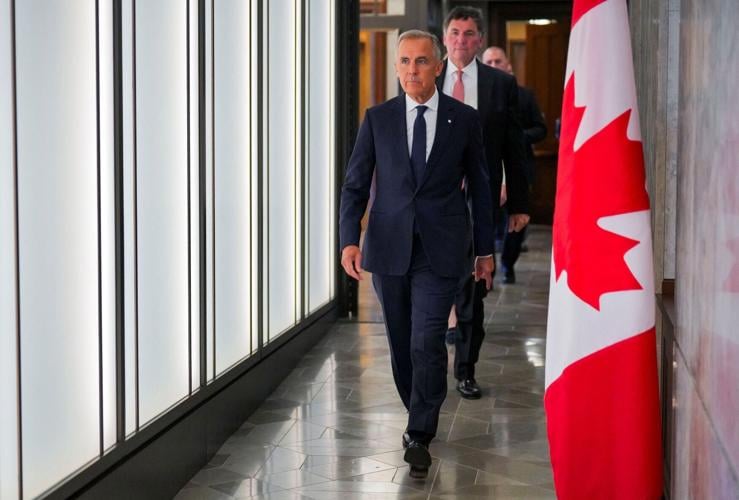
Canada’s Prime Minister Mark Carney walks to speak with the news media Aug. 22 in Ottawa, Ontario, Canada, after he suspended trade negotiations with the United States.

Severing ties
Ashley Chapman, chief operating officer of Chapman's Ice Cream, a family-owned Canadian company, said his company pivoted away from using U.S. ingredients since Trump’s first round of tariffs against Canada last year. By mid-2027, Chapman said, the company aims to cut its use of U.S. ingredients by 70%.
“We’ve got years left of Trump in power and we need to figure out how we insulate ourselves,” he said. In recent months, Chapman said the company severed ties with nine long-standing U.S. suppliers and is sourcing ingredients like almonds and cherries from Australia and Chile.
The United States plans to import an extra 300,000 metric tons of beef trimmings over the next three months. President Donald Trump signed a special proclamation to make this happen, and lower prices for consumers. However, Canada's beef industry won't be part of it.
Chapman also pledged not to raise prices during the trade war, even if his profit margins take a hit.
“That is a price I’m willing to pay, to say that we will not be bullied and we will not be treated like this by what used to be our closest ally and friend,” he said.
Dave Samojlenko, a 53-year-old programmer in Ottawa, said he canceled subscriptions to U.S. streaming services like Netflix and swore off visiting the U.S. while Trump remains in office.
"We're an independent nation and we should stand up for ourselves," he said. "I haven't traveled (to the U.S.) since this last administration came in and I probably won't until at least they're gone and probably long after."
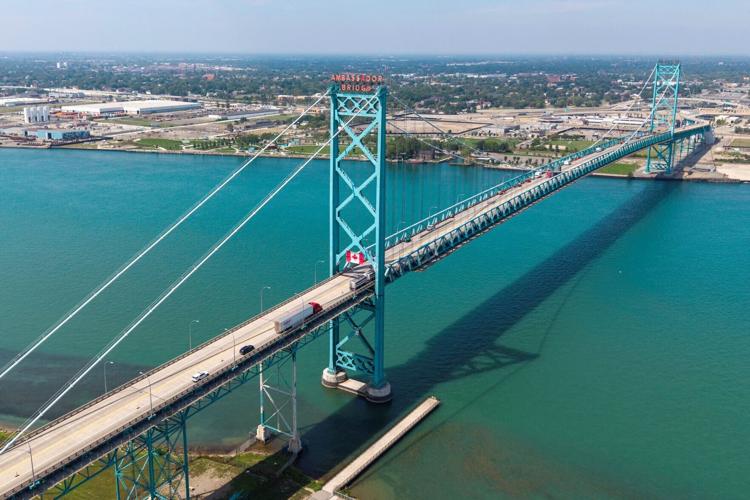
Vehicles on Sept. 1 cross the Ambassador Bridge, which connects Windsor, Ontario, Canada, and Detroit, Michigan.
Visits to the U.S. declined by 10.6% in the first three months of the year from a year earlier, official data shows, and spending on travel to the U.S. fell 13.6% to $3.6 billion as domestic tourism grew.
Megan Woodward, a travel agent based in Edmonton, confirmed she saw a further shift since the latest round of tariff threats.
"We're not getting bookings to the U.S. anymore, and (Canadians) are very vocal about where they want to spend their money. If we recommend a U.S. vacation, a lot of people are very much against that,” Woodward said. “They want to keep their dollars in Canada or are very happy to spend them in Europe."