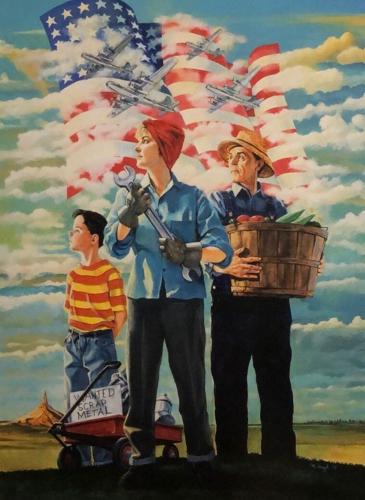
The Victory ’95 committee commissioned this painting by artist Michael Hagel to honor Nebraskans’ contributions to winning World War II — including the 1942 scrap drive, which began in Nebraska and expanded nationwide.
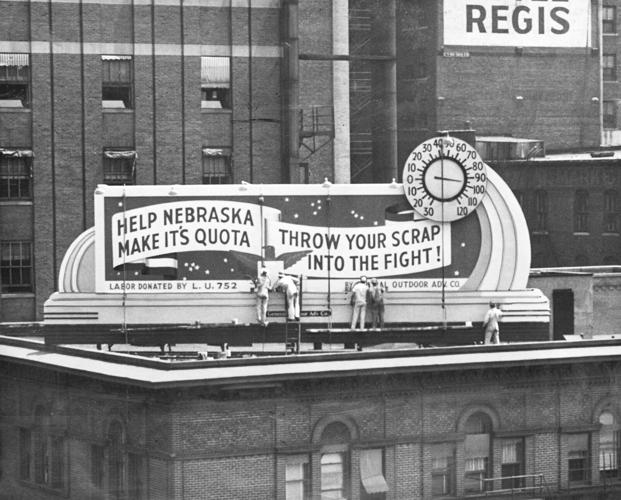
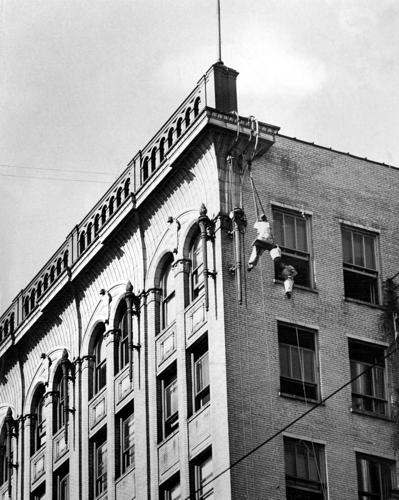
Urging participation in the scrap metal and rubber salvage campaign, this large sign was painted on one of the signboards atop the Patterson building, 17th and Farnam Streets, on July 26, 1942.
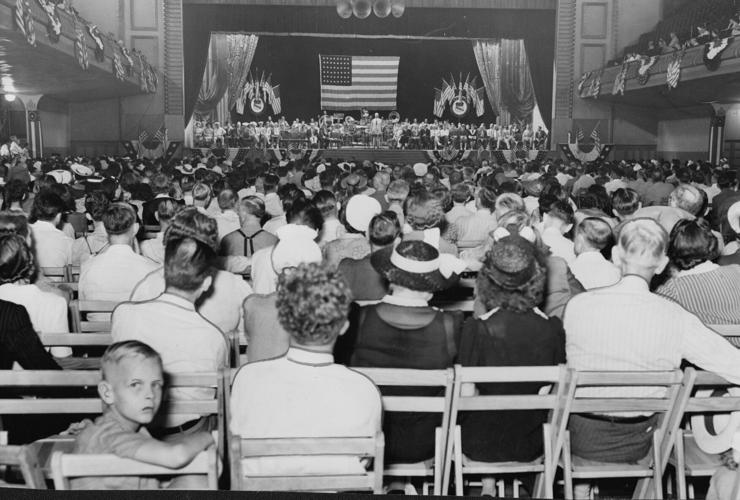
The Union Pacific railroad boosted the scrap metal drive by sponsoring a salvage rally at city auditorium on July 13, 1942. The price of admission was a scrap-metal donation.
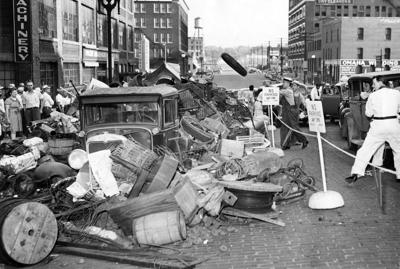
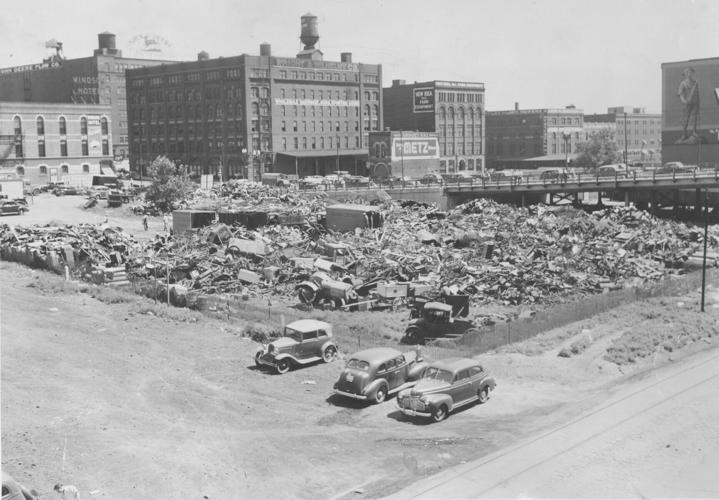
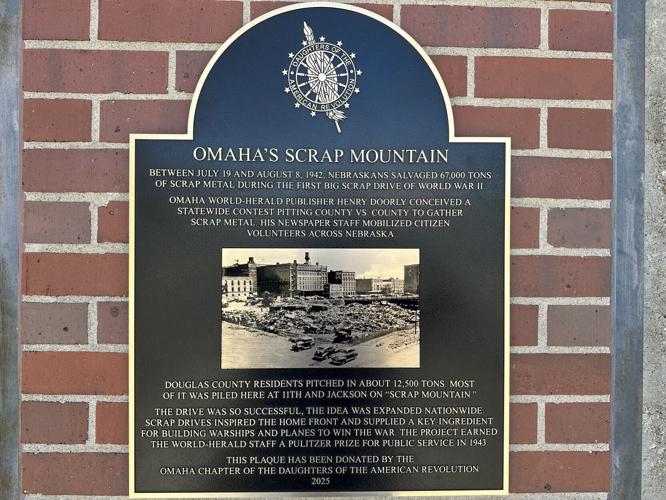
Omaha's "Scrap Mountain" at 11th and Jackson Streets on July 25, 1942, one week into the summer scrap drive. The pile would grow to more than 10 times this size by the end of the contest.
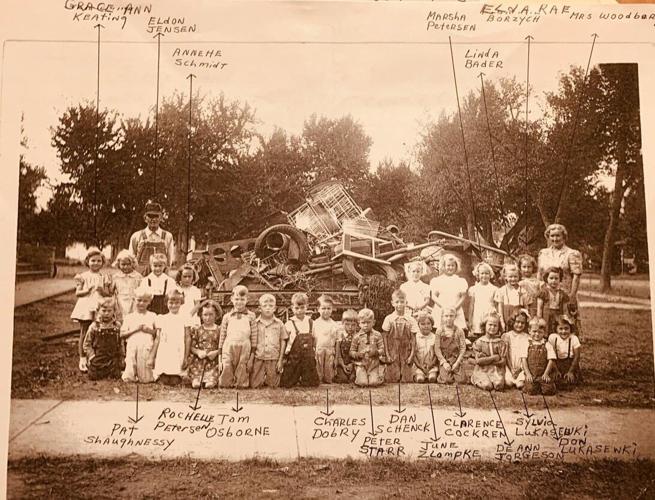
Children pose in front of a pile of scrap metal in St. Paul, Nebraska, in 1942 — including a youthful Tom Osborne, fifth from left in the front row. (If you ever wondered when the first photo of the Nebraska legend ran in a newspaper, this was it.)
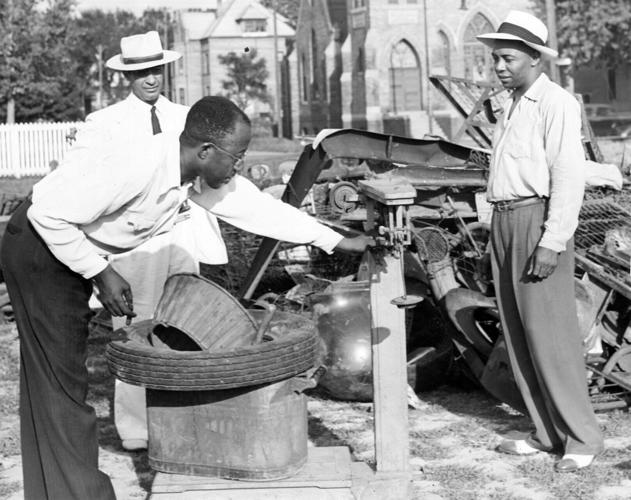
Besides promoting the statewide scrap drive, The World-Herald contributed 22 cast iron torches that had been decorating its building at 15th and Farnam Streets. The total contribution was 11,000 pounds.
The Victory ’95 committee commissioned this painting by artist Michael Hagel to honor Nebraskans’ contributions to winning World War II — including the 1942 scrap drive, which began in Nebraska and expanded nationwide.
Urging participation in the scrap metal and rubber salvage campaign, this large sign was painted on one of the signboards atop the Patterson building, 17th and Farnam Streets, on July 26, 1942.
Besides promoting the statewide scrap drive, The World-Herald contributed 22 cast iron torches that had been decorating its building at 15th and Farnam Streets. The total contribution was 11,000 pounds.
The Union Pacific railroad boosted the scrap metal drive by sponsoring a salvage rally at city auditorium on July 13, 1942. The price of admission was a scrap-metal donation.
Children pose in front of a pile of scrap metal in St. Paul, Nebraska, in 1942 — including a youthful Tom Osborne, fifth from left in the front row. (If you ever wondered when the first photo of the Nebraska legend ran in a newspaper, this was it.)
Omaha's "Scrap Mountain" at 11th and Jackson Streets on July 25, 1942, one week into the summer scrap drive. The pile would grow to more than 10 times this size by the end of the contest.