MEAD — Honey bees will fly miles seeking clumps of Dutch clover in a pasture or the yellow flowers of wild mustard in a roadside ditch, sources of nectar and pollen that grow plentiful in eastern Nebraska.
The people who live in Mead noticed something was changing in their environment. But it would take time and persistence to pinpoint what was wiping out bee colonies, sickening animals and potentially causing health issues for residents.
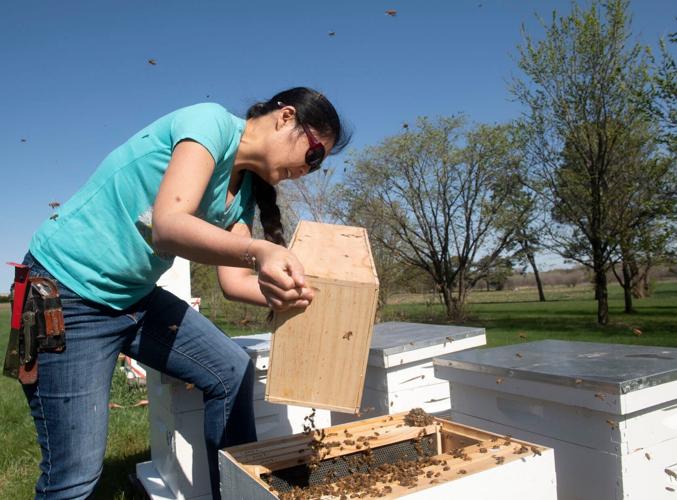
Wu-Smart hopes the bees placed at UNL’s agricultural research station south of Mead will lead researchers to pesticide hot spots near the former AltEn ethanol plant.
Judy Wu-Smart, University of Nebraska-Lincoln assistant professor and extension specialist, works with bees this spring as part of a massive research study to monitor the effects of a toxic ethanol plant near Mead over the next decade.
Judy Wu-Smart hopes the bees placed at UNL’s agricultural research station south of Mead will lead researchers to pesticide hot spots near the former AltEn ethanol plant.
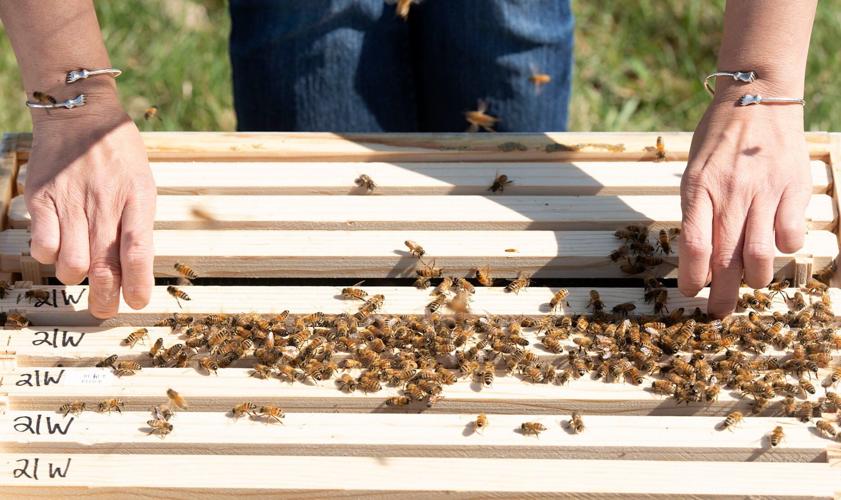
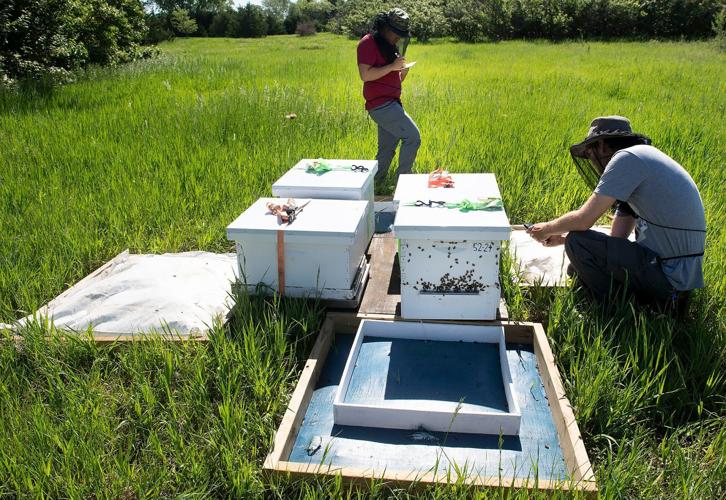
Insect science major Luke Norris (right) uses an app to record the weight of hives at the Eastern Nebraska Research and Extension Center's Bee Lab as fellow student Earl Agpawa takes notes before the pair collect dead bees in late May.
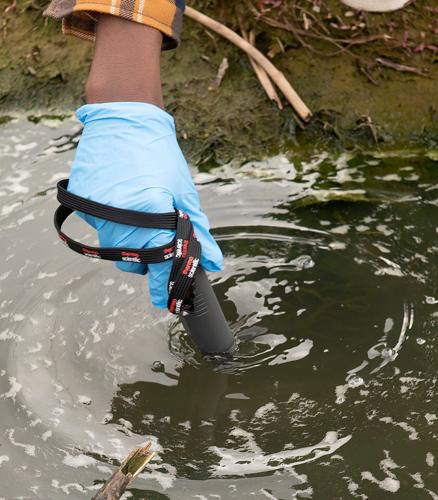
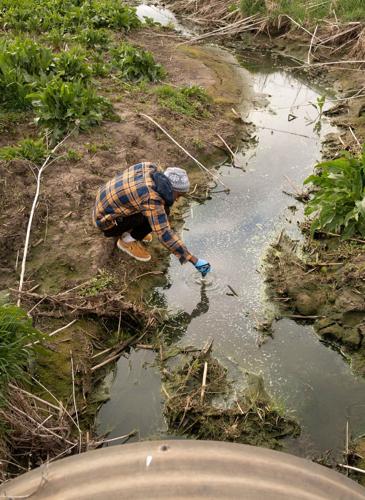
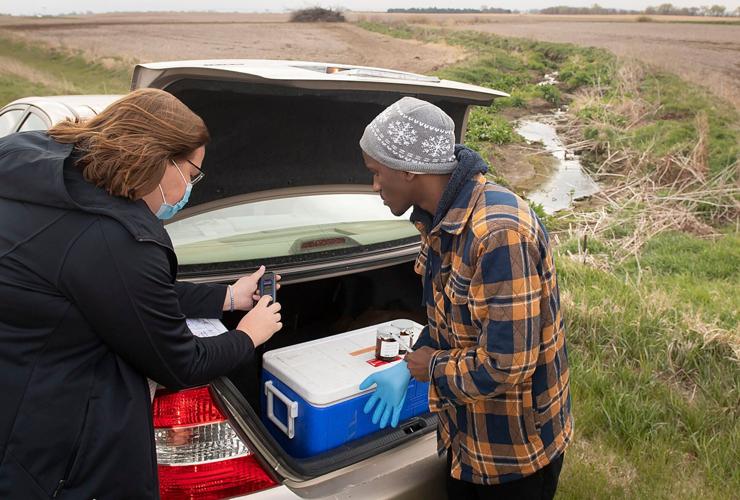
UNL professor Shannon Bartelt-Hunt (left) and student Patrick Niyitugize prepare to test the pH, temperature and conductivity of water in a drainage ditch east of AltEn near Mead on April 23.
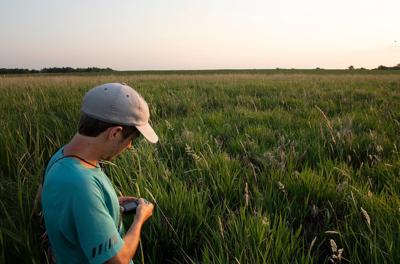
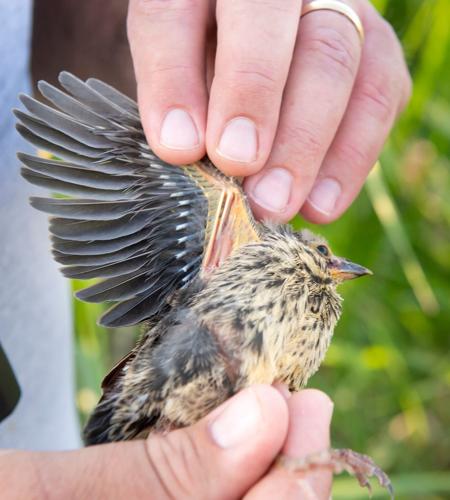
Larkin Powell, UNL professor of conservation biology, estimates the age of a fledgling red-winged blackbird on June 17. Tracking the birds and their offspring may help show the pesticides moving through the ecosystem.
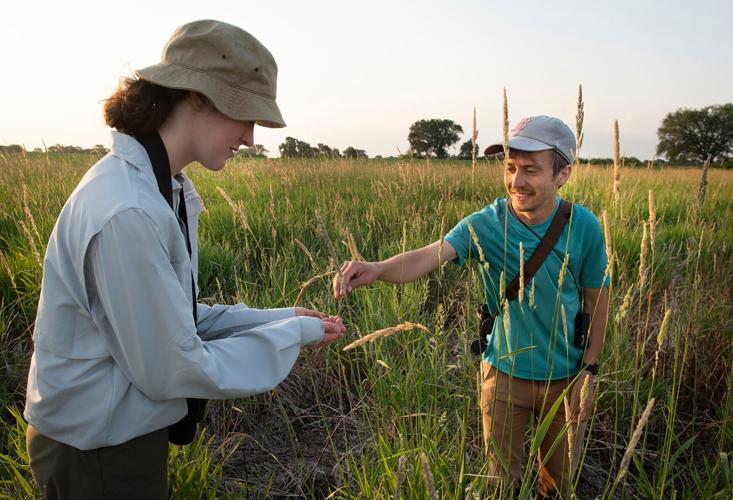
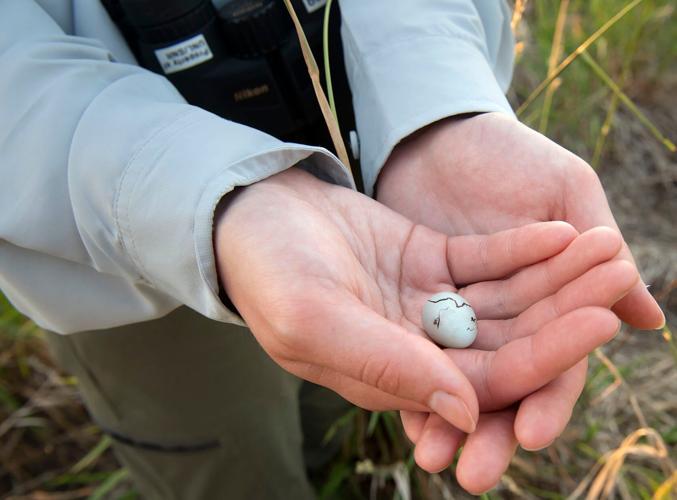
Ian Hoppe (right), a University of Nebraska-Lincoln graduate student studying applied ecology, hands a red-winged blackbird egg to Callie McCright, a UNL undergraduate studying environmental science in fisheries and wildlife, as the pair collect information on the newly discovered nest on June 17 near Mead.
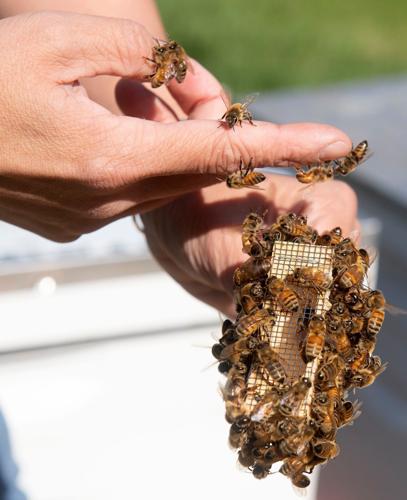
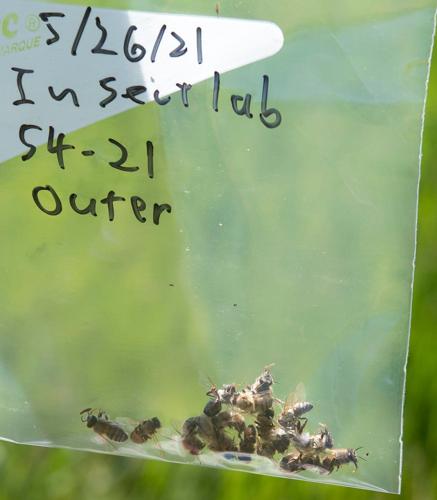
Dead bees from hives are collected and labeled. Bees are used as a bioindicator species meaning they can help monitor the spread of pollution in the environment.
The Department of Environment and Energy ordered AltEn Ethanol near Mead to shut down in early February, dispose of millions of gallons of contaminated wastewater on the site and repair lagoons in violation of state regulations.
JUSTIN WAN, Journal Star file photo
AltEn Ethanol, 2.4
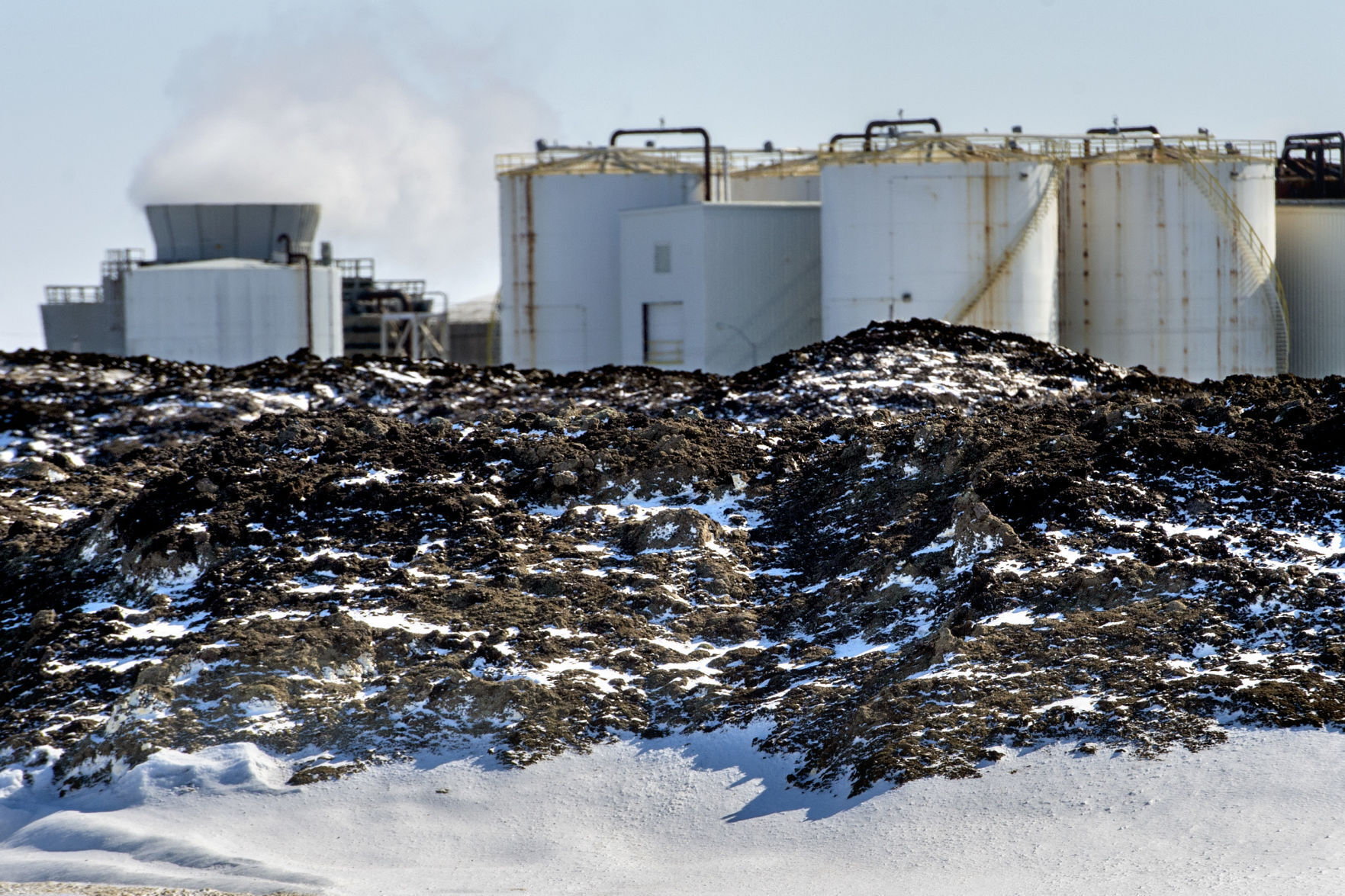
Unlike other ethanol plants, AltEn used treated seed instead of harvested grain for its fuel production. The byproduct from that process and wastewater near the plant have been found to carry levels of pesticides and fungicides above limits set by the Environmental Protection Agency.
JUSTIN WAN, Journal Star file photo
AltEn Ethanol, 2.4
AltEn Ethanol has been the subject of dozens of complaints since it reopened near Mead in 2015 related to an odor coming from the byproduct of its ethanol process, seen here at the beginning of the month. The byproduct has been found to carry levels of pesticides and fungicides above limits set by the Environmental Protection Agency.
JUSTIN WAN, Journal Star
AltEn Ethanol, 2.4
AltEn ethanol plant is seen in this photo, Thursday, Feb. 4, 2021.
JUSTIN WAN, Journal Star
AltEn Ethanol, 2.4
AltEn shut down its operations on Feb. 8 after an order by the Nebraska Department of Environment and Energy. The state found three lagoons on the site were contaminated, badly damaged and holding more wastewater than permitted.
JUSTIN WAN, Journal Star
AltEn Ethanol, 2.4
AltEn is unique among ethanol plants in that it uses seeds pre-treated with pesticides to produce ethanol instead of harvested grain. It ceased operation on Feb. 8 after a state order.
JUSTIN WAN, Journal Star
Mead, 2.4
MEAD, NEB. - 02/04/2021 - A view of Mead, including the grain elevators with Frontier Cooperative, Thursday, Feb. 4, 2021. JUSTIN WAN, Journal Star
JUSTIN WAN Journal Star
AltEn Ethanol, 2.4
AltEn Ethanol has been the subject of dozens of complaints since it reopened near Mead in 2015 related to an odor coming from the byproduct of its ethanol process. The byproduct has been found to carry levels of pesticides and fungicides above limits set by the Environmental Protection Agency.
JUSTIN WAN, Journal Star
Mead AltEn Ethanol plant leak
A pipe burst on a 4 million-gallon digester tank at the AltEn Ethanol plant near Mead late last week, releasing waste material into the waterways and culverts more than 4 miles from the plant, according to the Nebraska Department of Environment and Energy.
Nebraska Department of Environment and Energy
Mead AltEn Ethanol plant leak
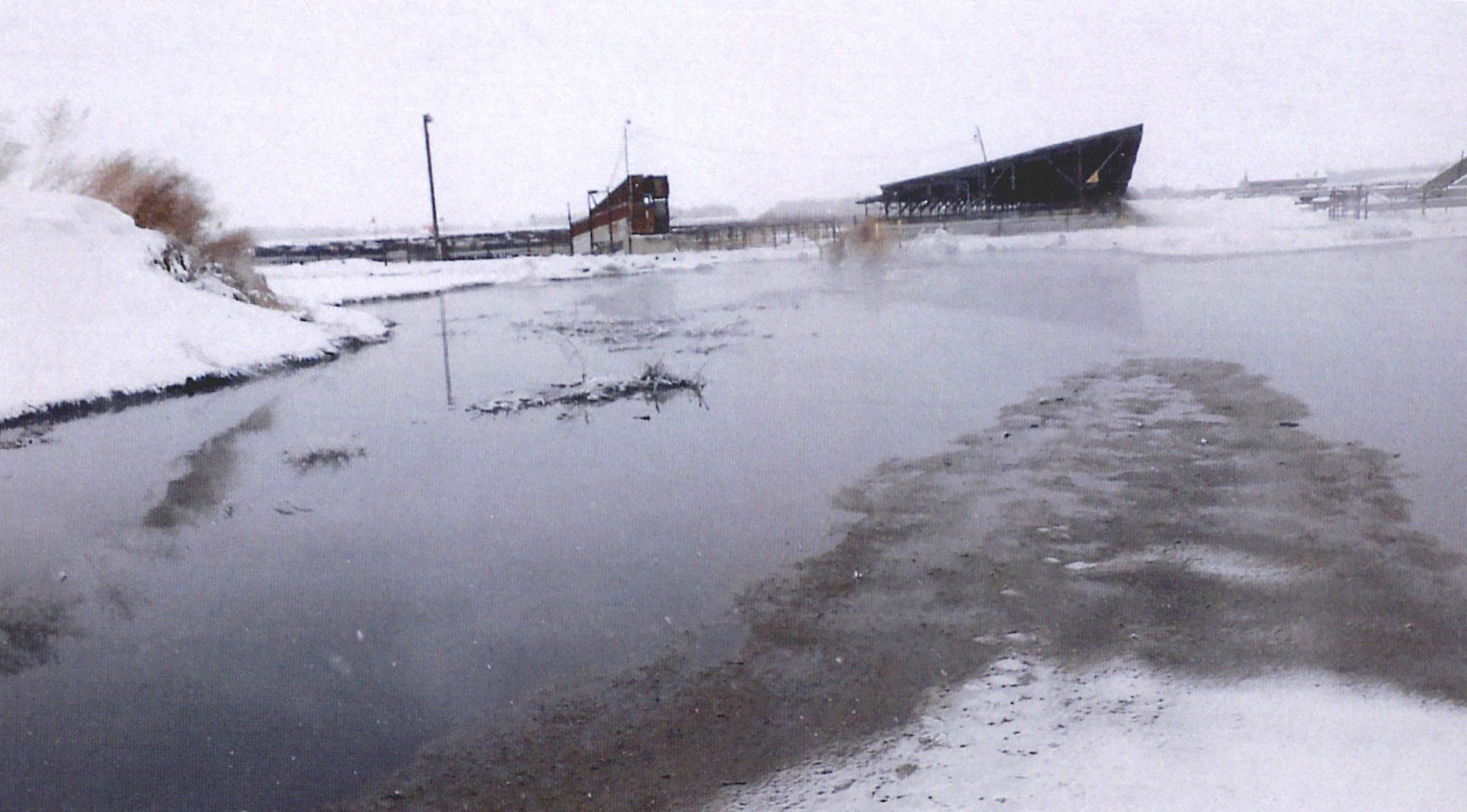
A notification of environmental concern inspection report from Feb. 12, 2021, noted "flow, dark water and odor," in water pictured on University of Nebraska-Lincoln property. A pipe burst on a 4 million-gallon digester tank at the AltEn Ethanol plant near Mead late last week, releasing waste material into the waterways and culverts more than 4 miles from the plant, according to the Nebraska Department of Environment and Energy,
Nebraska Department of Environment and Energy
Mead AltEn Ethanol plant leak
University of Nebraska-Lincoln personnel using a backhoe to place bales and plastic to dam the culvert on UNL property near Mead after a pipe burst on a 4 million-gallon digester tank at the AltEn Ethanol plant late last week, releasing waste material into the waterways and culverts more than 4 miles from the plant, according to the Nebraska Department of Environment and Energy.
Nebraska Department of Environment and Energy
Mead AltEn Ethanol plant leak
A notification of environmental concern inspection report from Feb. 12 noted "flow, dark water and odor," in water pictured on UNL property after a pipe burst on a 4 million-gallon digester tank at AltEn Ethanol near Mead, releasing waste material into the waterways and culverts more than 4 miles from the plant, according to the Nebraska Department of Environment and Energy.
Nebraska Department of Environment and Energy
Mead AltEn Ethanol plant leak
Water pools west of the leaking digester at Mead AltEn Ethanol on Feb. 12 after a pipe burst on a 4 million-gallon digester tank late last week, releasing waste material into the waterways and culverts more than 4 miles from the plant, according to the Nebraska Department of Environment and Energy.
Nebraska Department of Environment and Energy
Mead AltEn Ethanol plant leak
A depth finder measures flow from a leak on Feb. 12 after a pipe burst on a 4 million-gallon digester tank at AltEn Ethanol near Mead late last week, releasing waste material into the waterways and culverts more than 4 miles from the plant, according to the Nebraska Department of Environment and Energy.
Nebraska Department of Environment and Energy
Mead AltEn Ethanol plant leak
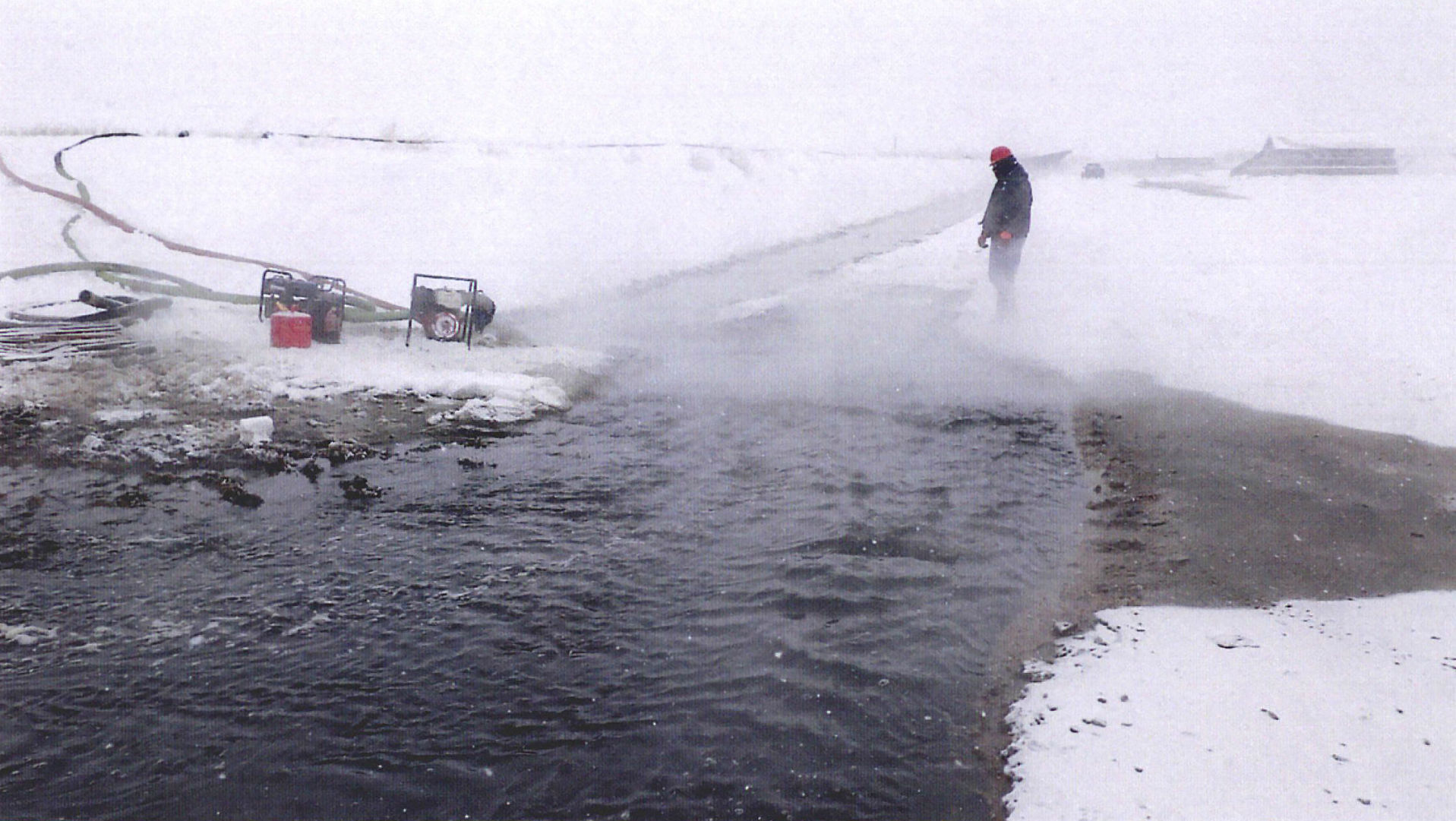
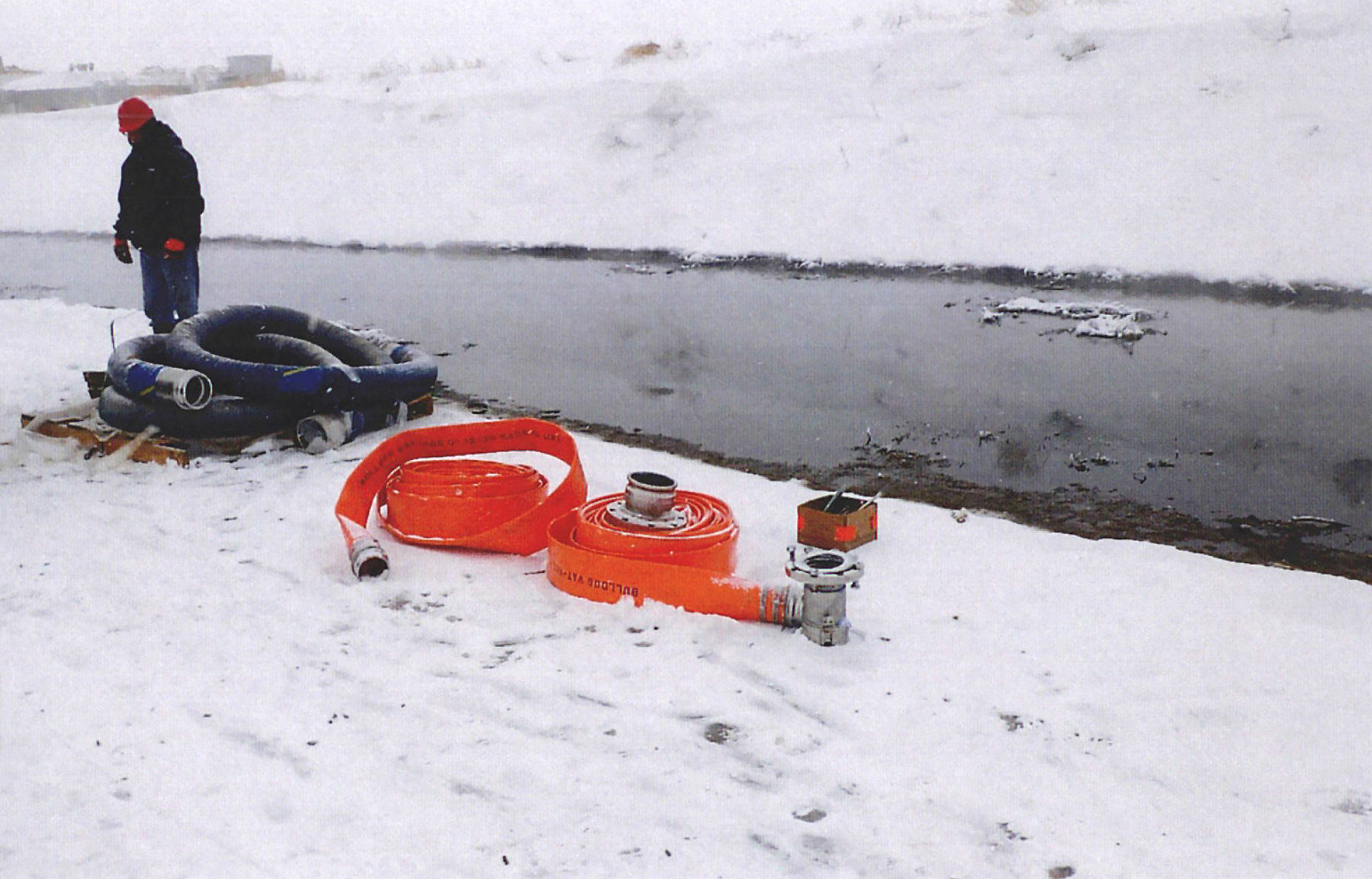
Mead AltEn Ethanol employees use trash pumps to transport water into an emergency lagoon on Feb. 12. A pipe burst on a 4 million-gallon digester tank at the plant late last week, releasing waste material into the waterways and culverts more than 4 miles from the plant, according to the Nebraska Department of Environment and Energy.
Nebraska Department of Environment and Energy
Mead AltEn Ethanol plant leak
Mead AltEn Ethanol employees work to install a trash pump to transport water into an emergency lagoon on Feb. 12. A pipe burst on a 4 million-gallon digester tank at the plant late last week, releasing waste material into the waterways and culverts more than 4 miles from the plant, according to the Nebraska Department of Environment and Energy.
Nebraska Department of Environment and Energy
Mead AltEn Ethanol plant leak
Water exits the damaged area (blue arrow) of a 4 million-gallon digester tank at AltEn Ethanol near Mead on Feb. 12, releasing waste material into the waterways and culverts more than 4 miles from the plant, according to the Nebraska Department of Environment and Energy.
Nebraska Department of Environment and Energy
AltEn Ethanol cleanup
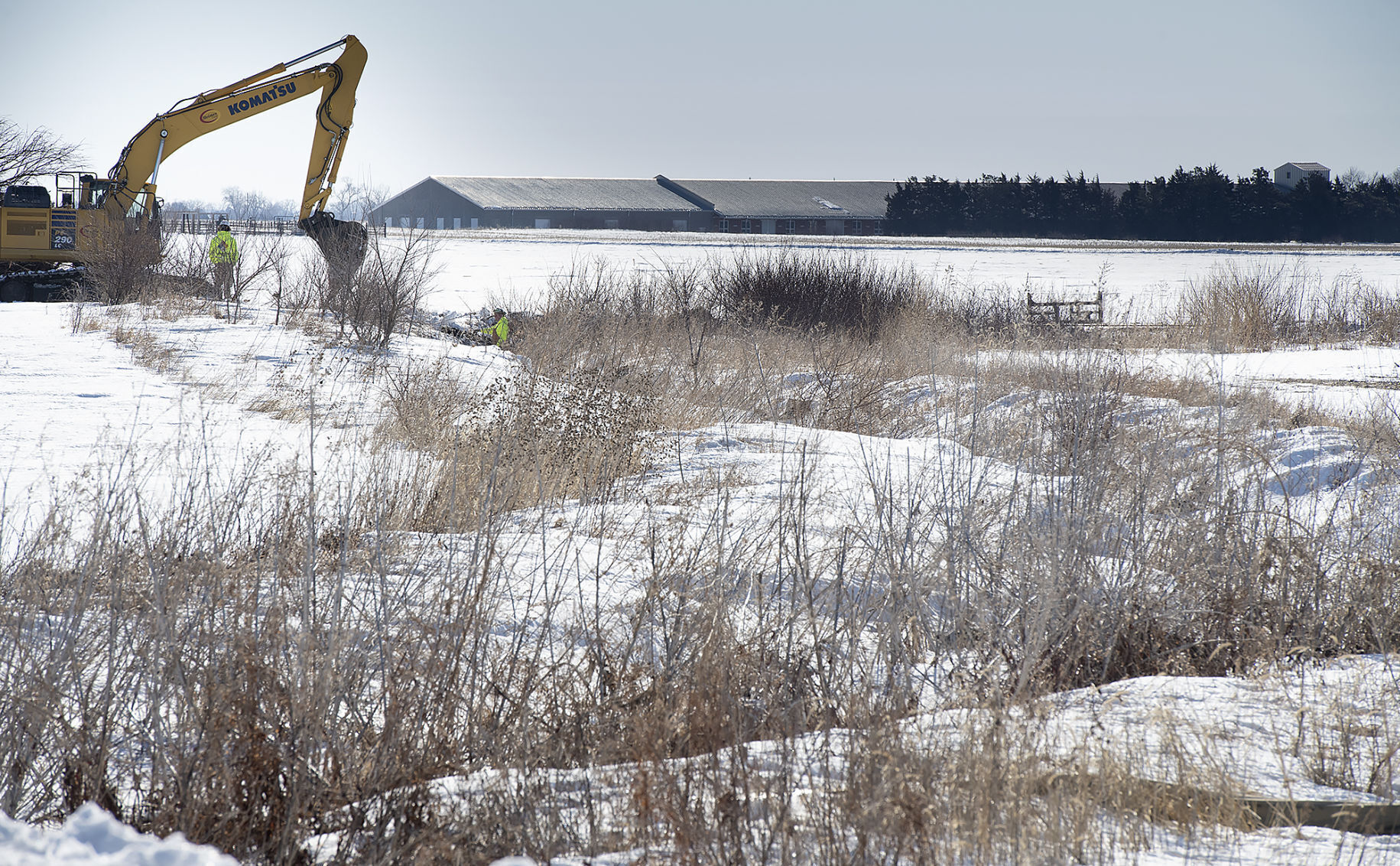
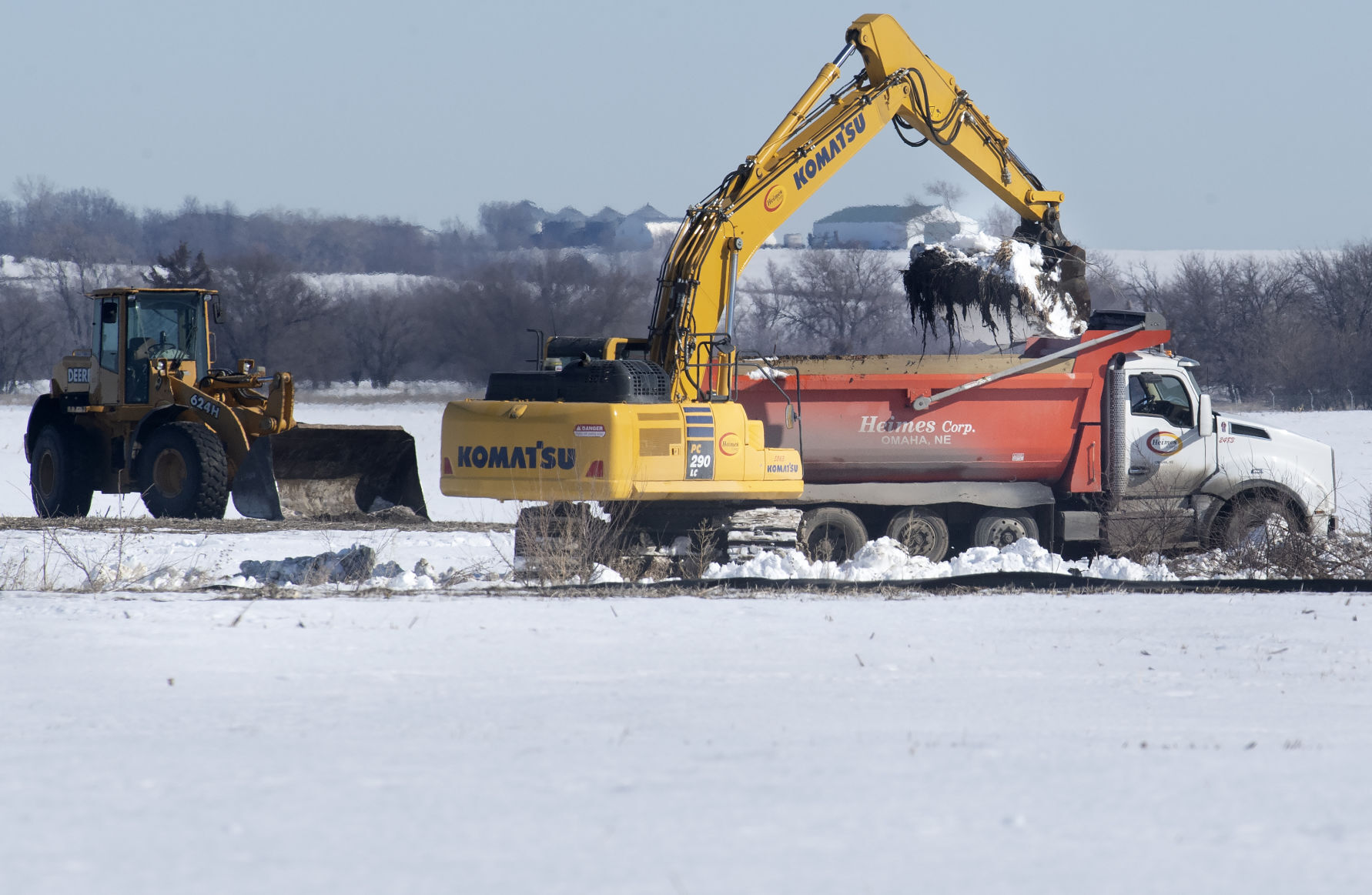
A crew works to remove waste material from a culvert southeast of AltEn Ethanol on Tuesday in Saunders County.
GWYNETH ROBERTS, Journal Star
Saunders County Board of Supervisors
Saunders County Supervisors David Lutton (from left), Doris Karloff and Craig Breunig listen to Saunders County Attorney Joe Dobesh (not seen) speak about communications with state officials about AltEn Ethanol in February in Wahoo.
GWYNETH ROBERTS, Journal Star file photo
AltEn Ethanol cleanup
An earthen dam blocks the flow of waste material in a waterway southeast of AltEn Ethanol last week in Saunders County.
GWYNETH ROBERTS, Journal Star
Saunders County Board of Supervisors
Saunders County Attorney Joe Dobesh talks about his communication with state officials about AltEn Ethanol at a Saunders County Board of Supervisors meeting in late February in Wahoo.
GWYNETH ROBERTS, Journal Star file photo
AltEn Ethanol cleanup
A crew works to remove waste material from a culvert southeast of AltEn Ethanol on Tuesday in Saunders County.
GWYNETH ROBERTS, Journhttps://leemun-tcmsv2.leeent.net/lincoln.local/content/tncms/assets/v3/editorial/9/09/9092f903-80e4-5f8e-a0c9-828b1a4e95e5/60355b41dcca3.image.jpgal Star
Saunders County Board of Supervisors
The Saunders County Board of Supervisors listens to Saunders County Attorney Joe Dobesh (not pictured) speak about communications with state officials about AltEn Ethanol on Tuesday during the board's meeting in Wahoo.
GWYNETH ROBERTS, Journal Star
AltEn Ethanol cleanup
A crew works to remove waste material from a culvert southeast of AltEn Ethanol on Tuesday in Saunders County.
GWYNETH ROBERTS, Journal Star
Saunders County Board of Supervisors
Saunders County Supervisors David Lutton, Doris Karloff and Craig Breunig listen to Saunders County Attorney Joe Dobesh speaks about communications with state officials about AltEn Ethanol on Tuesday during the board's meeting in Wahoo.
GWYNETH ROBERTS, Journal Star
AltEn aerial
The AltEn plant near Mead, which the state shut down earlier this year, is shown on Aug. 25. Along with the toxic solids spread on land surrounding the site, the environmental cleanup is also focused on removing pesticides from wastewater on the site.
Silver Lab Productions, For the Journal Star
Wet cake in field
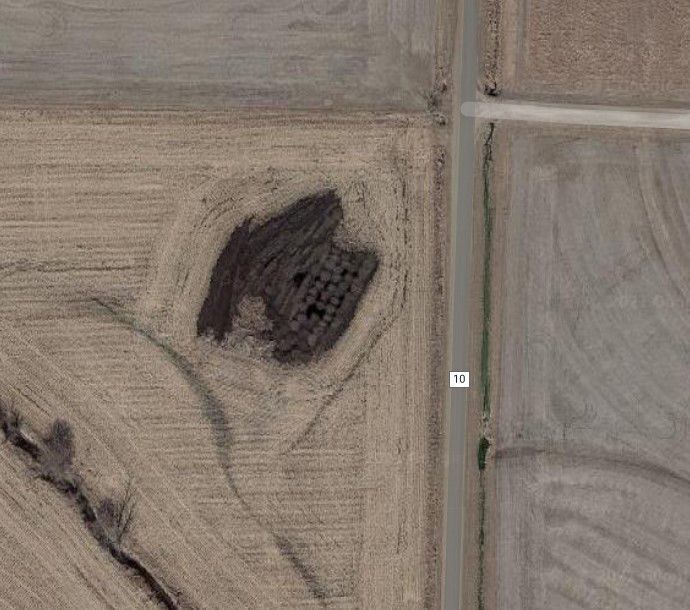
This 2021 Google Maps image shows a location north of Mead where AltEn's distiller's grains were stockpiled in a cornfield.
Google Maps
Mead Tour, 7.8
Curtis Pearson of Mead talks Thursday during a meeting at Mead Covenant Church about the troubled AltEn ethanol plant near the town.
JUSTIN WAN, Journal Star
Mead Tour, 7.8
Stan Keiser talks Thursday during a meeting at Mead Covenant Church about the troubled AltEn ethanol plant near the town.
Judy Wu-Smart, University of Nebraska-Lincoln assistant professor and extension specialist, works with bees this spring as part of a massive research study to monitor the effects of a toxic ethanol plant near Mead over the next decade.
Judy Wu-Smart hopes the bees placed at UNL’s agricultural research station south of Mead will lead researchers to pesticide hot spots near the former AltEn ethanol plant.
Wu-Smart hopes the bees placed at UNL’s agricultural research station south of Mead will lead researchers to pesticide hot spots near the former AltEn ethanol plant.
Larkin Powell, UNL professor of conservation biology, estimates the age of a fledgling red-winged blackbird on June 17. Tracking the birds and their offspring may help show the pesticides moving through the ecosystem.
UNL professor Shannon Bartelt-Hunt (left) and student Patrick Niyitugize prepare to test the pH, temperature and conductivity of water in a drainage ditch east of AltEn near Mead on April 23.
Ian Hoppe (right), a University of Nebraska-Lincoln graduate student studying applied ecology, hands a red-winged blackbird egg to Callie McCright, a UNL undergraduate studying environmental science in fisheries and wildlife, as the pair collect information on the newly discovered nest on June 17 near Mead.
Insect science major Luke Norris (right) uses an app to record the weight of hives at the Eastern Nebraska Research and Extension Center's Bee Lab as fellow student Earl Agpawa takes notes before the pair collect dead bees in late May.
Dead bees from hives are collected and labeled. Bees are used as a bioindicator species meaning they can help monitor the spread of pollution in the environment.