
Bryan Telemedicine
Kayla Northup's family is pretty healthy, but when her kids do get sick, it's often at an inconvenient time, such as on a vacation.
That's why she likes having the option of setting up a telehealth visit instead of going to an urgent care clinic or the emergency room.

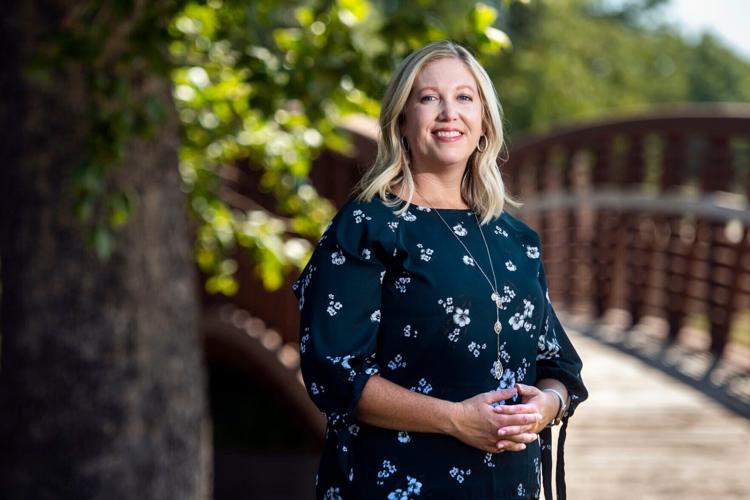
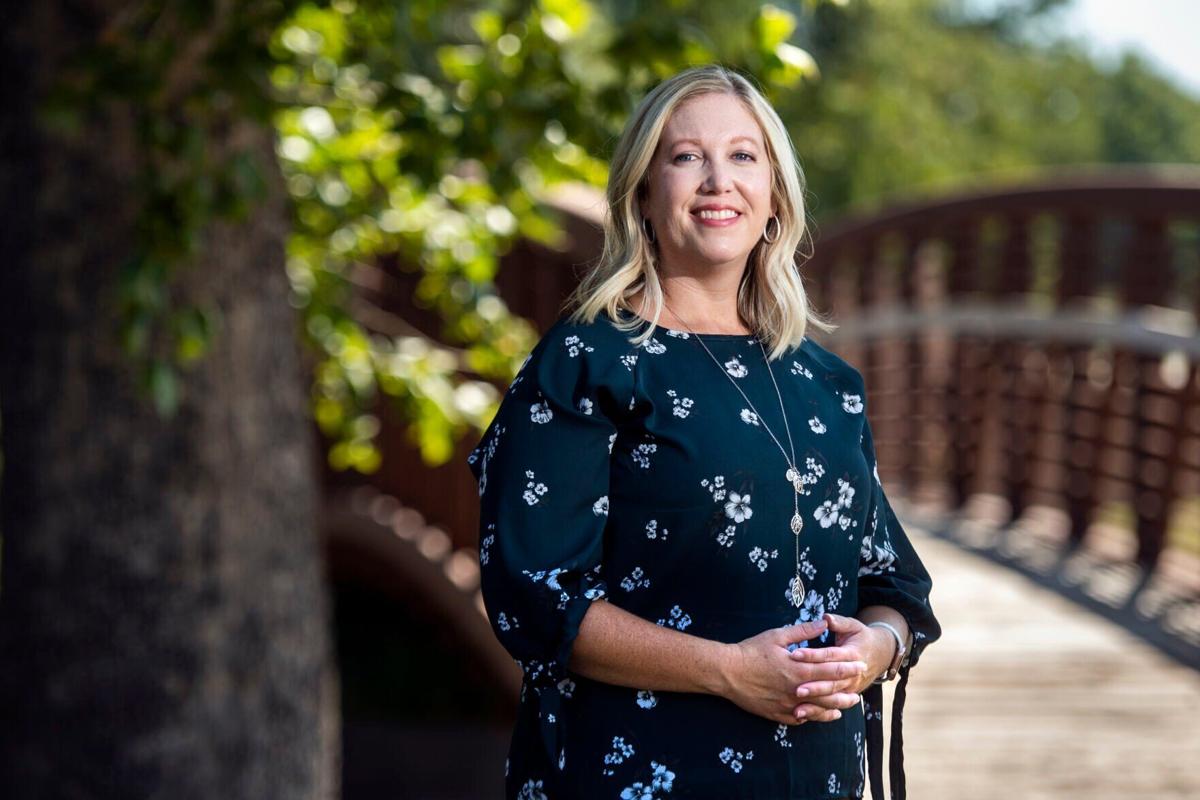
Kayla Northup
Northup said she also sometimes uses telehealth when she's in town and could go into the doctor's office, because she likes the convenience, especially when she has a good idea of what's ailing her or one of her kids.
"It's faster and easier and, honestly, cheaper," the Lincoln woman said, noting that on her high-deductible health insurance plan, telehealth visits usually cost half as much as a traditional office visit.
Telehealth, whether done over the phone or via videoconferencing, has been around for several years, although it never really caught on as a regular practice before the coronavirus pandemic. But the pandemic changed the game, causing a rapid increase in its use, with some health care providers transitioning from barely using it to employing it exclusively.
People are also reading…
A study done last year by the U.S. Department of Health and Human Services found that the share of Medicare visits conducted through telehealth grew from approximately 840,000 in 2019 to 52.7 million in 2020, a 63-fold increase.
However, that same study showed that Nebraska was among the five states with the lowest increase in telehealth use. In 2020, only Tennessee had a lower percentage of Medicare visits via telehealth than Nebraska's 2.9%.
That could have to do with Nebraska's largely rural population, because the study showed that telehealth adoption has lagged in rural states. But that doesn't mean health care systems and providers in Nebraska haven't embraced telehealth.
Nebraska Medicine in Omaha is a perfect example. In its 2018 and 2019 fiscal years combined, it did less than 3,500 telehealth visits. That jumped to more than 47,000 in fiscal year 2020 and grew to more than 100,000 in both fiscal 2021 and 2022.
"There was a rapid adoption of telehealth during the pandemic," said David Cloyed, applications director of Connected Health at Nebraska Medicine.
The necessity of switching to telemedicine in the early months of the pandemic to protect the health of patients and providers certainly drove up adoption, but other changes helped, Cloyed said, including a federal law that required health insurers to cover telemedicine visits the same as a regular visit while emergency health measures were in place.
Blue Cross Blue Shield of Nebraska, the state's largest health insurer, said it saw telehealth use increase 1,000% in March 2020 and 4,000% in April 2020, compared with February of that year.
That increased pandemic usage spurred it to process more than 150,000 telehealth claims in 2020, up from a little more than 1,600 in 2019. That number dropped to 110,000 in 2021 but has stayed relatively consistent at about 9,000 a month into the first half of this year.
The Nebraska Legislature last year also made changes to ensure people can receive telemedicine services in their home and that they can do so with verbal rather than written consent.
Jill Hull, executive director of operations for Bryan Telemedicine & Teledigm Health, said that in addition to forcing providers to use telemedicine, the pandemic also helped to show to patients, providers and regulators that the technology works.
"I think what COVID's done is it has increased confidence in the care that can be provided," she said.
Hull's job is focused on facilitating telehealth throughout the Bryan system and with partner hospitals rather than between providers and patients, so that's where she's seen the greatest effects.
For example, she said, increased use of telehealth has allowed Bryan specialists to greatly increase the number of patients they see in smaller communities.
Pulmonology is a good example of that.
Before the pandemic, Bryan offered acute care pulmonary services in just three hospitals outside of Lincoln and non-acute outpatient care at six clinics. Thanks to expanded use of telehealth services, Bryan now works with 10 additional hospitals in Nebraska and one in Iowa in offering acute care and now has 13 total outpatient clinics in Nebraska and one in Iowa.
Bryan's telemedicine program recently won a national award, the 2022 Teladoc Transformational Leadership award, for its work with rural hospitals to provide specialty care, outpatient care and support services that would otherwise be unavailable.
“Our specialists are available right in the patient’s room when they’re most needed,” said Dr. Brian Bossard, president and CEO of Bryan Telemedicine and Teledigm Health. “Patients in rural facilities can receive the same state-of- the-art care as someone in Lincoln or Omaha because they have immediate access to some of the top specialists in the country.”
A number of Nebraska health systems have used telehealth in various ways to expand and transform how they deliver care.
CHI Health now offers virtual care 24 hours a day and is planning to incorporate an area at its new CHI Family Health Center being built at 40th Street and Yankee Hill Road where patients can drive up to access a test or vaccine that they order online, said spokeswoman Taylor Miller.
At Nebraska Medicine, there is now a virtual waiting room in the emergency department where people can speak with a doctor via computer, something that can help speed up the process of receiving care and being admitted to the hospital.
Charity Swain, Nebraska Medicine's telehealth programs coordinator, said that though virtual visits can be utilized in any health care setting, some medical specialties are better suited to telehealth visits than others. Among the ones she mentioned are bariatrics, endocrinology and dermatology.
Telehealth services have also expanded in behavioral health.
A study by the Kaiser Family Foundation found that telehealth use in behavioral health has remained high, even as the overall use of the technology has waned since the early days of the pandemic.
According to the study, 40% of mental health and substance abuse visits nationwide from March-August of 2020 were via telehealth, while 11% of all other outpatient visits were conducted over phone or computer. A year later, 36% of mental health visits were still being conducted via telehealth, but only 5% of other visits were done virtually.
At CHI Health, only about 5% of its total patient visits are now done virtually, but 30% of behavioral health visits are done over the internet, Miller said. That's down from a high of 88% of visits during the early months of the pandemic, but much higher than the 2% rate pre-COVID.
Blue Cross Blue Shield has seen behavioral health account for more and more of its telehealth claims as the pandemic has worn on. In 2020, 66% of its total telehealth claims processed were for behavioral health. That rose to 75% in 2021 and stands at 73% this year.
"Mental health is clearly an area where telehealth has been beneficial in helping patients get access to providers," said Dr. Josette Gordon-Simet, Blue Cross Blue Shield of Nebraska’s chief medical officer. "The pandemic has been hard on a lot of people, and we’re glad that we have been able to help people get the care they need.”
Telehealth has been a lifeline for people like Jessica Olson, who switched to doing her therapy appointments virtually during the early months of the pandemic. She now sees her therapist in person but does telehealth visits with the doctor who prescribes her medication because it is more convenient.
"My experiences with it have been great," the Lincoln woman said. "It saves me the gas and time of driving 25 minutes across town to my doctor ... and was great when avoiding public places during peak COVID times."
However, Olson said she still prefers the in-person experience over telehealth, even for her medication appointments.
"If the office was closer, I wouldn't use telehealth at all unless I really had to," she said.
It's consumers, people like Olson and Northup, who will ultimately decide how widely accepted telehealth becomes, experts say.
"Really what's driving a lot of the continued demand for this are patients," Cloyed said. "They continue to want to have access to their providers virtually."
Nebraska Medicine continues to see strong telehealth usage, with about 12%-15% of visits done virtually, Cloyed said.
One hurdle Nebraska Medicine particularly faces is providing virtual care outside of Nebraska.
With telehealth, regulators consider care to be given in the location where the patient is. That means if a provider does a virtual visit with someone from another state, the provider must be licensed in that state.
At Nebraska Medicine, about 6%-7% of patients are from Iowa, and it also sees patients from other states, including Missouri and Kansas.
Licensing doctors, physician's assistants and other care providers in those states is not easy or cheap, often costing hundreds of dollars and taking months to complete, Cloyed said.
Another issue is insurance reimbursement.
When public health emergencies were in place, health insurance companies were required to cover telehealth visits "at parity" with in-person visits, meaning they reimbursed the same amount or percentage of costs.
But Nebraska's public health emergency was rescinded more than a year ago, and some insurers have since reduced what they pay for telehealth visits.
That reimbursement disparity can lead health systems and providers to rethink how and when they provide telehealth.
"If reimbursement is in question, then health systems are not going to want to invest in telehealth," said Dr. Leslie Eiland, an endocrinologist at Nebraska Medicine.
Northup, who works as an employee benefits manager, said she believes most health insurance companies are supportive of expanded use of telehealth and see the value of it in some settings.
"I think there is a strong push and incentive to use telehealth for the things that are appropriate," she said.
Gordon-Simet echoed that sentiment.
“When it is medically appropriate, we still want to continue to give patients a telehealth option," she said.
Reach the writer at 402-473-2647 or molberding@journalstar.com.
On Twitter @LincolnBizBuzz.