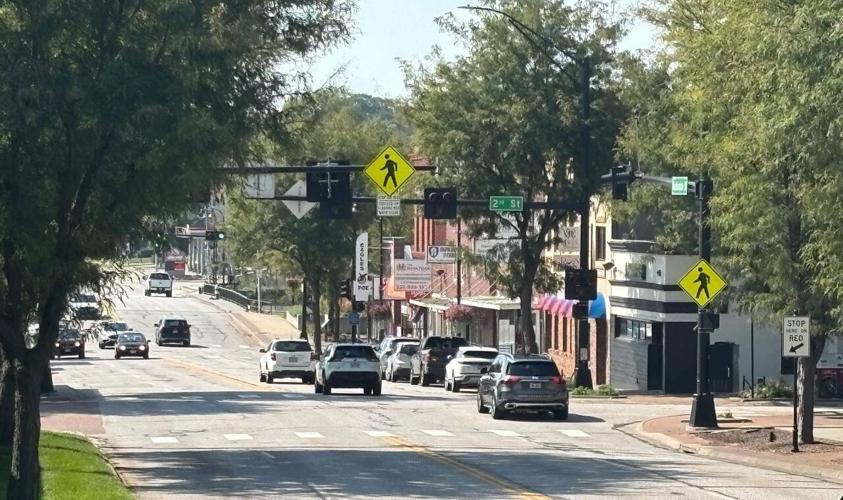
A picturesque relief from the usual monotony of inland towns. Rapidly growing in favor as a suburban residence.

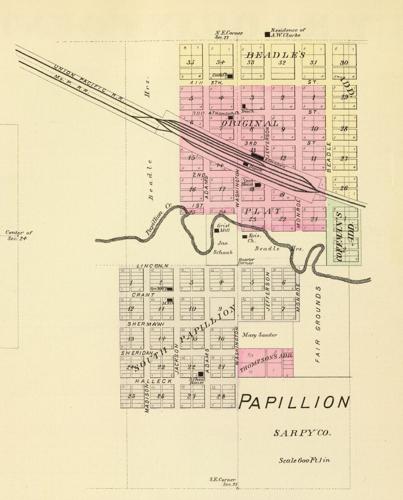
An 1885 Everts and Kirk plat map of Papillion.
PUBLIC DOMAINPeople are also reading…
- Western Nebraska Football Top 5s
- Aristh Rodriguez-Linares found guilty of manslaughter Wednesday in Dawson County District Court
- Dan Osborn staffers infiltrated small Nebraska political party and tried to dissolve it
- Lady Swedes softball drops season opener to McCook
- Livin’ Out Loud goes on despite storm damage
- Douglas County dismisses misdemeanor charges against Bellevue police officer
- Former NU regent sentenced to year in prison after DUI crash causing serious injury
- Volleyball top returners and key departures for Dawson County high school teams
- LRHC’s Lehmann receives 2026 Caring Kind Award at surprise event
- 'Took my breath away' — Elm Creek, nearby communities unite at vigil for 3 injured teens
- Local riders fare well at Cowboy Dressage Show in Lincoln
- Greyson Bjorkman powers Carpet Land to winning start at World Series
- Two arrested during electric scooter, bike 'takeover' in downtown Omaha
- Lexington softball drops home opener 12-0 to Aurora Thursday evening
- Sarah Neben: Pampered pooches

Washington (84th) Street in downtown Papillion is shown in 1967.
THE WORLD-HERALD
After the Union Pacific moved its main line to the north, Papillion's commuting connection to Omaha was with the Nebraska Traction and Power Company's Interurban streetcar railway from 1911 to 1926.
THE WORLD-HERALD

With its early 20th-century buildings, Washington (84th) Street remains a quaint part and a reminder of Papillion's past.
STU POSPISIL, THE WORLD-HERALD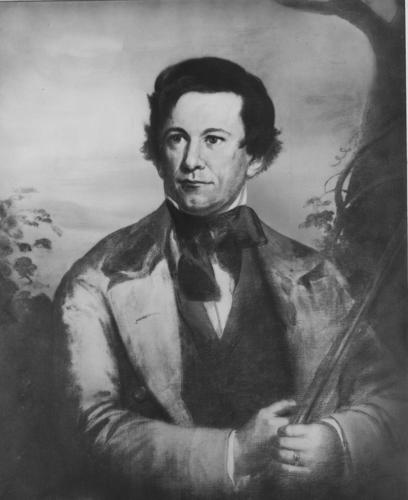
1857: Sarpy County, named for fur trader Peter A. Sarpy, was established by carving off a southern portion of Douglas County. Papillion was surveyed and platted, officially becoming a village in 1870, and replaced Bellevue as the county seat in 1875.
- THE WORLD-HERALD
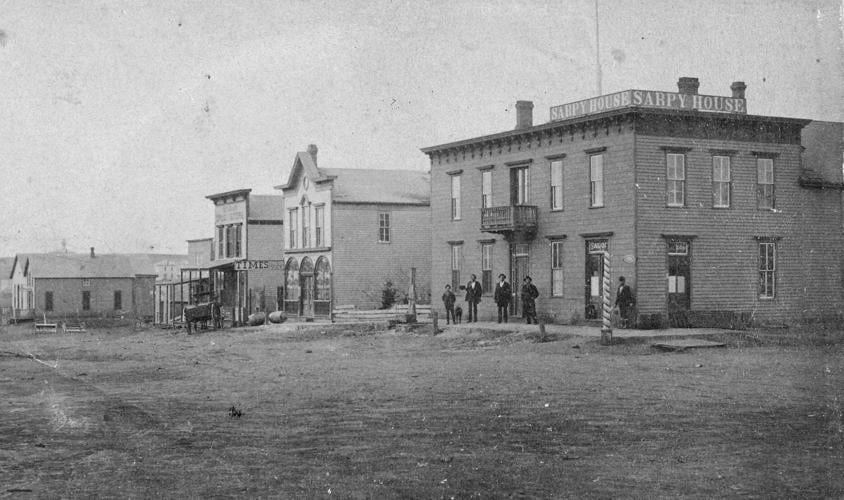
c. 1876: The Sarpy House Hotel was built in autumn of 1870 by John Eisele. After Papillion began using electric lights, Sarpy House owner R. E. Tallon was the first to apply them to advertising, installing a flashing sign on the corner of his building in 1911.
- PAPILLION AREA HISTORICAL SOCIETY
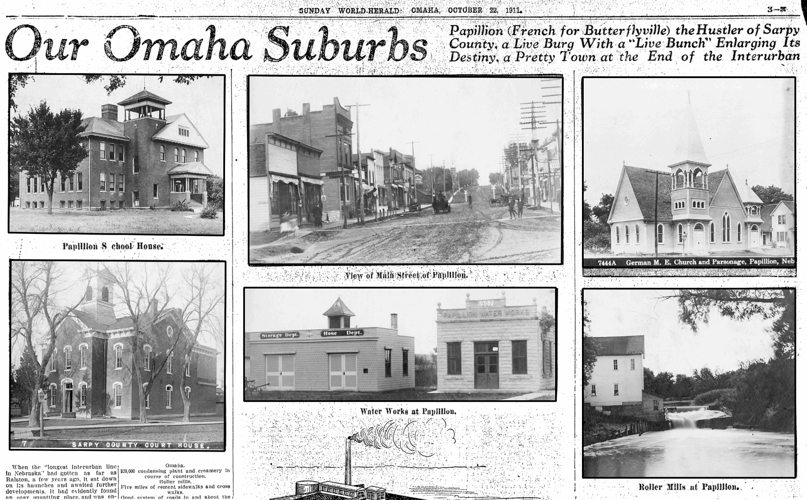
October 22, 1911: A snappy World-Herald headline dubs Papillion 'the Hustler of Sarpy County' and goes on to highlight some of the city's landmark sites as they appeared in the early 1900s. Clockwise from top left: Papillion School House; a view of Main Street; German Methodist Episcopal Church and Parsonage; Papillion Roller Mills; the recently installed waterworks system; the original Sarpy County Courthouse.
- THE WORLD-HERALD
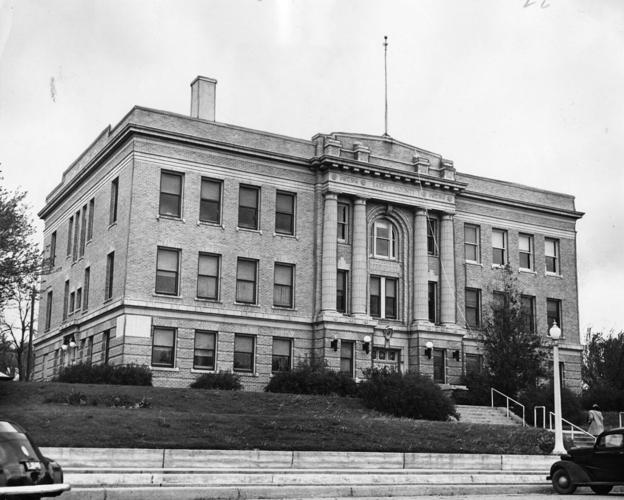
1945: Once a mecca for immediate midnight marriages, the Sarpy County Courthouse dropped from a record high of 1,796 marriage licenses issued in 1942 to a mere 98, after a 1943 Nebraska law was passed requiring couples to present a health certificate before being issued a license.
- THE WORLD-HERALD
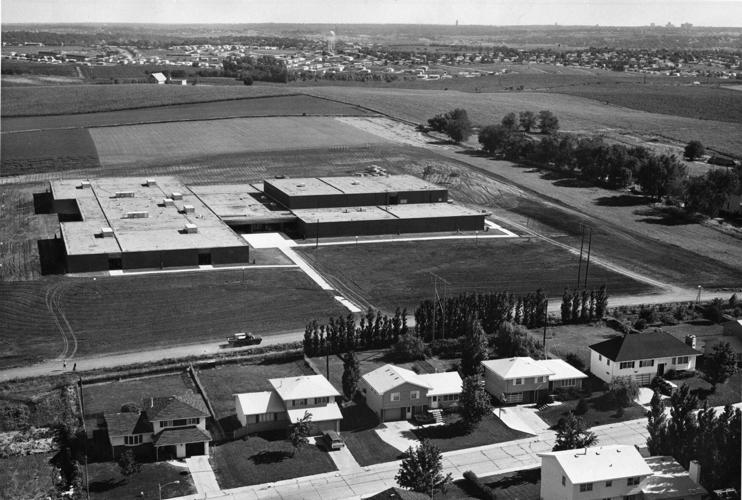
1971: An aerial view of the new Papillion High School, with Omaha and La Vista distantly visible in the background. The new high school served grades 9-12, and first-year attendance was estimated at around 1,000 students.
- ROBERT PASKACH/THE WORLD-HERALD
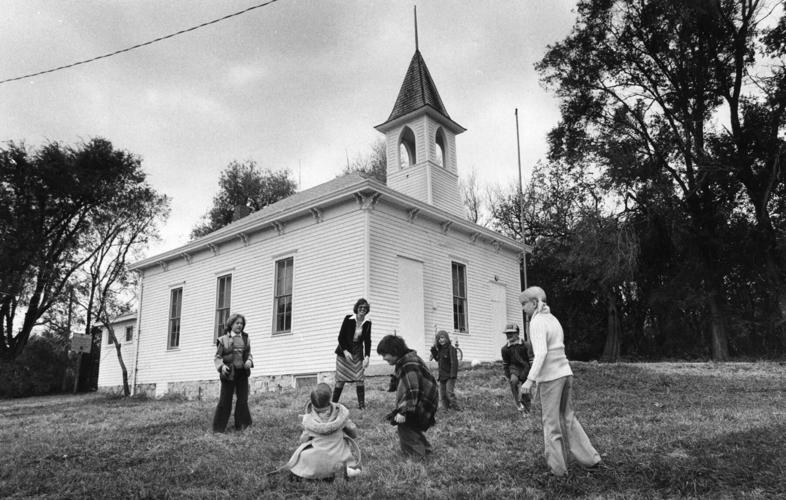
1978: Located on the edge of Papillion, the unincorporated town of Portal, Nebraska once supported a wooden one-room school house of three students. The building was eventually purchased and relocated downtown by the Papillion Area Historical society.
- RICH JANDA/THE WORLD-HERALD
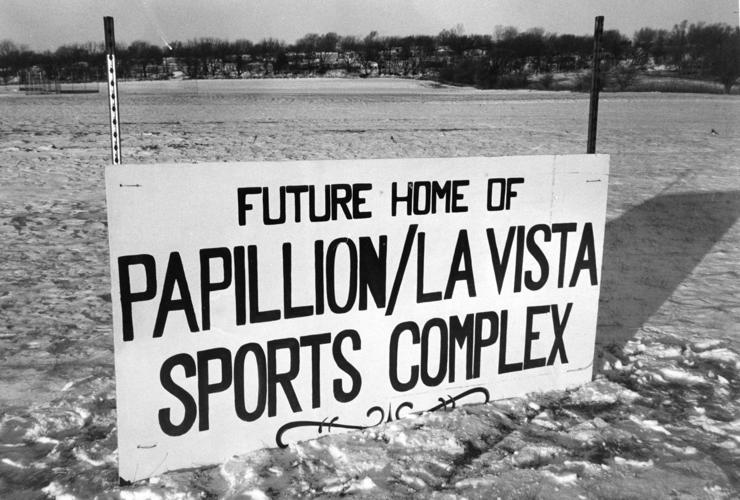
1985: A new sign appears indicating the future site of the La Vista sports center on 66th Street. Due to an ongoing debate over which city should come first when naming the joint project, it was assumed Papillionites had placed the sign as a practical joke. The complex was paid for by the city of La Vista, and continues to operate today as the La Vista Sports Complex.
- JAMES IVEY/THE WORLD-HERALD
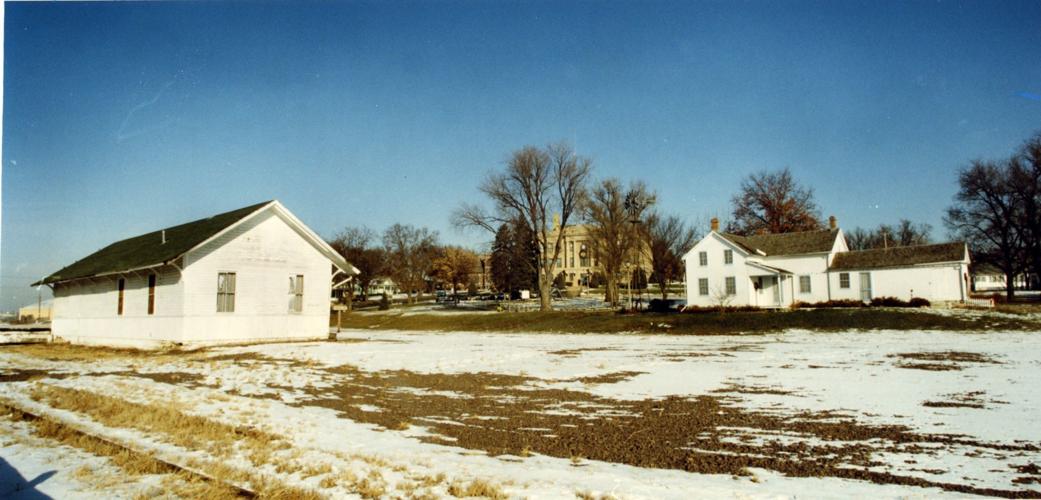
1993: The former Union Pacific train depot awaits its fate, despite a valiant petition effort to save it. Once acquired by Papillion City Council, the depot was eventually demolished and replaced by a new public library. Further back, historic Sautter Farmhouse and Papillion City Hall can be seen.
- RICH JANDA/THE WORLD-HERALD
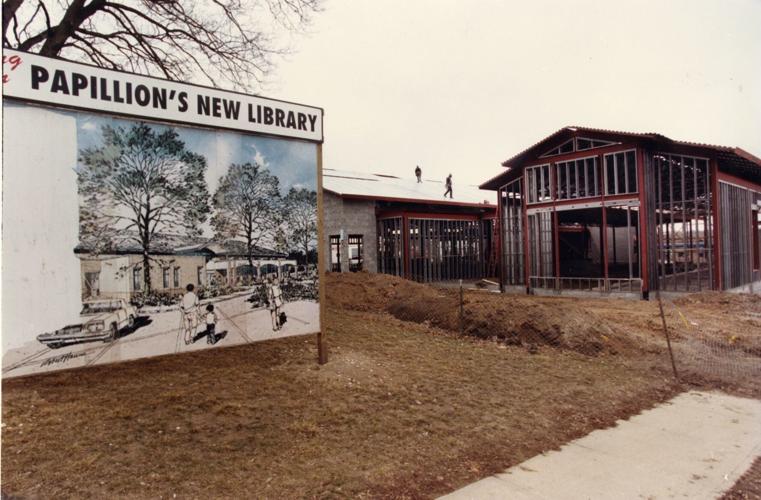
1996: The new Papillion Library under construction. After almost thirty years of planning and despite a rejected bond effort, a combination of city budget adjustments and private donations raised the funds necessary for the new building. Construction began in spring of 1995 and was completed by late fall the next year.
- KILEY CHRISTIAN/THE WORLD-HERALD
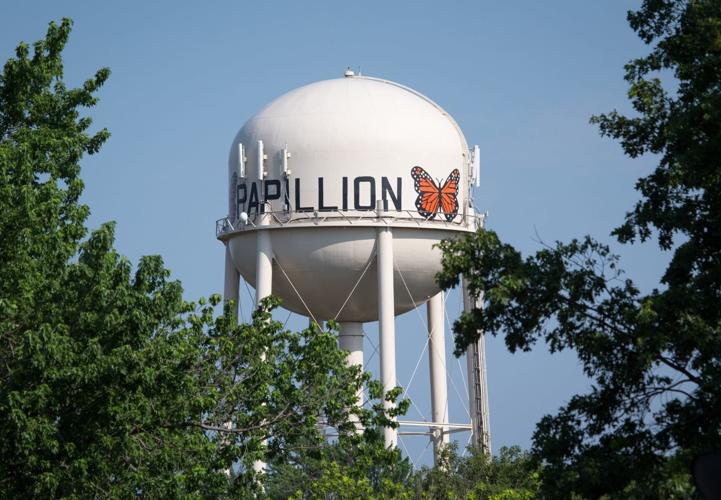
2016: The Papillion water tower, located near Sixth and Beadle Streets. The town's name is believed to have originated from the French 'papillon', as used by early fur traders to describe local wildlife. Dr. D. E. Beadle, sometimes mentioned as the town's father, built the first house in Papillion and was its first Postmaster.
- KENT SIEVERS/OMAHA WORLD-HERALD
Timeline: Papillion through the years
An assorted collection of historical archive photos documenting newsworthy events in the history of Papillion, from early settlements during the 1900s to recent developments.
1857: Sarpy County, named for fur trader Peter A. Sarpy, was established by carving off a southern portion of Douglas County. Papillion was surveyed and platted, officially becoming a village in 1870, and replaced Bellevue as the county seat in 1875.
- THE WORLD-HERALD
c. 1876: The Sarpy House Hotel was built in autumn of 1870 by John Eisele. After Papillion began using electric lights, Sarpy House owner R. E. Tallon was the first to apply them to advertising, installing a flashing sign on the corner of his building in 1911.
- PAPILLION AREA HISTORICAL SOCIETY
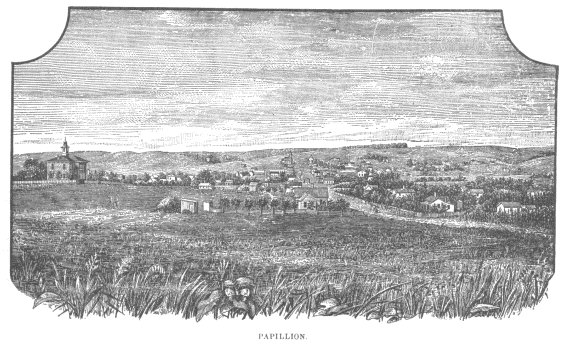
1882: An illustration from Andreas' History of the State of Nebraska shows Papillion during an early survey of the area.
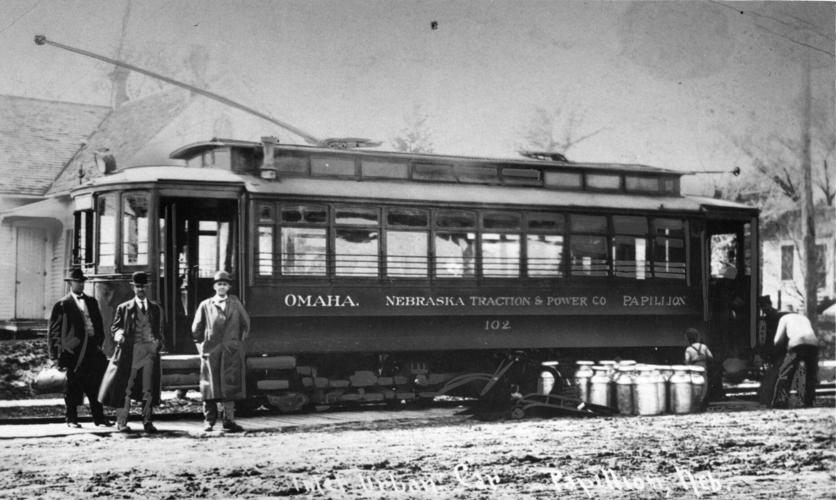
After the Union Pacific moved its main line to the north, Papillion's commuting connection to Omaha was with the Nebraska Traction and Power Company's Interurban streetcar railway from 1911 to 1926.
- THE WORLD-HERALD
October 22, 1911: A snappy World-Herald headline dubs Papillion 'the Hustler of Sarpy County' and goes on to highlight some of the city's landmark sites as they appeared in the early 1900s. Clockwise from top left: Papillion School House; a view of Main Street; German Methodist Episcopal Church and Parsonage; Papillion Roller Mills; the recently installed waterworks system; the original Sarpy County Courthouse.
- THE WORLD-HERALD
1945: Once a mecca for immediate midnight marriages, the Sarpy County Courthouse dropped from a record high of 1,796 marriage licenses issued in 1942 to a mere 98, after a 1943 Nebraska law was passed requiring couples to present a health certificate before being issued a license.
- THE WORLD-HERALD
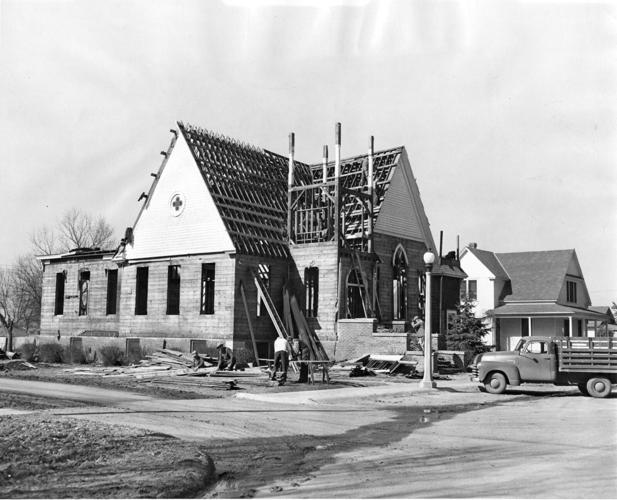
1953: One of Papillion's many historic churches, St. Paul's Methodist, was razed to make room for a new structure.
- THE WORLD-HERALD
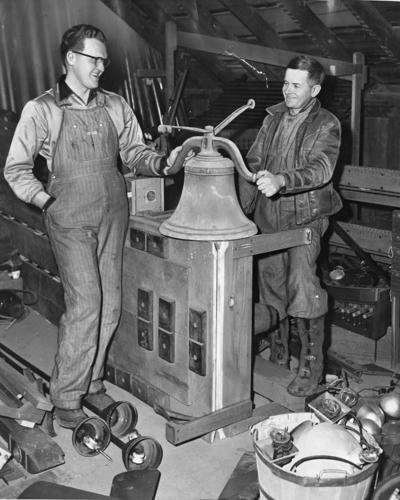
1953: A 1,100-pound bell that had been used at St. Paul's Methodist since 1900 was saved for installation in the new church building.
- THE WORLD-HERALD
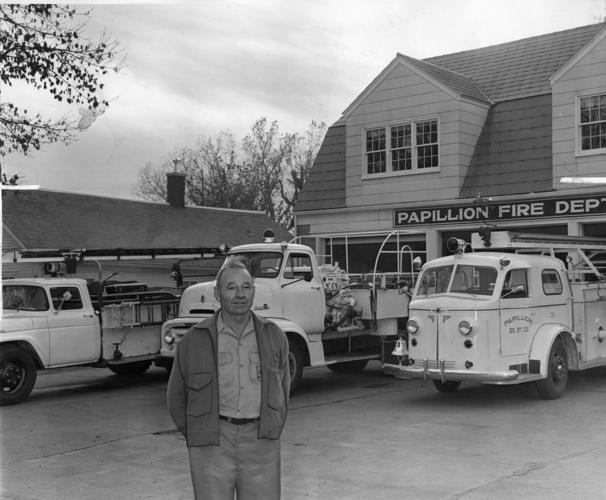
1957: Chief Tony Bucher stands outside the Papillion Fire Department.
- THE WORLD-HERALD
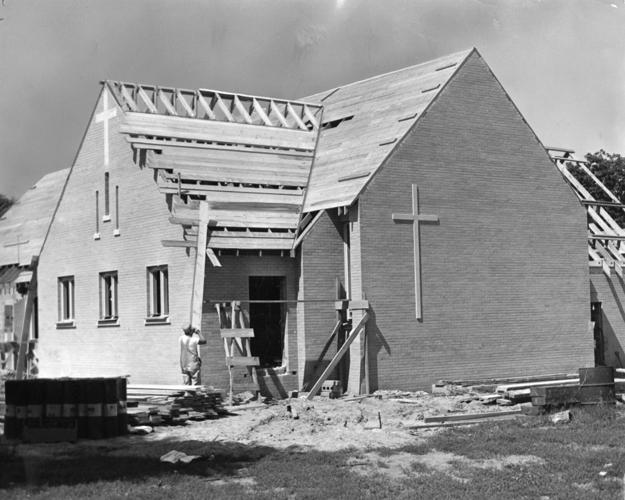
1959: During a historic year for Omaha-area churches, twenty-nine congregations finished, broke ground, or laid plans for construction, including Papillion Trinity Lutheran.
- THE WORLD-HERALD
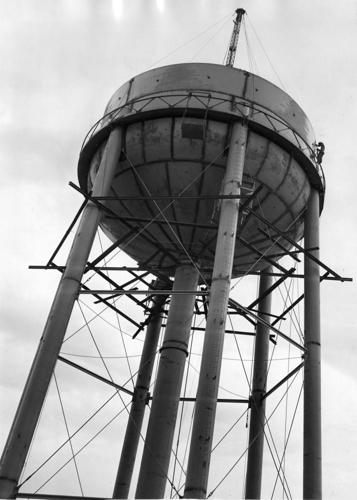
1960: Steeplejacks face 90 to 135 degree temperatures in early August as they work inside and outside of the new Papillion water tower.
- THE WORLD-HERALD
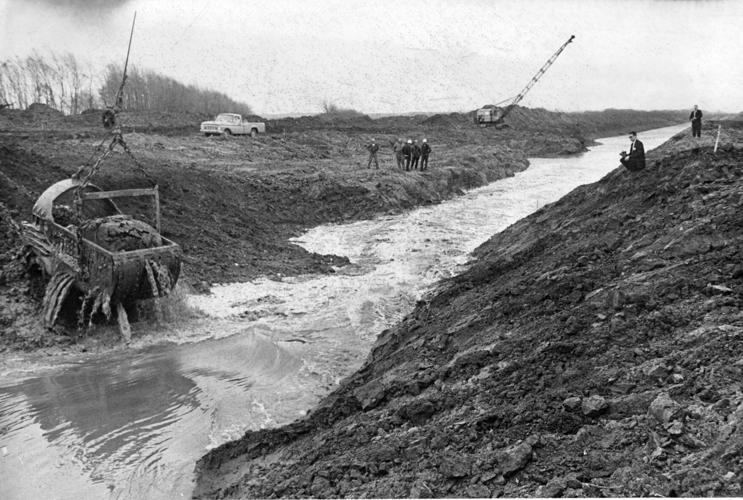
1964: The Army Corp of Engineers diverts Papillion Creek into a new channel to avoid more threat of flooding in 1964.
- THE WORLD-HERALD
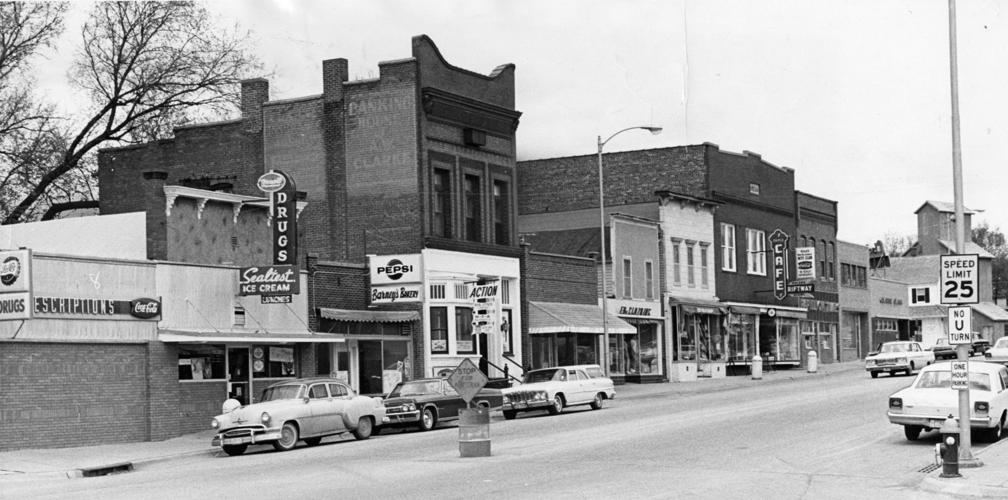
Washington (84th) Street in downtown Papillion is shown in 1967.
- THE WORLD-HERALD
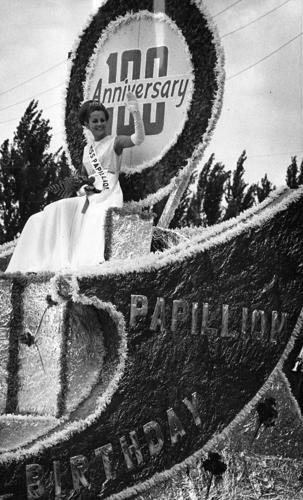
1970: Miss Papillion waves from her float in the centennial parade as the city celebrates is 100th anniversary.
- THE WORLD-HERALD
1971: An aerial view of the new Papillion High School, with Omaha and La Vista distantly visible in the background. The new high school served grades 9-12, and first-year attendance was estimated at around 1,000 students.
- ROBERT PASKACH/THE WORLD-HERALD
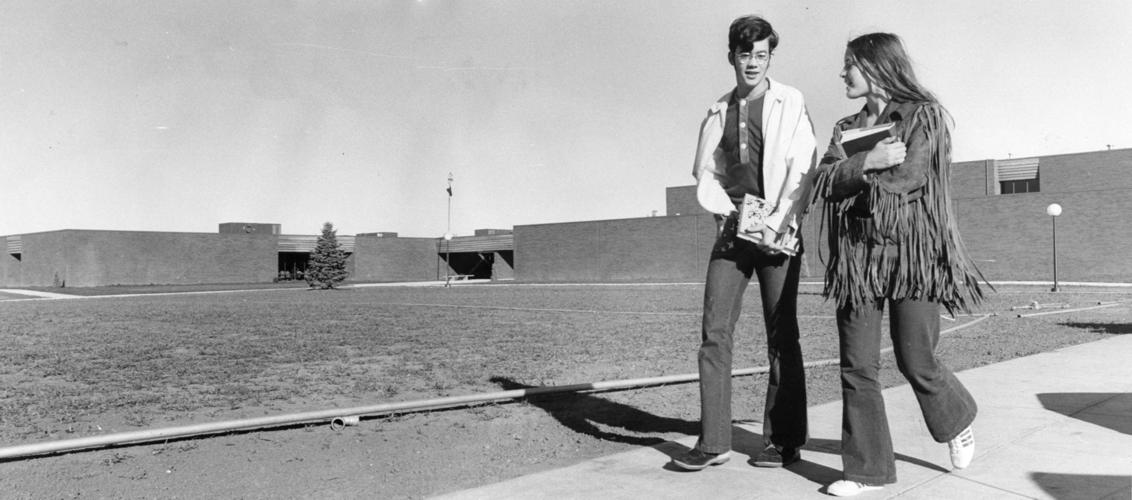
1971: Students Jim Dewhurst and Debbie Schaaf stroll past the newly-dedicated Papillion High School building.
- THE WORLD-HERALD
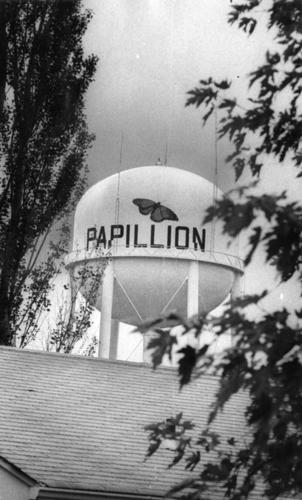
1973: The first paintings of red and black butterflies are added to the Papillion water tower during renovation, reflecting the town's French-origin name and the nickname of Papillion High School's athletic teams: the Monarchs.
- THE WORLD-HERALD
1978: Located on the edge of Papillion, the unincorporated town of Portal, Nebraska once supported a wooden one-room school house of three students. The building was eventually purchased and relocated downtown by the Papillion Area Historical society.
- RICH JANDA/THE WORLD-HERALD
1985: A new sign appears indicating the future site of the La Vista sports center on 66th Street. Due to an ongoing debate over which city should come first when naming the joint project, it was assumed Papillionites had placed the sign as a practical joke. The complex was paid for by the city of La Vista, and continues to operate today as the La Vista Sports Complex.
- JAMES IVEY/THE WORLD-HERALD
1993: The former Union Pacific train depot awaits its fate, despite a valiant petition effort to save it. Once acquired by Papillion City Council, the depot was eventually demolished and replaced by a new public library. Further back, historic Sautter Farmhouse and Papillion City Hall can be seen.
- RICH JANDA/THE WORLD-HERALD
1996: The new Papillion Library under construction. After almost thirty years of planning and despite a rejected bond effort, a combination of city budget adjustments and private donations raised the funds necessary for the new building. Construction began in spring of 1995 and was completed by late fall the next year.
- KILEY CHRISTIAN/THE WORLD-HERALD
2016: The Papillion water tower, located near Sixth and Beadle Streets. The town's name is believed to have originated from the French 'papillon', as used by early fur traders to describe local wildlife. Dr. D. E. Beadle, sometimes mentioned as the town's father, built the first house in Papillion and was its first Postmaster.
- KENT SIEVERS/OMAHA WORLD-HERALD