DUBAI — Iranian leaders are acknowledging the economic toll of war with the United States, with the supreme leader urging the government to address the hardship and the president saying foreign trade has shrunk by a third due to the American sanctions and blockade.
Chabahar, Iran - August 29, 2026 A severe gasoline shortage in Chabahar, southeastern Iran, has reportedly left several fuel stations closed and caused kilometre-long queues at the city’s main fuel station. Local reports say the Hur'an, Fisheries, Free Zone and Tis stations have stopped supplying gasoline, leaving main station as the only reported outlet serving residents. The resulting surge in vehicles has led to lengthy waits, overcrowding and growing disruption for drivers.
StringersHub
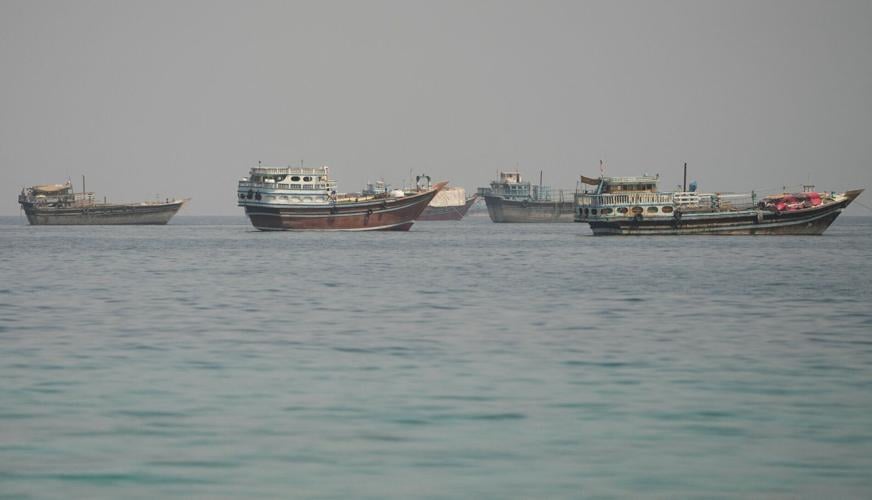
Vessels near the Strait of Hormuz on Friday are seen from Musandam, Oman.
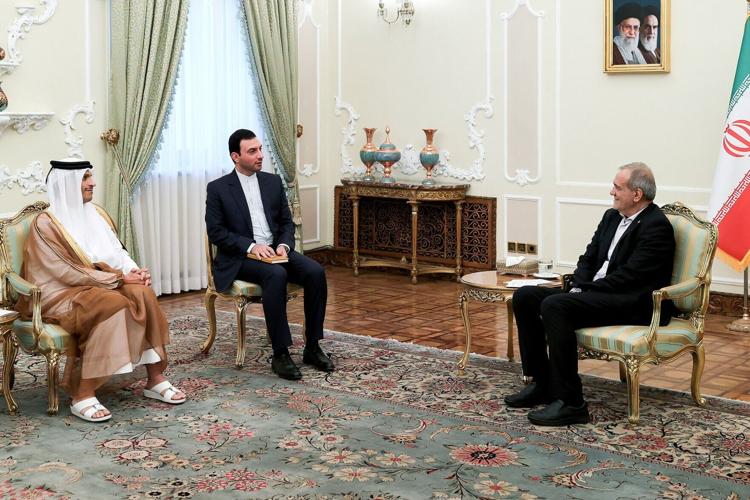
Iranian President Masoud Pezeshkian meets with Qatari Prime Minister and Foreign Minister Mohammed bin Abdulrahman Al Thani on Thursday in Tehran, Iran.
After six months of war, Iran’s leadership has coalesced around a hard core of military generals and clerics long entrenched in the ruling theocracy. They are ready for a potentially long confrontation with the US and determined to prevent any unrest at home. It’s a far cry from US President Donald Trump’s initial hopes of toppling the Islamic Republic and his subsequent claims that “regime change” had brought more compromising officials to the fore. In an analysis, FRANCE 24's Philip Turle said the war had so far cost around 1,100 US dollars for each US taxpayer.
Iranian President Masoud Pezeshkian meets with Qatari Prime Minister and Foreign Minister Mohammed bin Abdulrahman Al Thani on Thursday in Tehran, Iran.