Leaders in North Platte and Lexington hope the federal government's newly revamped "opportunity zone" tax incentives will pay off for rural economic development this time around.
Both were among six western Nebraska cities and 28 statewide with lower-income census tracts that Gov. Jim Pillen nominated July 22 to become or remain able to offer the eight-year-old federal incentives.
Lexington, North Platte, Scottsbluff and McCook will continue to have opportunity zones if the U.S. Treasury certifies Pillen's choices as expected by Jan. 1. Ogallala and Alliance will join them.
But since 2018, Lexington and North Platte have had the same number of projects that benefited from opportunity zones: zero.
Cozad will lose its opportunity zone at the end of 2028 after having been among the original 44 zones named in 2018. Cozad officials were unavailable for comment for this story.
People are also reading…
Lexington's opportunity zone will shift from one that covers most of the city — including the recently closed Tyson Foods meatpacking plant — to a different census tract on the city's northeast side. Both tracts would be opportunity zones in 2027, however.
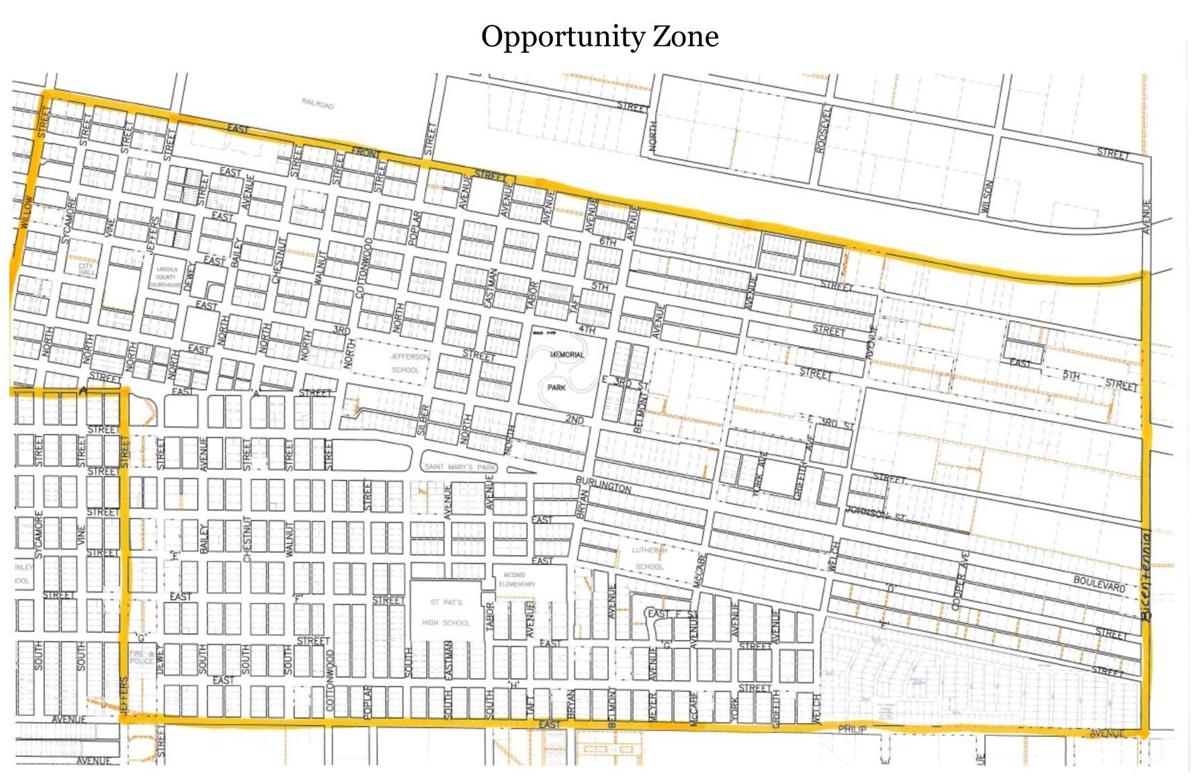
North Platte's opportunity zone will continue to cover most of the downtown Canteen District and much of the city's east side. It's bounded by Front Street, Bicentennial and Philip avenues and Jeffers, West A and Willow streets.
But the city again failed, as was the case in 2018, to win an opportunity zone for a census tract covering much of the city's north side.
"Politically, you're not going to see the governor doing more than one zone apiece outside of Omaha and Lincoln," said Gary Person, president and CEO of the North Platte Area Chamber & Development Corp.
He was disappointed that none of Lincoln County's villages was chosen for a zone from among Nebraska's 112 eligible census tracts. But "it's nice they spread it across the state."
Congress authorized opportunity zones in 2017 during President Donald Trump's first four-year term. After Trump returned to office in 2025, the program was altered but made permanent in the omnibus tax measure dubbed the "One Big Beautiful Bill."
Rural census tracts are eligible for the zones if they have a poverty rate of at least 20% and a median family income below 125% of the statewide median family income, the DED fact sheet says.
They're also eligible if their median family income doesn't exceed 70% of their state's median family income. Eligibility for metro-area tracts looks at the same percentages but compares median family income with its metro.
Community data from the 2020 federal census has left Lexington's current opportunity zone ineligible under the renewed program but opened the door for the city's other census tract, City Manager Joe Pepplitsch said.
Complicated tax breaks
Pepplitsch joined Person and retiring Ogallala City Manager Kevin Wilkins in saying rural Nebraska towns still need as many economic development tools as ever to gain the business and housing investments they need.
"I think (version) 2.0 will really increase the opportunities for workforce housing in the rural communities," Pepplitsch said. With Tyson's January closure and the loss of 3,212 jobs, "we're in a position for community redevelopment (and) rebirth."
Ogallala's opportunity zone will cover the Keith County seat's downtown and most of its oldest neighborhoods north of the Union Pacific tracks.
"I think it was a pleasant surprise that we were awarded opportunity zone status," Wilkins said in an interview before Tell Jensen succeeded him Monday. He will remain as assistant city manager through Dec. 31.