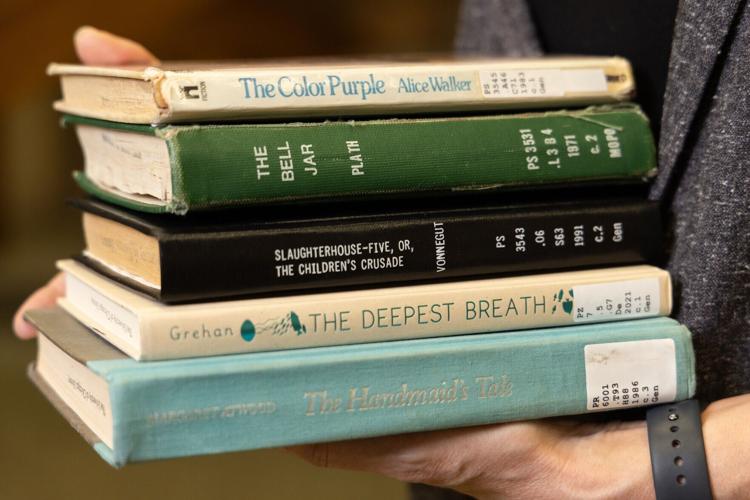
Dulcey Hunter, a banned books postdoctoral scholar at the University of Chicago, stands with a a few of the books in the university’s banned books display in the Regenstein Library on Thursday, Oct. 15, 2026. (Arthur Maiorella/Chicago Tribune/TNS)
Arthur Maiorella/Chicago Tribune/TNS
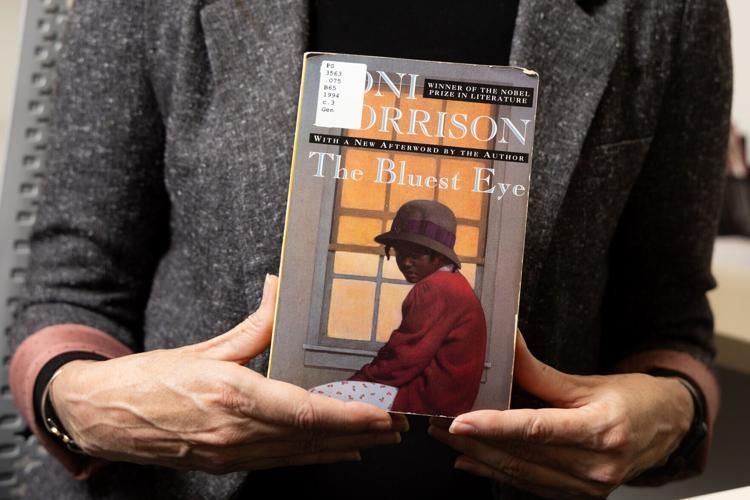
Dulcey Hunter, a banned books postdoctoral scholar at the University of Chicago, stands with a library copy of the oft-banned “The Bluest Eye” in the university’s Regenstein Library on Thursday, Oct. 15, 2026. (Arthur Maiorella/Chicago Tribune/TNS)
Arthur Maiorella/Chicago Tribune/TNS
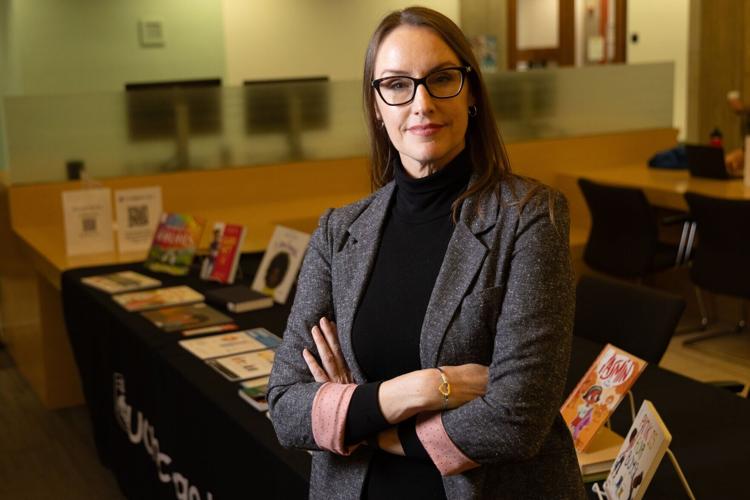
Dulcey Hunter, a banned books postdoctoral scholar at the University of Chicago, stands in the university’s Regenstein Library on Oct. 15, 2026. (Arthur Maiorella/Chicago Tribune/TNS)
CHICAGO — Already well known as a sanctuary city for refugees and immigrants, Chicago became, in 2022, a different kind of refuge — one for banned books. It was then that the city and Chicago Public Library officials established “Book Sanctuaries” across 77 community areas and 81 library branches, expanding local access to banned or challenged books.
Somewhere, someone is already asking: Wait a minute, do audiobooks even count as reading? So let’s get that out of the way. Yes, they do. Ther…
Dulcey Hunter, a banned books postdoctoral scholar at the University of Chicago, stands with a a few of the books in the university’s banned books display in the Regenstein Library on Thursday, Oct. 15, 2026. (Arthur Maiorella/Chicago Tribune/TNS)
Dulcey Hunter, a banned books postdoctoral scholar at the University of Chicago, stands with a library copy of the oft-banned “The Bluest Eye” in the university’s Regenstein Library on Thursday, Oct. 15, 2026. (Arthur Maiorella/Chicago Tribune/TNS)
Dulcey Hunter, a banned books postdoctoral scholar at the University of Chicago, stands in the university’s Regenstein Library on Oct. 15, 2026. (Arthur Maiorella/Chicago Tribune/TNS)