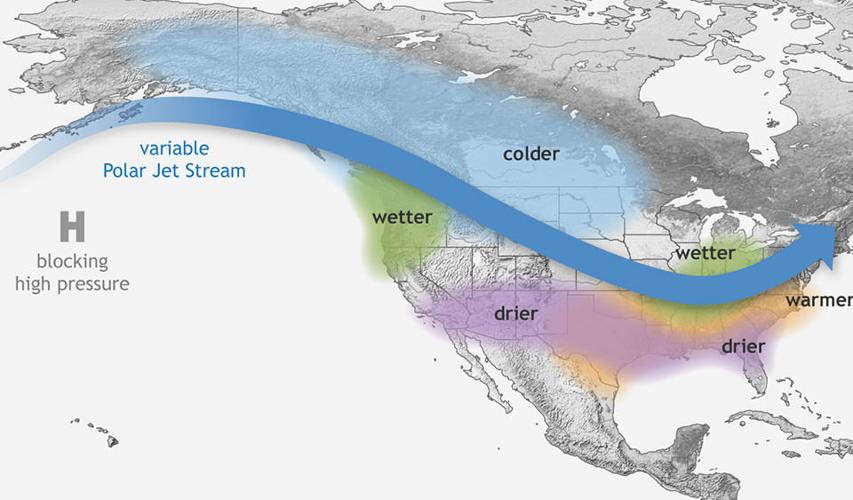
La Niña causes the jet stream to move northward and to weaken over the eastern Pacific. During La Niña winters, the South sees warmer and drier conditions than usual. The North and Canada tend to be wetter and colder.
National Oceanic and Atmospheric Administration Courtesy
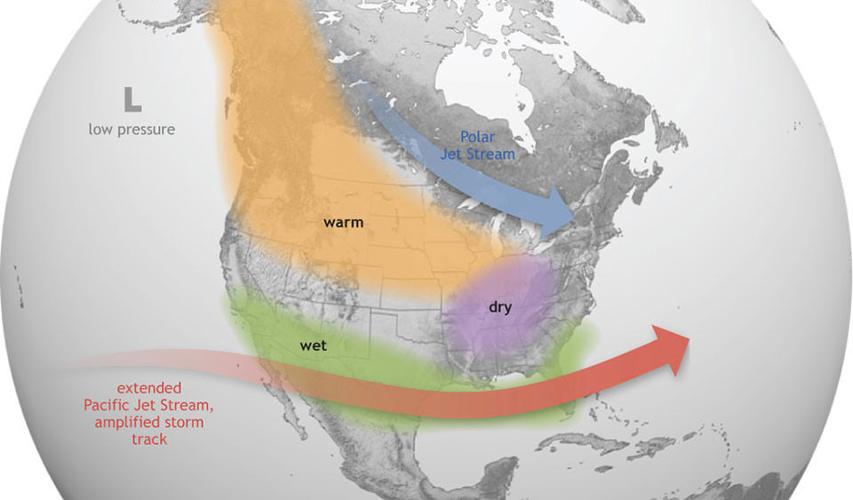
El Niño causes the Pacific jet stream to move south and spread further east. During winter, this leads to wetter conditions than usual in the Southern U.S. and warmer and drier conditions in the North.
National Oceanic and Atmospheric Administration Courtesy
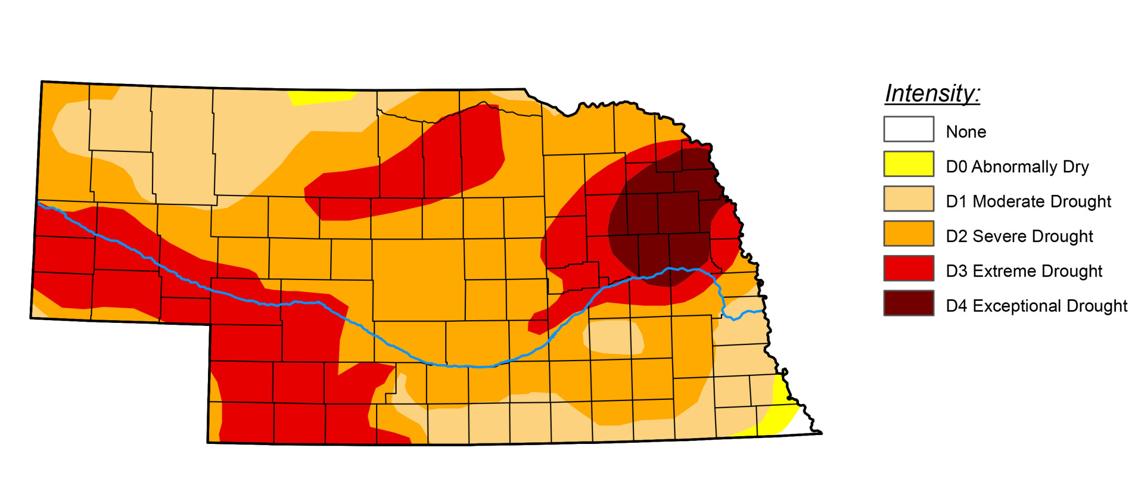
“Much of the High Plains remains in long-term drought, with the central High Plains seeing some expansion of moderate drought, D1, from southeast Nebraska to northeastern Kansas based on continued lack of recent precipitation, low stream flows and soil moisture,” per the U.S. Drought Monitor.
LEXINGTON — Drought conditions have slightly eased for parts of northeast Nebraska. Meanwhile, forecasters at National Oceanic and Atmospheric Administration (NOAA) say the La Niña weather phenomenon is out.
La Niña causes the jet stream to move northward and to weaken over the eastern Pacific. During La Niña winters, the South sees warmer and drier conditions than usual. The North and Canada tend to be wetter and colder.
National Oceanic and Atmospheric Administration Courtesy
El Niño causes the Pacific jet stream to move south and spread further east. During winter, this leads to wetter conditions than usual in the Southern U.S. and warmer and drier conditions in the North.
National Oceanic and Atmospheric Administration Courtesy
“Much of the High Plains remains in long-term drought, with the central High Plains seeing some expansion of moderate drought, D1, from southeast Nebraska to northeastern Kansas based on continued lack of recent precipitation, low stream flows and soil moisture,” per the U.S. Drought Monitor.