




LEXINGTON — Testimony from state witnesses continued for a second day in the trial of Francisco Hernandez-Corona, who is accused of killing 23-year-old Marcus Keyser in a drive-by shooting on July 6, 2021.
Hernandez-Corona is charged with first degree murder, a Class 1A felony with use of a firearm to commit a felony, a Class 1C felony.
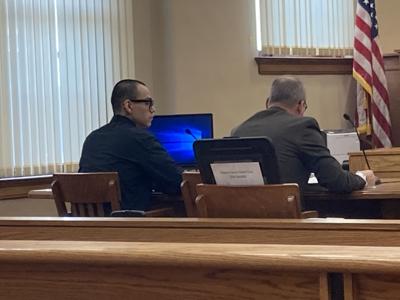
Dawson County Attorney Elizabeth Waterman is prosecuting the case. Brian Davis of Cozad is representing the defendant.
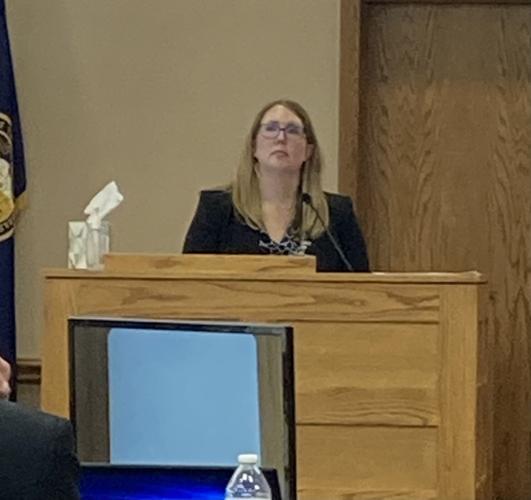
Yesenia Rodriguez, the girlfriend of Keyser at the time of the shooting, started her testimony on Monday and continued on Tuesday.
During the early hours of July 6, Rodriguez, who worked at the Casey’s location on North Adams St., took her break outside with Keyser. They both noticed a dark colored vehicle drive by at a slow rate of speed. Rodriguez noticed a man in the back passenger seat with a neck tattoo staring at them.
People are also reading…
She later became concerned when a Lexington police officer came into Casey’s asking if anyone had heard firework-like noises. Rodriguez messaged Keyser via cell phone but never received a response.
She left Casey’s around 3 a.m. and walked the short distance to her home on 9th St. where she discovered Keyser’s body in the driveway. She said there was “a lot of blood.”
She would mention the male with the neck tattoo to Lexington police later in the day.
During cross examination, Davis asked Rodriguez if she knew of cocaine that had been in her home. At the time, Rodriguez said “I did not know anything about the cocaine in my house.”
Rodriguez returned home after Keyser’s death and found an amount of cocaine on a TV stand in her house. She later said she knew of Keyser pulling a gun on a her ex-boyfriend when purchasing cocaine a few days before the murder.
Rodriguez later said it was a “thought” of hers that the cocaine was related to Keyser’s murder.
The substance believed to be cocaine was later acquired by the Lexington Police Department and field tested, showing it was not cocaine.
Under cross examination, Davis said Rodriguez had said the vehicle that drove by slowly on her break was different colors at different times. When shown a picture of Hernandez-Corona's gray Nissan Ultima, she said it wasn’t that vehicle.
During the state’s opportunity to redirect, Rodriguez identified Hernandez-Corona as the person she knew as “Frankie.”
She also said that when describing the vehicle it was, “like an Impala,” and said it was a dark colored.
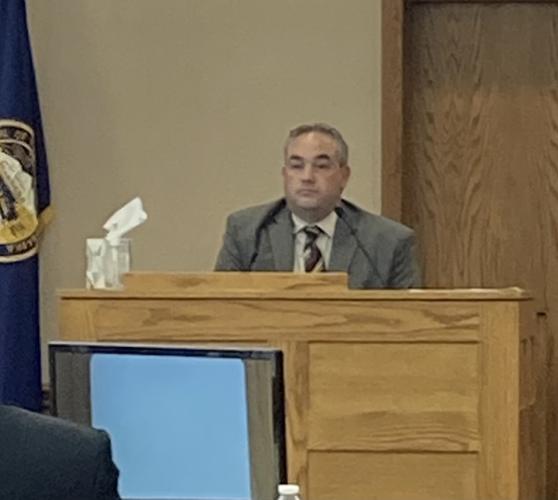
Lexington Police Department Investigator Erik Rowan was called next.
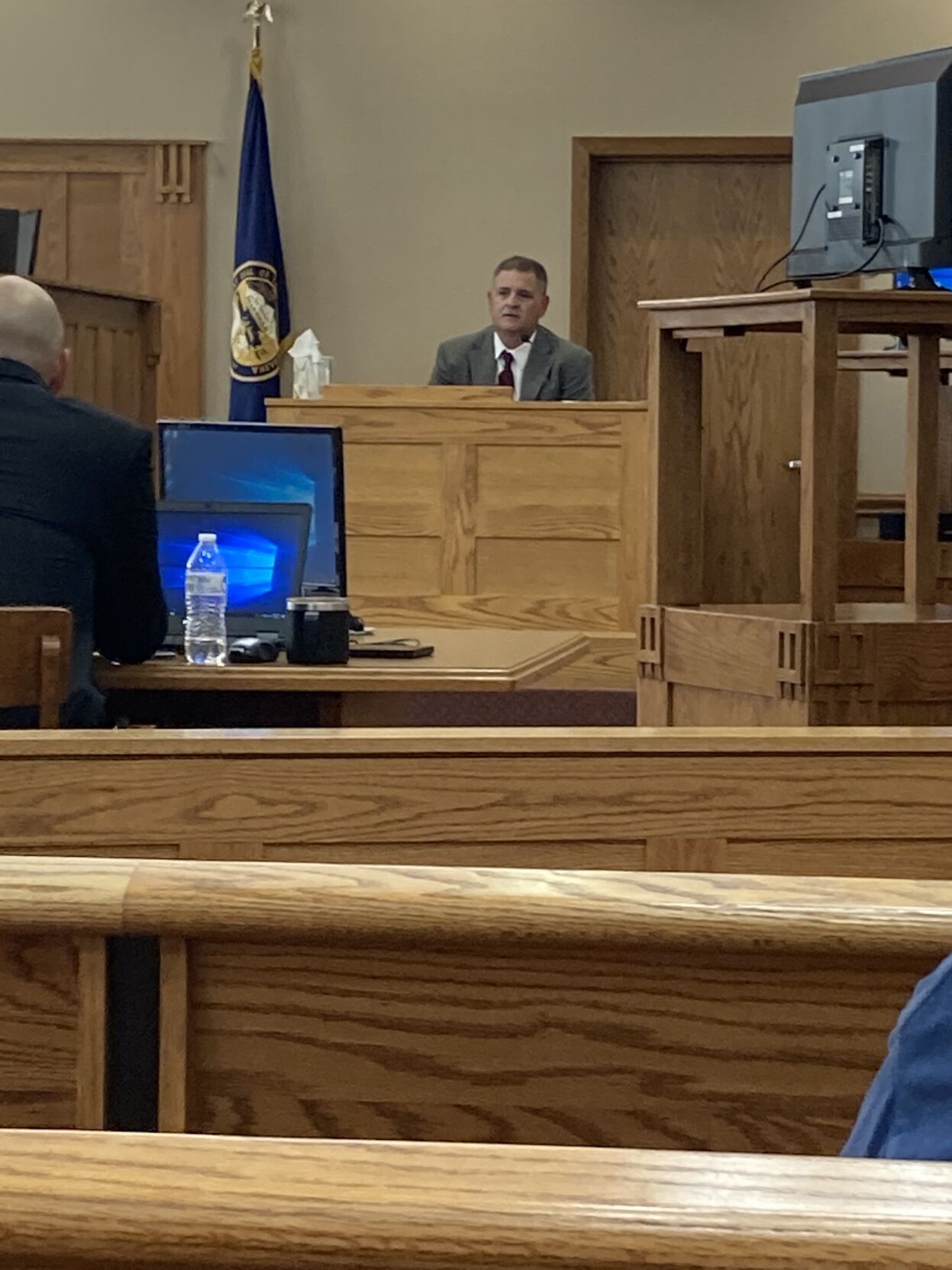
Sgt. Erik Rowan
He testified that, on scene, he and the other officers looked extensively for shell casings, but found none. He and other officers walked 9th St. and took walks up 13th St., to Airport Road and Highway 30 but never located any casings.
Rowan said he conducted the search of Hernandez-Corona’s Nissan Ultima and found rifle shells and magazine in the vehicle. There was also a bullet hole through the floorboard in the rear passenger area behind the driver.
Also near the bullet hole was a Casey’s wrapper containing the remnants of a donut. Hernandez-Corona had been recorded on Casey’s video surveillance prior to the shooting purchasing pizza and a donut.
The Casey’s bag had been shot through and there were plastic fragments strewn over the floorboard.
The jury were also shown several autopsy photos of Keyser’s body, including photos of an abrasion to his left forehead and left shoulder. There were also photos of the entry and exit wound of a single bullet on Keyser’s head.
Upon cross examination, Davis asked Rowan about investigative techniques used when Hernandez-Corona was questioned a second time. The investigators told Hernandez-Corona that co-defendant Aldaberto Seanz-Gonzalez had said everything was his fault.
Davis noted Hernandez-Corona did not confess when presented with this.
When asked about the bullet hole in Hernandez-Corona’s Ultima, Rowan said he could not say for sure how long it had been there.
During the state’s redirect period, Rowan said the bullet hole in the floorboard was not rusty and that the donut in the damaged plastic wrapping did not have mold on it and appeared to be fresh.
An expert witness called by the state was Kent Weber, a forensic scientist at the Nebraska State Patrol crime lab.

Kent Weber, a forensic scientist at the Nebraska State Patrol crime lab.
Weber conducted tests on the weapon located in Hernandez-Corona’s bedroom, a Radical, RF-15 semi-automatic rifle, chambered for .223 rounds. He also received bullet fragments recovered from the house.
After testing, Weber said he couldn’t exclude Hernandez-Corona’s rifle but could not determine it was the exclusive source of the rounds fired.
During cross examination, Weber reiterated that matching the rifle in question to the bullet’s fired was inconclusive. He also noted there are differences in the types of ammunition produced by manufacturers that could lend to differences when fired.
The next expert witness was Amanda Neely, who was also working at the NSP crime lab in July 2021. She is also a forensic scientist and deals with trace evidence, including gunshot residue.
She said it is possible to test for the presence of primer gunshot residue (PGSR), or the materials that can be found when a primer that fires a bullet is activated and discharged.
She said people who use a firearm or pick one up that has been recently fired can come into contact with PGSR. It remains on the hands for 4-8 hours and can linger on surfaces indefinitely until removed.
Both Hernandez-Corona and Seanz’s hands were sampled for PGSR and sent to the crime lab. Neely said Hernandez-Corona’s kit contained five particles of PGSR while Seanz contained one particle.
Neely noted she cannot draw conclusions about the number of particles found on each man’s hand due to the amount of factors involved.
During cross examination, Neely said PGSR could be transferred from surface to surface and a recently fired weapon could transfer onto a surface such as a blanket or sweater if it came in contact with the weapon.
Neely also said she needs to know about the hobbies of those tested for PGSR, those who shoot weapons often could come into contact with particles more often.
The next expert was Dan Warrington, with the Kearney Police Department. He said he handles digital investigations, which includes mobile forensics.
Warrington said he examined the iPhones owned by Hernandez-Corona, Seanz and Keyser. He said he obtained location data from Saenz and Keyser’s phones, while Hernandez-Corona’s location services had been turned off.
The accuracy of the GPS location of the phones depends on how many satellites the phone can connect with. It can vary from a one to five meter radius to a 150 meter radius, the maximum law enforcement rely on in investigations, Warrington said.
Keyser’s phone was also recording information with the health application and tracked significant movements by the person carrying the phone. At 1:29 a.m. the health data showed him traveling 300 meters, then at 1:44 a.m., Keyser traveled 200 meters.
Warrington said the health data suddenly stopped until law enforcement recovered the phone from his body later during the morning of July 6.
Upon cross examination, Warrington said a phone could be anywhere within the radius indicated by the GPS data, it could be in the center or at a far edge.
He also noted the iPhone health app tracks movement along the horizontal and vertical axis, indicating Keyser had been traveling some distance.
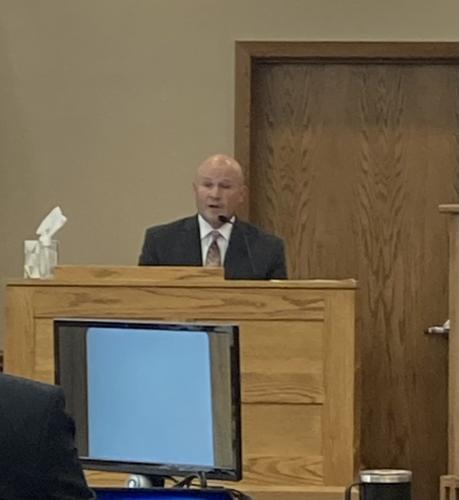
The lion share of Tuesday’s testimony was provided by Lexington Police Department Investigator Michael Baker.
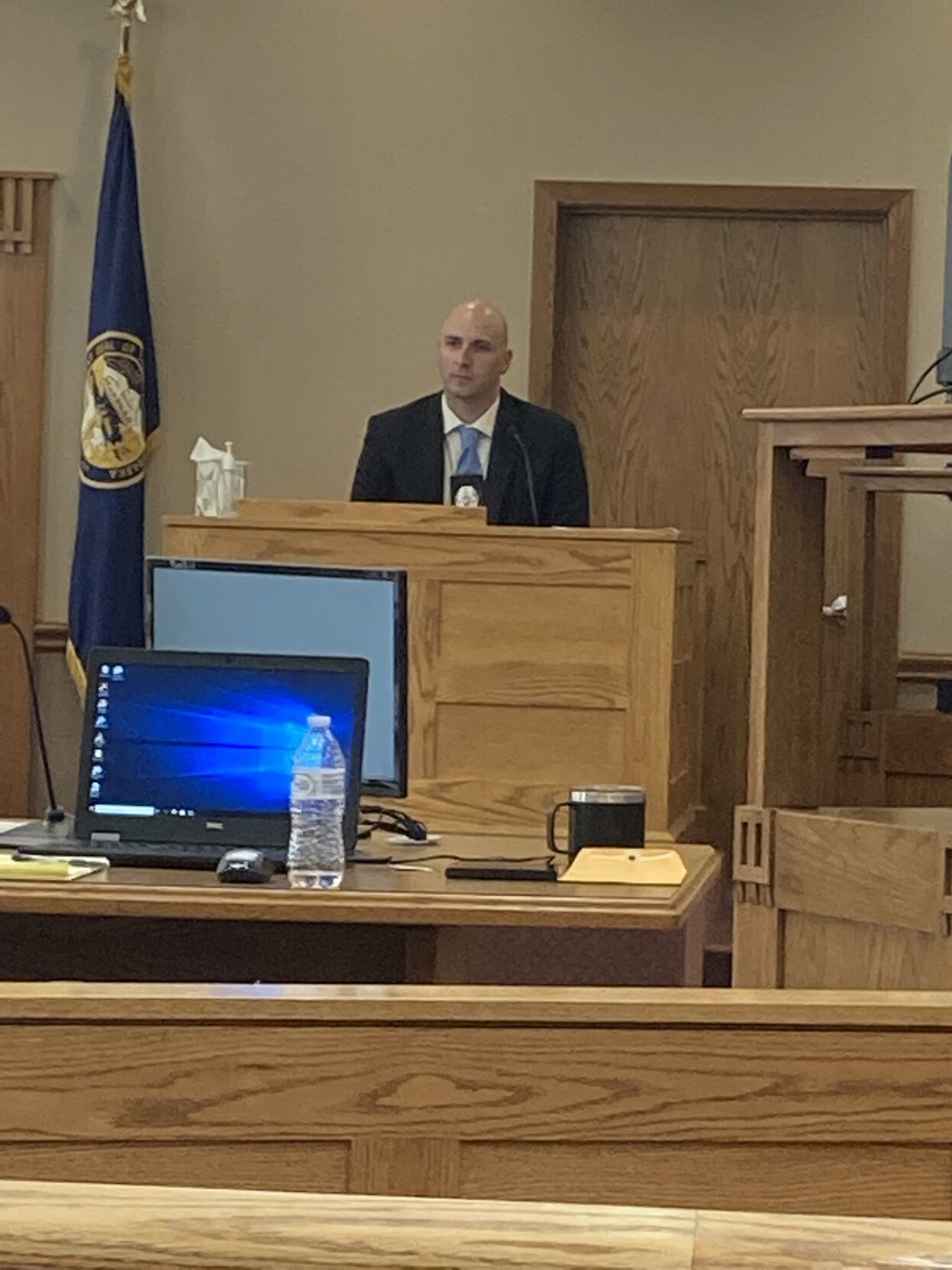
Investigator Michael Baker
Baker arrived at 800 W. 9th St. around 3:30 a.m. and observed Keyser’s body, a large pool of blood and a handgun tucked into his waist. There were several bullet holes on the lower garage door, as well as in a neighboring house and vehicle on the street.
Baker said around 8-10 rounds appeared to have been discharged. One round that passed through the garage had impacted a Dewalt drill and fragments were recovered from it.
He also noted it was unusual that no bullet casings were found, given the amount of rounds discharged.
The jury was shown photos of Keyser body as it was discovered on scene and its relation to the garage, driveway and house.
Baker created a diagram of where the bullets impacted along 9th St. and it was his conclusion the rifle was traveling as it was being fired.
After documenting the scene, Baker spoke with Hernandez-Corona in the Dawson County Jail, as he was being held on the minor in possession charge. Baker would interview Hernandez-Corona twice.
After the second interview, Baker said he learned four notable details, Hernandez-Corona was adamant he and Seanz had been together all evening, he owned an AR-style rifle, it was equipped with a casing catcher bag and it was located either in his house or his car.