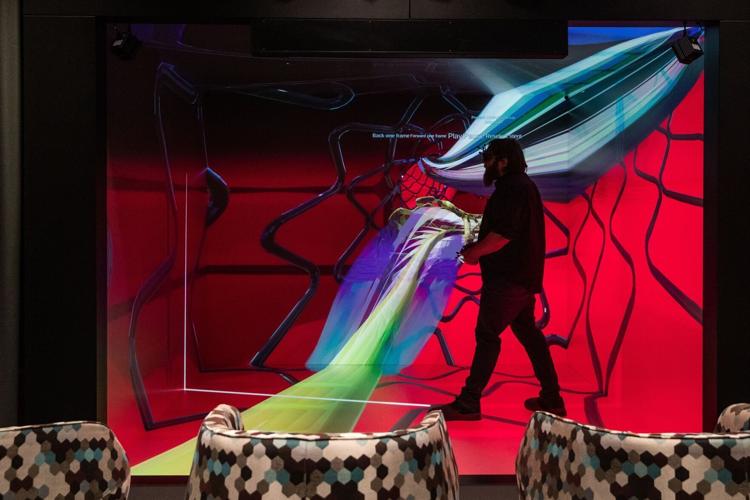
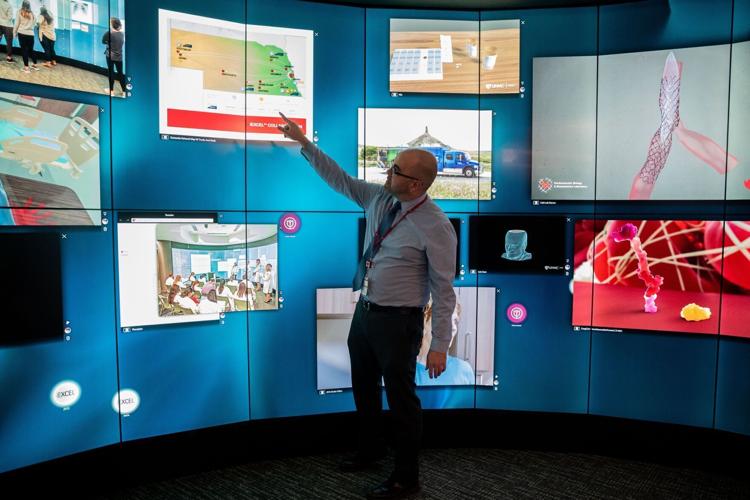
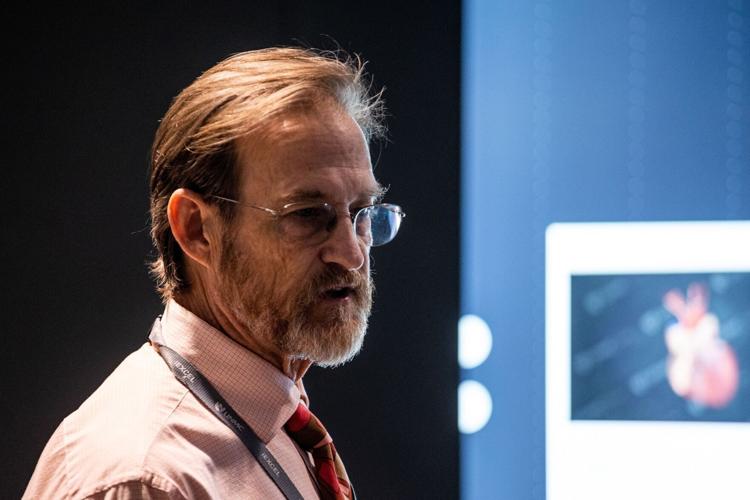
University of Nebraska Medical Center computer programmer Jeremiah Wilt shows a visualization of a stent being inserted into an artery at the Davis Global Center in Omaha. “As technology (has) advanced ... it’s helping us create much more realistic scenarios,” said Pamela Boyers, UNMC’s associate vice chancellor of clinical simulation.
LILY SMITH, THE WORLD-HERALD
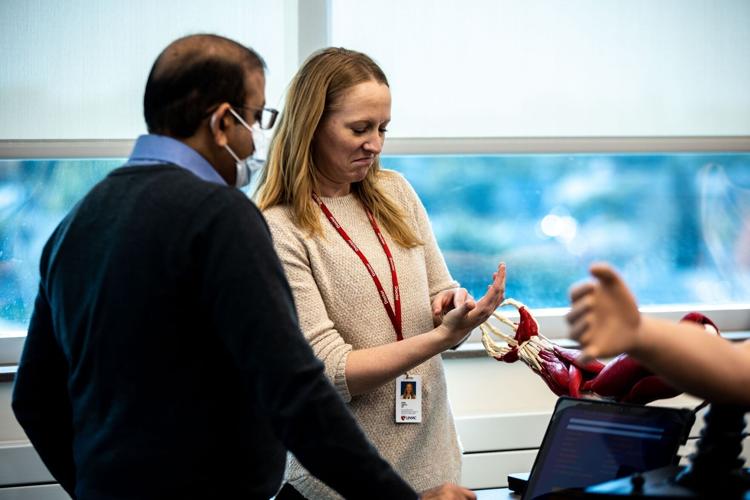
UNMC neurological studies professor Erin Cameron-Smith demonstrates Botox injections on a mannequin hand with a student.
LILY SMITH, THE WORLD-HERALD
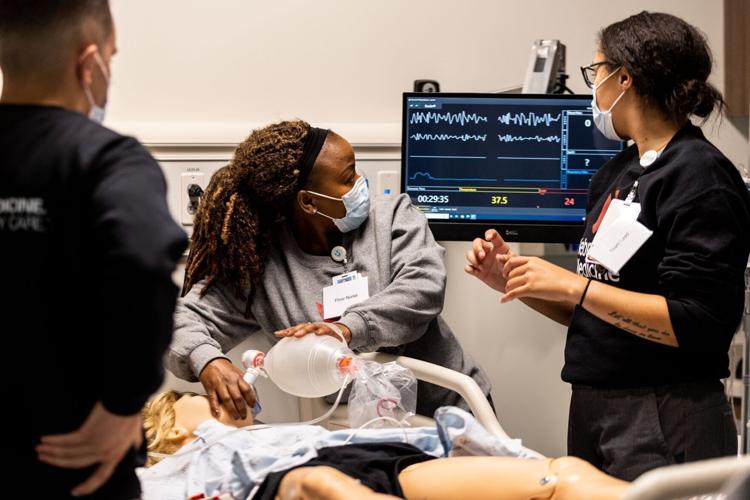
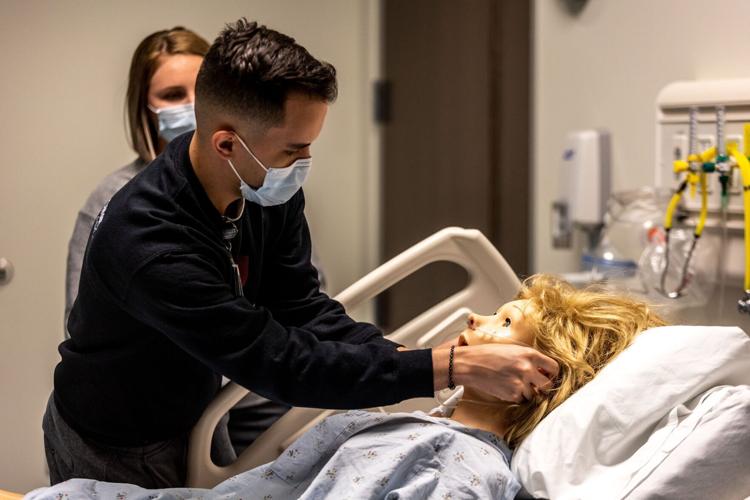
UNMC students monitor the heart rate of a high-tech mannequin during a clinical simulation. The mannequins are realistic. For example, students can inject a medication and see vital signs change.
LILY SMITH, THE WORLD-HERALD
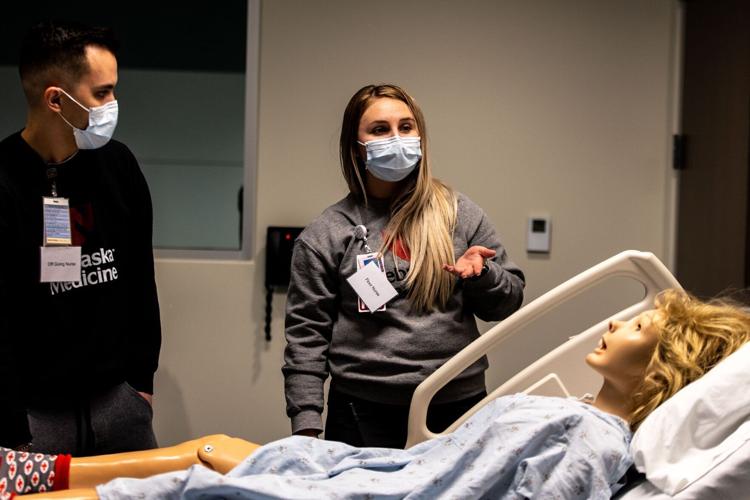
UNMC students prepare to work with a mannequin during a clinical simulation.
LILY SMITH, THE WORLD-HERALD
Paul Dye, UNMC manager of educational technology and design, demonstrates uses for an iWall at the Davis Global Center, which opened in 2020.
LILY SMITH, THE WORLD-HERALD
A UNMC student attaches a nasal cannula to a mannequin during a clinical simulation.
University of Nebraska Medical Center computer programmer Jeremiah Wilt shows a visualization of a stent being inserted into an artery at the Davis Global Center in Omaha. “As technology (has) advanced ... it’s helping us create much more realistic scenarios,” said Pamela Boyers, UNMC’s associate vice chancellor of clinical simulation.
UNMC students monitor the heart rate of a high-tech mannequin during a clinical simulation. The mannequins are realistic. For example, students can inject a medication and see vital signs change.