

Pillen vetoes 5 bills ahead of final day of session in Nebraska Legislature
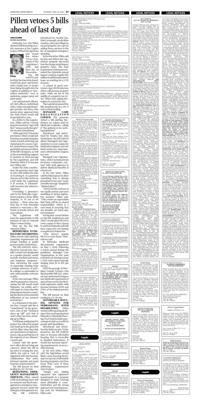
Nebraska Gov. Jim Pillen allowed a bill increasing security measures at the Capitol to pass without his signature and issued five vetoes Thursday ahead of the Legislature's 60th and final day of the session.
The bill (LB1237), put forth by the Executive Board, would ban guns and knives with a blade over 3.5 inches from being brought into the Capitol, in addition to "hazardous materials," such as explosives, pepper spray and spray paint.
Law enforcement officers, off-duty officers, individuals with a valid concealed handgun permits and those who receive prior approval from the State Patrol would still be permitted to carry.
In a letter to the Legislature, Pillen said he "cannot in good conscience" sign a bill that "unnecessarily disrupts" the Second Amendment.
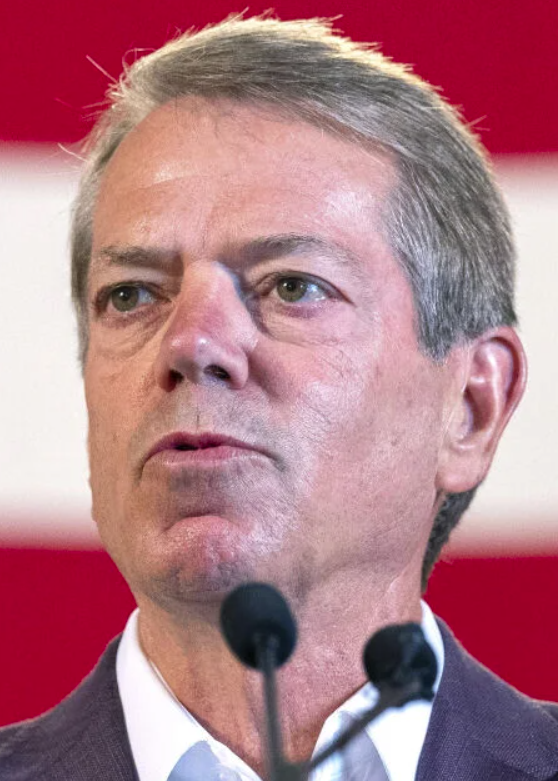
Pillen
"Although LB1237 includes provisions which would not have been my preferred policy routes toward achieving our shared goal of a secure Capitol, I nevertheless respect the good faith and earnest efforts of the bill’s designers, as well as the overwhelming support it received on final passage by the Legislature, and will therefore allow it to become law," Pillen said.
Under the state constitution, the governor must sign or veto a bill within five days of receiving it. If a governor chooses not to take action on a bill while the Legislature is in session, it automatically becomes law without a signature.
Overriding a governor's veto in the Nebraska Legislature requires a three-fifths majority, or 30 out of 49 senators — three votes less than the 33-vote threshold needed to overcome a filibuster to invoke cloture and cease debate.
The Legislature will have the opportunity to file motions to vote to override Pillen's vetoes Friday.
Here are the five bills vetoed by Pillen:
REPORTABLE FUNDING FOR UNIVERSITIES: Pillen vetoed a bill clarifying reporting requirements for foreign funding at public postsecondary institutions.
The bill (LB1029), introduced by Lincoln Sen. Danielle Conrad and designated as a speaker priority, would exclude standard purchases and employee compensation, narrowing the scope of reportable funding from a foreign adversary to public colleges or universities to only substantiable contracts or gifts.
In his veto message, Pillen cited transparency concerns, saying the bill would make Nebraska "an outlier and a soft target at a time when the federal government is sounding the alarm on documented infiltration of our research institutions."
In a statement to the Journal Star, Conrad said she is "unbothered" by the governor's veto of her "technical clean-up bill" and that it won't deter her from standing up to Pillen.
"I will keep working hard to protect the will of the people and stand up to the governor and his allies when they dole out special favors to big businesses, big ag and big tech at the expense of our citizens," Conrad said.
Conrad said the governor's office did not bring any concerns about the bill to her prior to issuing the veto, which she said is "out of alignment with the dynamic collaboration that exists between separate and equal branches of government."
The bill passed on final reading in a 29-20 vote.
REDEFINING EMERGENCY MANAGEMENT SERVICES: Pillen vetoed a bill reclassifying snow and ice removal and flood management as emergency management services under the Emergency Management Act.
The bill (LB1256), introduced by Omaha Sen. John Cavanaugh, would allow counties, cities and villages to exceed property tax caps by adding those services to the list of exempted emergency spending.
In his veto letter, Pillen said he does not believe the Legislature properly discussed how the change would impact property taxes. The state Department of Revenue estimated the statewide annual impact could be roughly $40 million in additional property taxes, accounting for a 2.5% increase.
"I cannot in good conscience sign LB1256 into law, which will increase property taxes, while we are in the middle of a property tax crisis," Pillen said, urging lawmakers to sustain his veto.
The Legislature passed the bill unanimously in a 49-0 vote on final reading.
MANAGED CARE ORGANIZATION COPAYS: The governor vetoed a bill putting limitations on copays paid by Medicaid recipients, calling it "the epitome of do-nothing legislation."
Introduced and prioritized by Omaha Sen. John Fredrickson, the bill (LB929) allows Managed Care Organizations to cover copays for Medicaid recipients and sets limits on the cost-share measures authorized by Congress last year.
Managed Care Organizations, which include private insurance companies, contract with state agencies to deliver Medicaid benefits at a fixed cost.
In his veto letter, Pillen said the bill proposes to allow something that is already permitted in law and "sends a terrible message" despite its "limited effect."
"LB929 invites overuse of our health system and more meddling in future legislative sessions," Pillen said. "This creates an expectation that there will be no shared responsibility, which is a core tenet in ensuring that our benefits are hand-ups, not handouts."
During first-round debate on the bill, Fredrickson said LB927 would allow MCOs to cover copays if they choose to and that Nebraska will still have copay and cost sharing as required by federal law.
"This doesn't require MCOs to cover them," Fredrickson said.
In Nebraska, Medicaid discontinued copayments on May 1, 2024. Following a waiver period during the pandemic, Managed Care Organizations in the state restarted cost sharing on June 1, 2024, with copays typically ranging from $1 to $15 per service.
With the passage of President Donald Trump's One Big Beautiful Bill Act, states are now authorized to impose new Medicaid copayments of up to $35 per service for Medicaid expansion adults with incomes between 100% and 138% of the federal poverty line.
The bill passed on final reading in a 31-18 vote.
AFFORDABLE HOUSING OPTIONS FOR NEBRASKANS WITH DISABILITIES: Pillen vetoed a bill requiring developers that use financing from Nebraska's Affordable Housing Trust Fund to build a percentage of units accessible to people with disabilities.
Introduced and prioritized by Bellevue Sen. Victor Rountree, the bill (LB839) aims to increase affordable housing that is accessible to disabled Nebraskans. It would also increase reporting requirements on accessible housing.
In his veto letter, Pillen said the legislation would likely cause housing developers to opt out of affordable housing programs and thus boost their costs if these additional requirements were in place.
"Simply put, adding expensive new regulatory requirements to a program designed to make housing more affordable is counterintuitive and the wrong approach for lowering housing costs for Nebraskans," Pillen said.
Pillen said to address the issue at hand, the state should work with disability rights advocates and housing developers to create "a scoring system" to incentivize developers to build the appropriate number of accessible housing units.
The bill passed on final reading in a 34-15 vote.
MATERNITY LEAVE FOR STATE EMPLOYEES: Pillen vetoed a bill ensuring all state employees who give birth or adopt children receive six weeks of paid leave after amending the legislation to include fathers who adopt.
The bill (LB878), introduced and prioritized by Omaha Sen. Dunixi Guereca, would ensure any state troopers, corrections officers and teachers who work in the state prison system who give birth or adopt also receive the benefit.
In his veto letter, Pillen said these benefits should be negotiated through the collective bargaining process and that he directed the Department of Administrative Services to negotiate with union leaders to provide six weeks of paid maternity leave to all their members.
The bill passed on final reading in a 41-7 vote.

Contact the writer at akleiber@journalstar.com or 402-473-7223. On X @annakleiber03