

'We're in tough shape': Drought worsens across Nebraska amid pleas to conserve water
The signs are everywhere.
Livestock ponds in the Panhandle running dry. Winter wheat so poor it's not even worth harvesting. Rivulet-scarred sandbars blotching the Platte River.
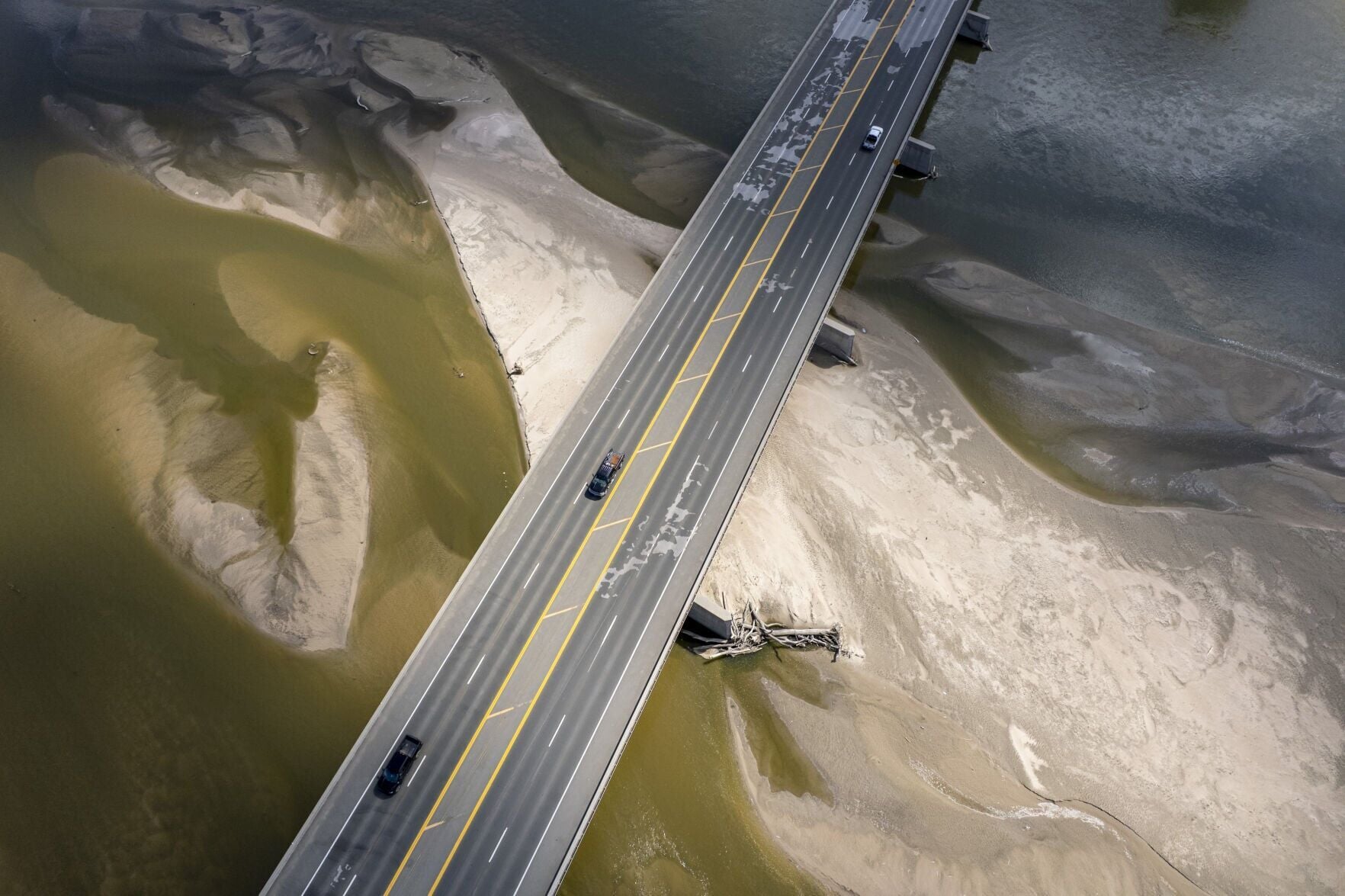
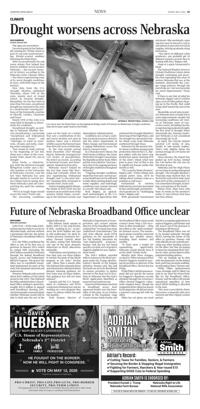
Cars drive over the Platte River on the Inglewood Bridge south of Fremont on Wednesday. Drought conditions have led to lower water levels in the Platte.
After an exceptionally dry and warm winter that helped fuel historic wildfires across western Nebraska — the second-warmest in history according to the Nebraska State Climate Office — the state is experiencing some of its worst drought conditions in years, with little hope on the horizon.
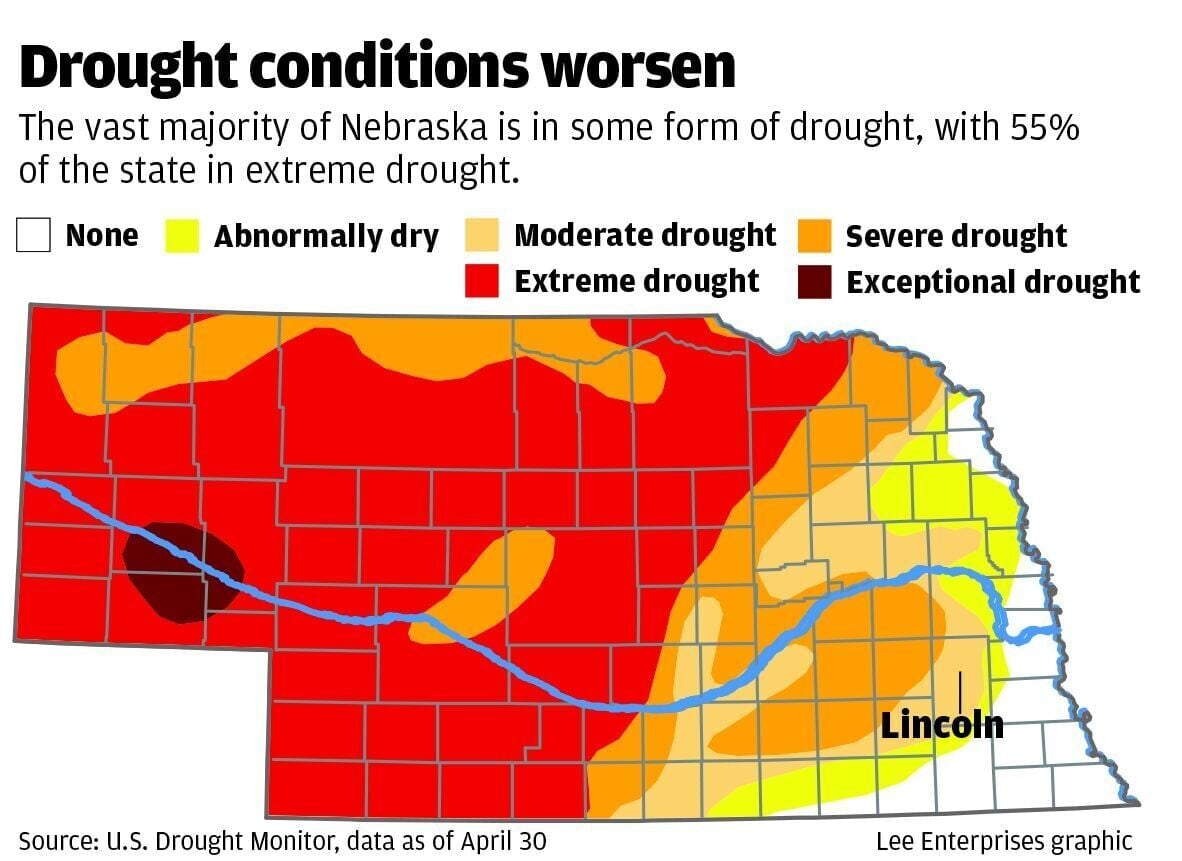
New data from the U.S. Drought Monitor, published Thursday, shows 55% of the state, mainly west of Grand Island, in extreme drought. Meanwhile, for the first time in more than two years, exceptional drought has returned to the state in a small pocket covering portions of the Panhandle counties of Morrill, Garden, Cheyenne and Deuel.
Nearly 94% of the state is in some kind of drought or abnormally dry condition.
Exceptional drought, according to National Weather Service classifications, can include "exceptional and widespread crop/pasture losses" and "shortages of water in reservoirs, streams and wells, creating water emergencies."
That stands in stark contrast to the beginning of last fall, when just a sliver of the Cornhusker State, about 9%, was in drought.
Brian Fuchs, a climatologist with the National Drought Mitigation Center and a faculty member at the University of Nebraska-Lincoln, said the last time Nebraska has seen drought similar to current levels is likely back in spring 2013, when Nebraska came off a devastating dry spell the summer before.
"We're in tough shape overall across the state," Fuchs said.
The worsening conditions come on the heels of a winter that saw a combination of dry and warm weather not seen in modern times and a historic wildfire season that burned more than 800,000 acres in Nebraska.
In the four-month period from December 2025 through March, Nebraska averaged just 1.05 inches of precipitation, the driest on record, according to National Oceanic and Atmospheric Administration data.
Nebraska wasn't helped by the fact that states like Wyoming and Colorado, which are also experiencing widespread drought, had "a very poor winter," meaning little snowmelt to run into rivers, Fuchs said.
Amid a changing global climate, the winter of 2025-2026 was the warmest on record for most of the western United States, according to the National Oceanic and Atmospheric Administration.
Conditions are so bad a coalition of natural resources districts and the state's Department of Water, Energy and Environment is urging Nebraskans across the state to conserve water.
In a Thursday news release, the Platte Basin Coalition, the Lower Platte River Drought Consortium, the Republican River Basin NRDs and the state called for "best practices due to the ongoing presence of drought conditions throughout Nebraska."
"Ongoing drought conditions mean that even near-normal seasonal rainfall may not be sufficient to fully offset existing deficits and water supplies, and hydrologic conditions may remain stressed as a result," the release said.
Brad Rippey, an agricultural meteorologist at the U.S. Department of Agriculture who authored the Drought Monitor's latest map of the High Plains, said the drought has devastated winter wheat crops from Nebraska southward through Texas.
Nebraska has the poorest winter wheat condition among major production states in the U.S., Rippey added, with the latest crop production report showing 65% of the state's wheat rated very poor to poor. Part of that is due to significant freezes earlier this month as well.
"(It's a) pretty bleak situation," Rippey said. "Unless things turn around pretty soon, we'll be talking about summer crops as a problem as well soon."
Pastureland in western Nebraska has also been decimated by fires and drought, putting livestock producers in "challenging times," Rippey said.
With grasslands transformed into desert-like wastelands, some ranchers may be forced to cull or sell animals or pay extra to truck in supplies, driving up already rising beef prices.
"You talk to 10 different cattle producers, you probably get 10 different answers on how they're dealing with this," Rippey said.
Hope of a quick turnaround is bleak.
The National Weather Service's Climate Prediction Center shows drought continuing and possibly even expanding into areas of eastern Nebraska that are, at the moment, abnormally dry. Longer-range patterns through the end of July are "not very favorable for much improvement," Fuchs said.
If there is any hint of relief for Nebraska, Rippey said, it could be signs of an El Niño pattern shaping up in the Pacific that could bring relief toward the end of the year.
Meanwhile, recent rains in eastern Nebraska have actually led to some improvements despite the worsening conditions out west. As of Thursday, most of Lancaster County, including Lincoln, is experiencing moderate drought, the first level of drought above abnormally dry. Extreme Southeast Nebraska is not considered abnormally dry at all.
In April, the Lincoln Airport notched 2.47 inches of rain, thanks to late-month soakers. That's only slightly below the normal average of 2.69 inches for the month.
Since January, the airport has picked up 4.09 inches, behind the 5.86 inches the city sees by this time of year.
Nebraska and the High Plains are not alone in seeing widespread drought. The Drought Monitor's Thursday map showed that, for the fourth consecutive week, more than 60% of the continental U.S. is in some kind of drought, including a vast portion of the South.
Before 2026, there have only been 30 weeks in the monitor's entire 27-year history that have met that criteria.

Contact the writer at zhammack@journalstar.com or 402-473-7225. On X @HammackLJS