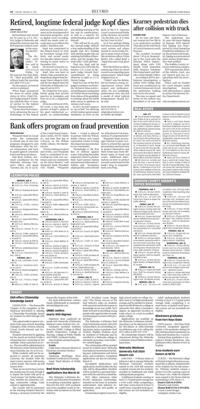


Retired, longtime Nebraska federal judge Richard Kopf dies
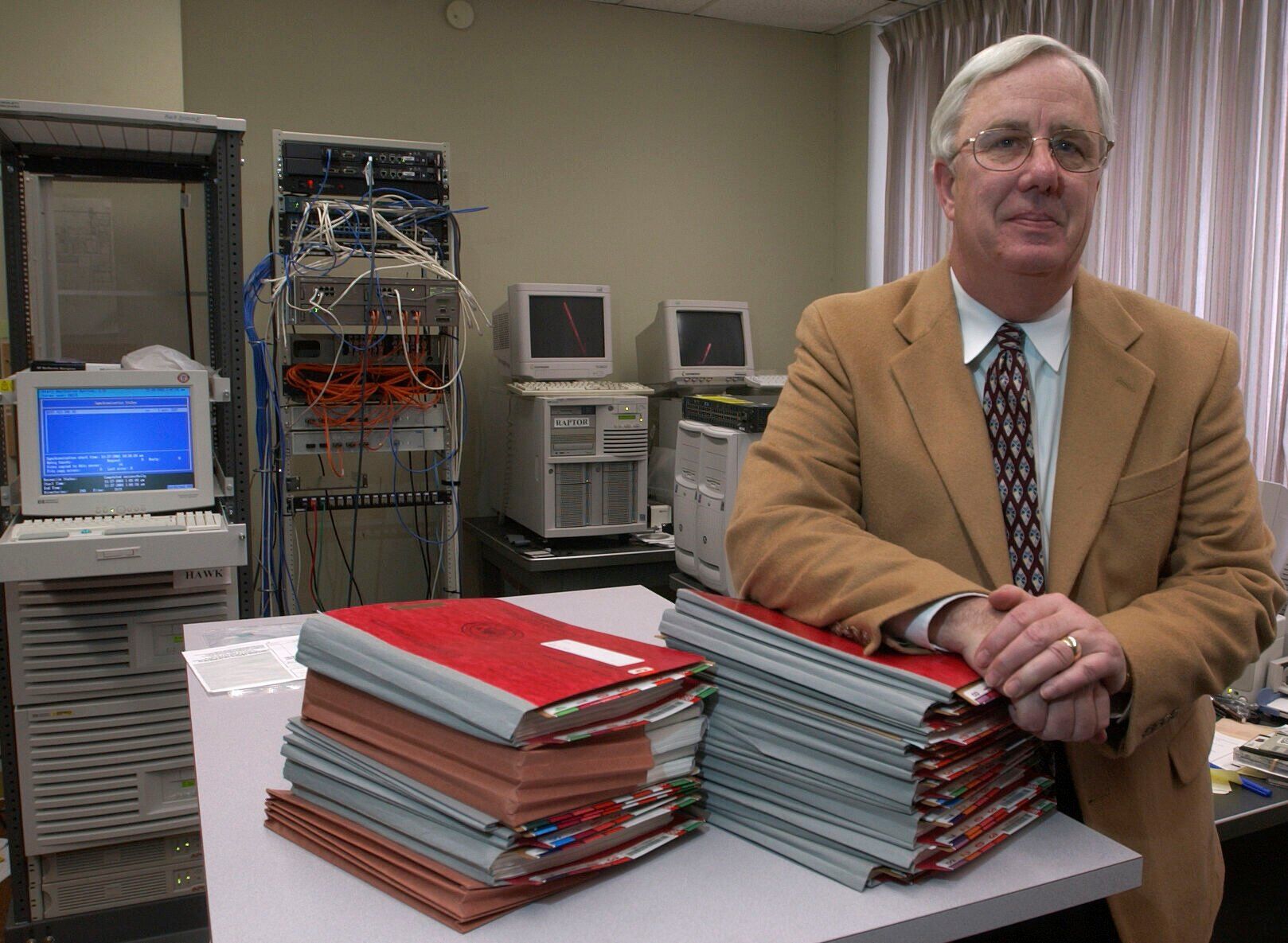
U.S. District Court Judge Richard Kopf helped the federal judiciary in Nebraska switch from paper to electronic legal filings. In this photo taken in November 2001 at the federal building in Lincoln, Kopf posed with paper files in the then-new computer room where the court was accepting electronic filings.
Richard Kopf, who served for 30 years as a U.S. District judge in Nebraska and helped the state become the first paperless federal court in the country, died Friday.
The district court clerk’s office said in an email obtained Friday by the Journal Star that Kopf, 78, “died peacefully and without pain this morning just after 9:30 a.m.”
Per his request, no funeral service is planned.
When Kopf announced his move to senior judge status in 2010, Chief District Judge Joseph F. Bataillon called his then-23 years of service to the federal bench “immeasurable.”
“He has been instrumental in advancing the use of technology in the federal judiciary and has been a pioneer in the development of innovative programs, such as digital court recording, which has made court records more accessible to the public,” Bataillon said.
Kopf was nominated to the federal bench in 1992 by President George H.W. Bush, and served nearly two decades before transitioning to senior status in December 2011.
He moved to inactive senior status on Dec. 30, 2022.
Kopf, who was born in Toledo, Ohio, earned his undergraduate degree from Kearney State College in 1969, and his law degree from the University of Nebraska College of Law in 1972.
He clerked for two years, before going into private practice in Lexington and then on to be a magistrate judge.
At his investiture in 1992, Ed Cook, a one-time law partner of Kopf’s, spoke of his great intellectual capacity, an understanding and abiding learning of the law and its ramifications, as well as a capacity for understanding people and himself.
“This will not be an arid, dry, learned judge without a true understanding of the people that he’s working with and the people who are enduring the foibles of themselves and the people they work with,” Cook said then.
That day, Kopf said he hoped to carry with him his mentor, U.S. Court of Appeals Judge Donald Ross’ commitment to doing whatever is right as a U.S. District judge.
Kopf was one of the first judges to embrace social media. He had at times controversial blog posts and posted on Twitter about everything from videos of his grandkids to writings about his battle with cancer to opinions on various court cases.
In 2013, he told Congress to “go to hell” for allowing a brief federal government shutdown. In 2014, on the heels of the U.S. Supreme Court’s controversial Hobby Lobby decision, he posted: “As the kids say, it is time for the Court to stfu.”
So it was perhaps fitting that those connected to the court system and others turned to social media Friday to share stories of Kopf, like probation officer Dylan Rotert who called Kopf a “legal titan and a truly great man.”
Brett McArthur recalled a sentencing where he raised a novel issue regarding a gun enhancement, which Kopf chipped away at.
“I didn’t win the debate, but he treated a young, inexperienced lawyer with respect and professionalism. He was unfailingly professional, wise, fair and a model of what judicial temperament should be,” he said.