
She warned them, but the Nebraska justice system didn't stop him from killing
He promised he would kill her before dawn.
After he beat her and raped her for hours, she believed him.
As the abuse dragged on, she pleaded with him, her on-again, off-again boyfriend. She apologized for all the slights he perceived. She promised she wouldn't leave him. They could still be together.
He used a stun gun on her until the battery died. He plugged it in and used a knife to threaten her while the stun gun recharged. He was getting tired too.
So when he finally lay down in the early-morning hours of April 9, 2019, she cooed what Benjamin Myers needed to hear, convincing him people would be suspicious if she didn’t show up to work.
"I was just trying everything I could not to die," she said.
Brittany Clements went into the bathroom, took two photos of her battered face, showered and drove to the Omaha grocery store where she worked. From there, she called the police.
She told Sarpy County detectives, the prosecutor and the judge: Keep him locked up. Put him on the sex offender registry. He's going to kill somebody.
Clements was convinced Myers would make good on his death threat if given the chance. She knew she was safe while he was behind bars. But if the charges didn’t stick, she thought he’d kill her or somebody else someday.
She was right.
Lanny Anderson, who had a 10-year relationship and a child with Myers' future victim, said the system, in this case, failed to protect the community.
Anderson is now asking why more wasn't done seven years ago to ensure Myers was locked up and branded a sex offender. If it had, Anderson believes, his daughter's mother would still be alive.
"They took the easy way out," Anderson said of the judge and attorneys, who dropped several charges against Myers in exchange for a plea agreement. Myers served only 6 years for the brutal assault on Clements. He was not listed on the sex offender registry.
The World-Herald pored over investigative, court and hospitalization records, interviewing experts, survivors of the two crimes and the officials involved in Myers' prosecution to find out how he slipped through the cracks in Nebraska’s justice system.
Why didn't the court lock Myers up for decades? Why didn't people know he was a violent abuser and sex offender?
Here’s how he did it.
'I felt like I was just stuck'
Myers wasn’t violent at first.
Clements said when she first met him on the online dating platform Plenty of Fish in July 2018, he was charismatic and said all the right things.
But within a few months of dating, he began pushing to move into her southwest Omaha apartment.
She refused — she had two young children and wasn’t looking for that type of commitment.
But Myers didn’t take no for an answer. He moved into a unit down the hall from Clements.
That’s when the casual relationship became unsettling.
While Clements was trying to distance herself from him, she started having car trouble. Myers swooped in just when she needed him. Later, she learned Myers had put sugar in her gas tank to force her to rely on him for transportation.
Myers started entering Clements' apartment regularly to wait while she and the kids got ready. Soon, Clements noticed her spare apartment key was missing from her junk drawer.
Clements would come home from work to find her light bulbs missing or carpet stained with liquid laundry detergent from a hole poked in the bottom of the container. Once there was feces on the bathroom floor.
Myers denied responsibility for any of it.
Clements had her locks changed but didn't go to the police.
“I thought I sounded crazy,” she said. “There’s not much that you could really do for someone stealing your light bulb, a little thing, or poking a hole in your laundry detergent.”
But she highlighted another reason she and many domestic abuse victims fear going to the police.
“A lot of times, they don’t do anything, and the guy is still there, and they’re more pissed off because now he knows that you went to the police,” she said. “So to me, in my head, I did not think that I had anything enough to go to the police for.”
She resigned to be cordial with him and try to keep the peace. By March, she was just trying to be friendly, to make the torment stop. She didn’t know what else to do.
“I felt like I was just stuck,” she said.
But she never thought he would take it as far as he did.
'You're gonna die tonight'
The psychological torment escalated to physical violence on April 8, 2019.
Clements and Myers had gone to Addy's Sports Bar & Grill in Omaha to watch the NCAA men's basketball final.
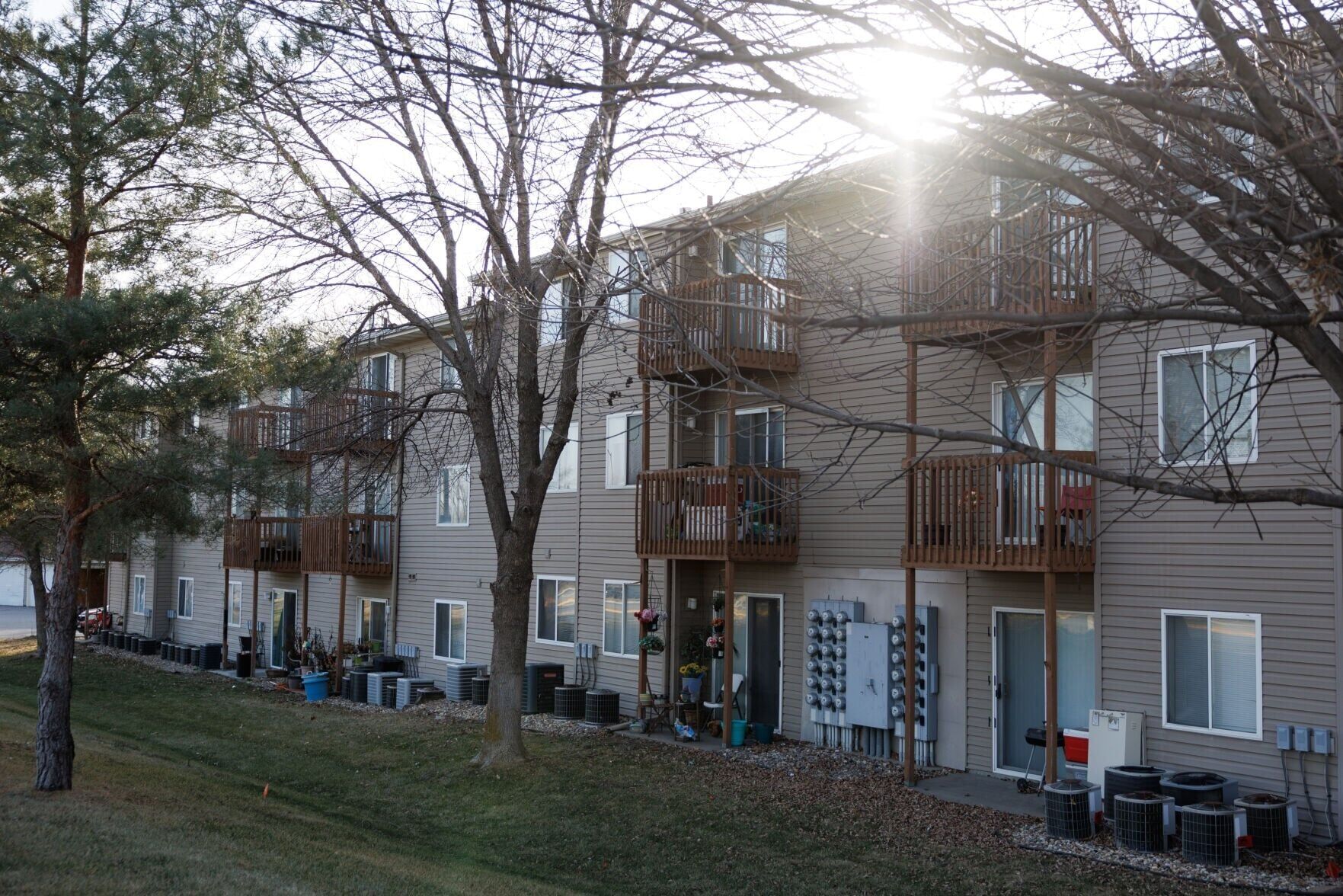
A look at Bear Creek Apartments, 14455 Harrison St., in Omaha, on Wednesday, Jan. 21, 2026.
When they returned to the apartment complex, Clements was exhausted but needed to do laundry before her 5 a.m. shift.
She left her apartment door unlocked while she went to the complex's shared laundry room — an oversight she would soon regret.
When she returned, Myers was inside her unit.
Though police noted Clements added Myers to the lease on her unit weeks earlier, she said he didn't actually live there — he still had his own unit down the hall.
He demanded sex. She said no.
Myers snapped.
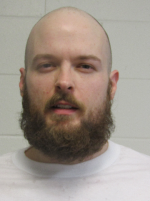
Myers
What followed was four and a half hours of escalating violence. The 6-foot-2, 310-pound man repeatedly used a stun gun on Clements, strangled her until she blacked out and raped her multiple times.
He struck her repeatedly in the head — targeting, she later told police, a surgical shunt from a childhood operation. Clements reminded him during the assault not to hit that spot on her head because it could kill her. She said he replied that’s what he was trying to do.
Clements fought for her life, scratching, biting and hitting him.
A woman in the unit below later burst into tears when police later questioned her, saying she heard the terrified screams but, as a single mother living alone, was afraid to get involved.
“Bitch, you’re gonna die tonight,” Myers told Clements. “I’ve already gone too far, and there’s no way out of it. You’re gonna die tonight, and I’ll kill myself in the morning.”
Myers had already spent 20 months in prison for felony drug possession, and he wasn't going back, he told her.
She pleaded with him not to kill her because her daughters, 4 and 10 at the time, needed her.
Around 3:30 a.m., after hours of abuse and sexual assault, Myers, exhausted, collapsed on the bed.
That's when Clements was able to make an escape.
The evidence
When Clements showed up to her job at Hy-Vee, battered and in shock, her co-workers told her to call the police.
Clements drove to the Sarpy County Sheriff’s Office's headquarters and gave her account through tears and a hoarse voice.
When investigators and deputies arrived at the apartment, they found blood smears on the couch, bed and walls, clumps of her hair and the torn, bloodstained clothing Myers ripped off of Clements.
They found a broken TV, a purple vase used as a weapon and circular holes in the bedroom wall where Myers had shoved her head. Between the box spring and mattress, they found a 9-inch serrated kitchen knife.
At CHI Health Midlands, a sexual assault nurse examiner photographed 31 injuries on Clements' body, including tiny red spots on her eyes and neck — signs of burst blood vessels consistent with strangulation.
CT scans revealed two brain bleeds, and an ambulance took Clements to the intensive care unit at Creighton University Medical Center-Bergan Mercy.
"They said it was like an equivalent to shaken baby syndrome, but for an adult," Clements said.
DNA evidence collected from the sexual assault exam later matched Myers.
Myers was still in the apartment when police arrived and arrested him.
When questioned by police, Myers said he'd been drinking and couldn't remember the night. He couldn't explain the bite marks and scratches on his arms or the bloodstain on his shirt — Clements' blood, he acknowledged — but denied abuse.
He said they had consensual sex.
'I wanted to take it to trial'
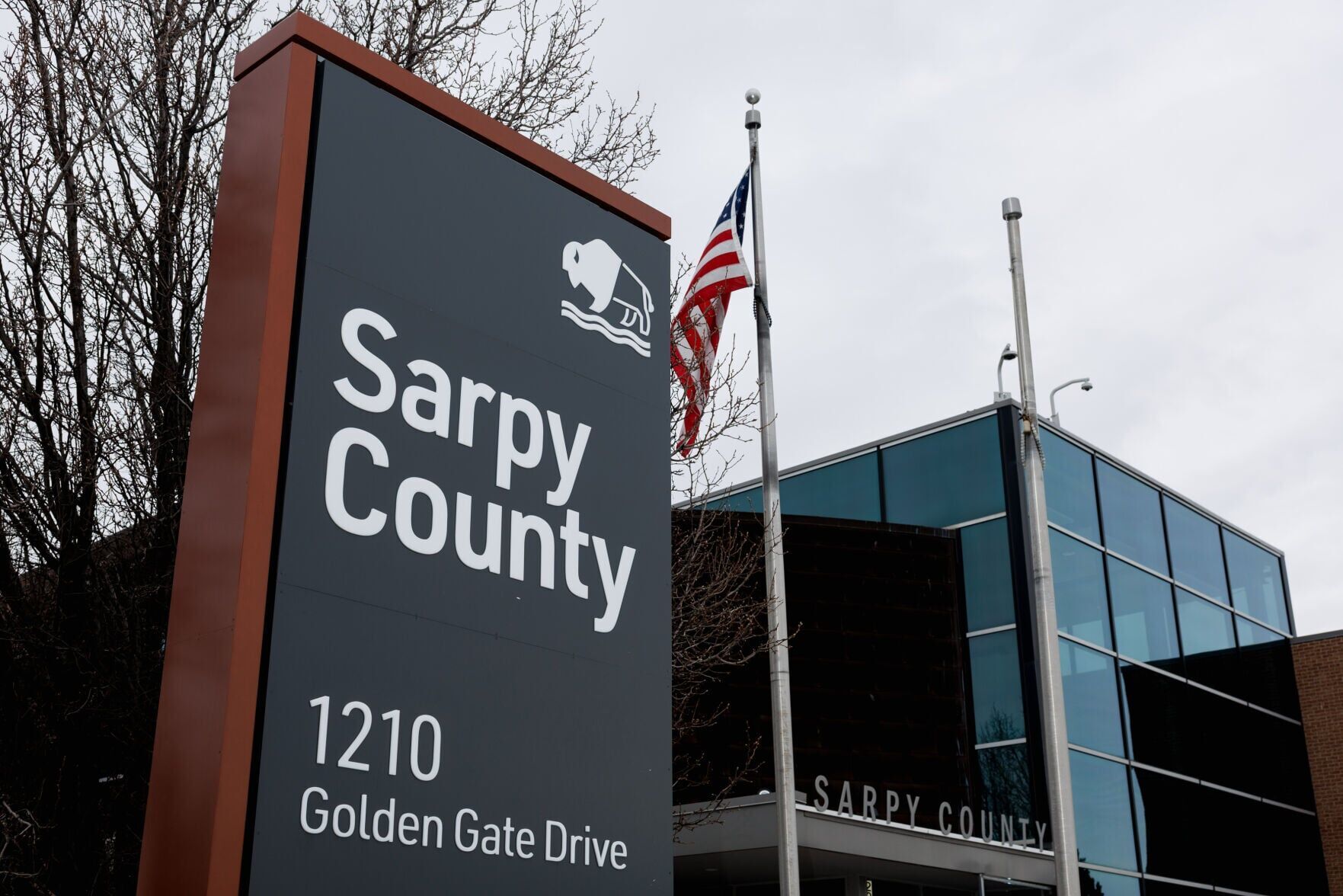
A look at the Sarpy County Administration and Courthouse in Papillion, on Tuesday, Feb. 24, 2026.
Sarpy County prosecutors charged Myers with six felonies: use of a deadly weapon to commit a felony, strangulation, terroristic threats, false imprisonment, first-degree sexual assault and first-degree domestic assault.
Clements worked with then-Deputy District Attorney Michael Mills, retelling her story every month.
She had one goal: make sure he couldn't do this again. She wanted him convicted of rape and on the sex offender registry.
But Myers wouldn’t plead to sexual crimes, and trial dates were set. Clements and the neighbor who heard her cries for help were subpoenaed.
However, Mills, the prosecutor, was reluctant to go to trial. Clements said he told her it was a risk.
“His DNA was there,” she said. “But they thought, because we had a relationship, it would be hard to prove in court that it wasn’t consensual, even though I’m telling them it wasn’t.”
Mills, who is now an attorney for an Omaha-based company, told The World-Herald that sexual assaults involving a prior relationship are inherently more complicated to prosecute.
Jurors are more likely to be skeptical of such allegations simply because a relationship existed, he said. Those cases often come down to a battle of credibility — the evidence might show injuries, a physical altercation and sex, but it doesn't necessarily connect those dots for a jury.
Weighing the risk of a loss at trial, which would let Myers go free, against the possibility of securing some accountability with a plea deal, he made a choice.
"You're kind of putting a little bit of it on the judge, as well, to fashion an appropriate sentence," Mills said. "And our judge in that case is a good judge, and I think we had every reason to believe that he was going to do that."
So Mills and the defense attorney reached a plea agreement.
On Sept. 30, 2019, Myers pleaded no contest and was found guilty of strangulation and a reduced assault charge. Every other charge, including sexual assault, was dropped:
1. Use of a deadly weapon to commit a felony — dismissed
2. Strangulation — found guilty
3. Terroristic threats — dismissed
4. False imprisonment, first degree — dismissed
5. Forcible sexual assault, first degree — reduced to first-degree simple assault, then found guilty
Clements said Mills told her they could still get a sex offender registration requirement.
At the Dec. 2 sentencing, Mills argued for a maximum prison sentence with mandatory sex offender registration, and Myers' public defender argued for probation only.
Sarpy County District Court Judge George Thompson agreed Myers was too dangerous for the probation his lawyer requested. He sentenced Myers to prison, two to three years on the strangulation charge and six to 10 years for assault, to be served consecutively, with credit for nearly eight months already served.
Under Nebraska's "good time" law, which cuts sentences in half for good behavior, Myers would be scheduled for mandatory release five and a half years later.
Mills noted the actual time served was a fraction of what the law allowed. First-degree assault carries a maximum penalty of 50 years in Nebraska.
"The defendant could have gotten substantially more time than he got," Mills wrote in an email to The World-Herald.
Why didn't Myers have to register as a sex offender?
Nebraska law allows judges to require people convicted of certain nonsexual crimes to register as a sex offender if there is a record of sexual contact.
So why didn't it happen here?
To require sex offender registration, the court must find a record of sexual penetration or contact in the "factual basis" — the official, agreed-upon version of events submitted by the state — but it's unclear if the judge accepted the sexual component at the change of plea hearing.
Thompson declined an interview request for this report, citing the judicial code of ethics, so The World-Herald dissected his words at the time through court documents to analyze his reason for the ruling.
The World-Herald obtained and reviewed a copy of transcripts from the September change-of-plea hearing and December sentencing, asked Joe Howard, a Dornan Law Team criminal defense attorney, to analyze the copies, and asked Mills to comment on key excerpts.
The reviews revealed no clear answer.
Howard said it seemed to come down to a lack of communication between the two attorneys and the judge.
When Mills read his account of the facts, including the sexual assault component, the defense attorney objected.
The Sarpy County Public Defender's Office declined to comment on any case specifics. Public Defender Todd West said they take these cases seriously and weigh the pros and cons to make the best decisions to reach a resolution.
Here, Howard said, it seems the attorneys were already not on the same page about what their plea agreement entailed.
To cause further confusion, Thompson's response was unclear: He said the court was “mindful” of the matter before saying the court accepted as true the state's presentation of the facts.
Whatever Thompson meant by his statements at the change-of-plea hearing, the consequence was the sexual component was not considered in his ruling.
Thompson noted at sentencing his recollection was that the sexual component had not been factored in. He also said he hadn't advised Myers that registration was a possible penalty of his conviction when he took the plea deal.
Howard said it’s vital that all parties are aware the state will request registration so the defendant enters the plea with full knowledge of the consequences, and the judge has all the information he needs to make decisions throughout the process, Howard said.
Howard knows Mills, Thompson and the defense attorney on the case, and he said he thinks highly of each of them.
He said this case is an extreme example of how a lack of understanding among parties to a case can have catastrophic consequences — one that could be a valuable case study for law students learning about the importance of clear communication.
'He was very good at manipulating'
Myers was released from prison on June 10, 2025, and met Shauna Shook just a month later on a dating app.
Like Clements before her, Shook was in a vulnerable transition. She was living with her ill mother and caring for her family.
Myers didn't hide his prison time — he used sparse public records to control the narrative.
Anderson’s 16-year-old daughter, Leah, said Myers showed them a picture of his arrest record. The charges listed strangulation and assault, but the context was missing.
Myers told them he'd attacked a man who was sleeping with his girlfriend — a lie he'd practiced in his cell.
Lanny Anderson said the story didn't sit right with him. He dug into the case, finding court records and an old news article that contradicted Myers' version.
He showed his daughter, who showed Shook in late September.
But the manipulation had already taken hold, and Shook didn't believe it.
“He was very good at manipulating and changing the narrative around so you were looking at the other person like they were the bad guy," Clements said of Myers.
‘He’s going to do this again’
The relationship moved quickly.
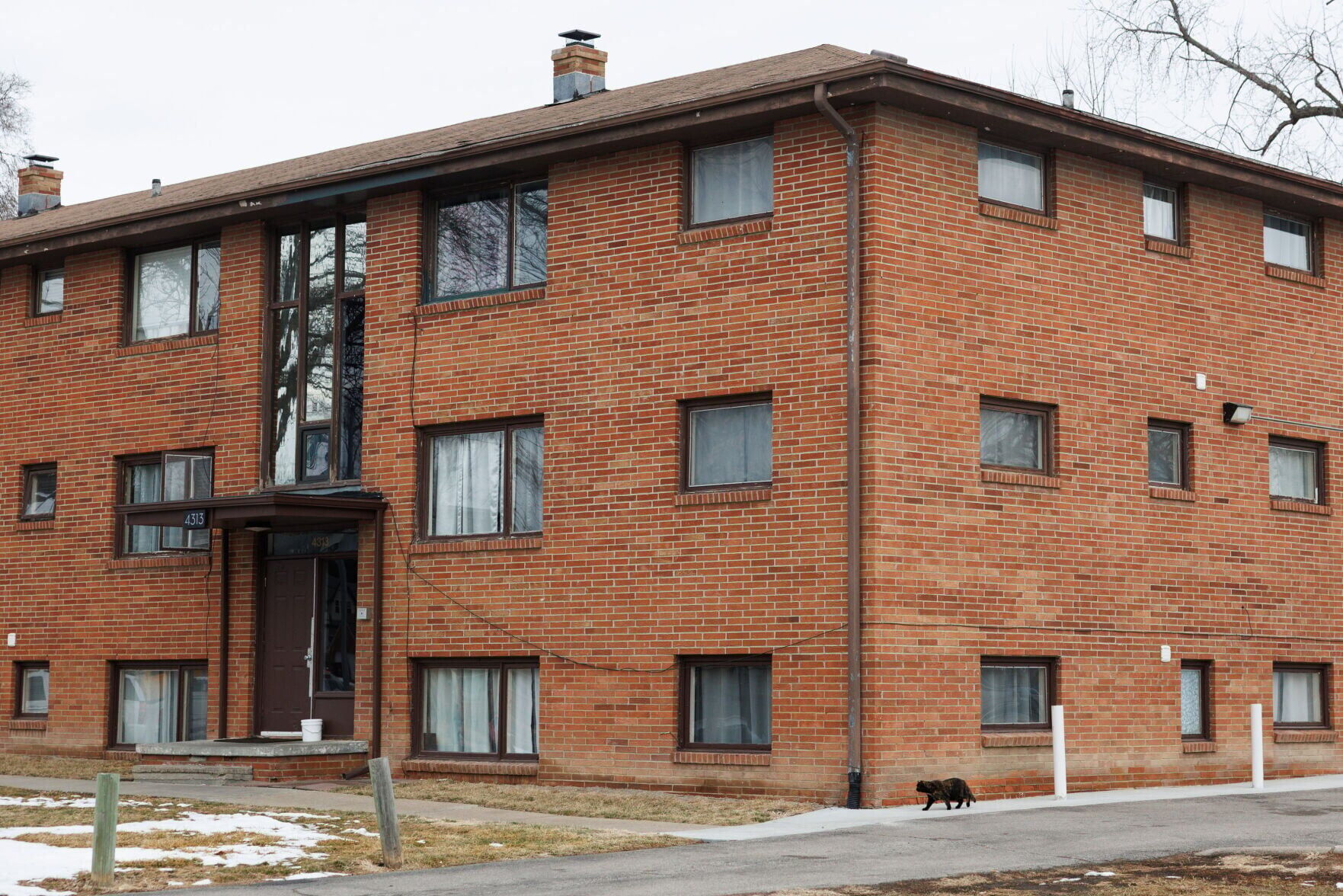
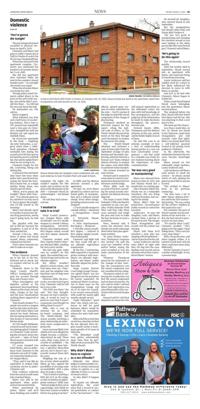
A look at 4313 North 65th Street in Omaha, on Tuesday, Feb. 24, 2026. Shauna Shook was found in her apartment, dead from strangulation and stab wounds on Oct. 16, 2025.
After her mother died in September, Shook moved into an apartment with Myers, who had been living in transitional housing.
Lanny Anderson said her sudden need for a place to live likely influenced the decision to move in with Myers so quickly.
And just as he had with Clements, Myers began to isolate her.

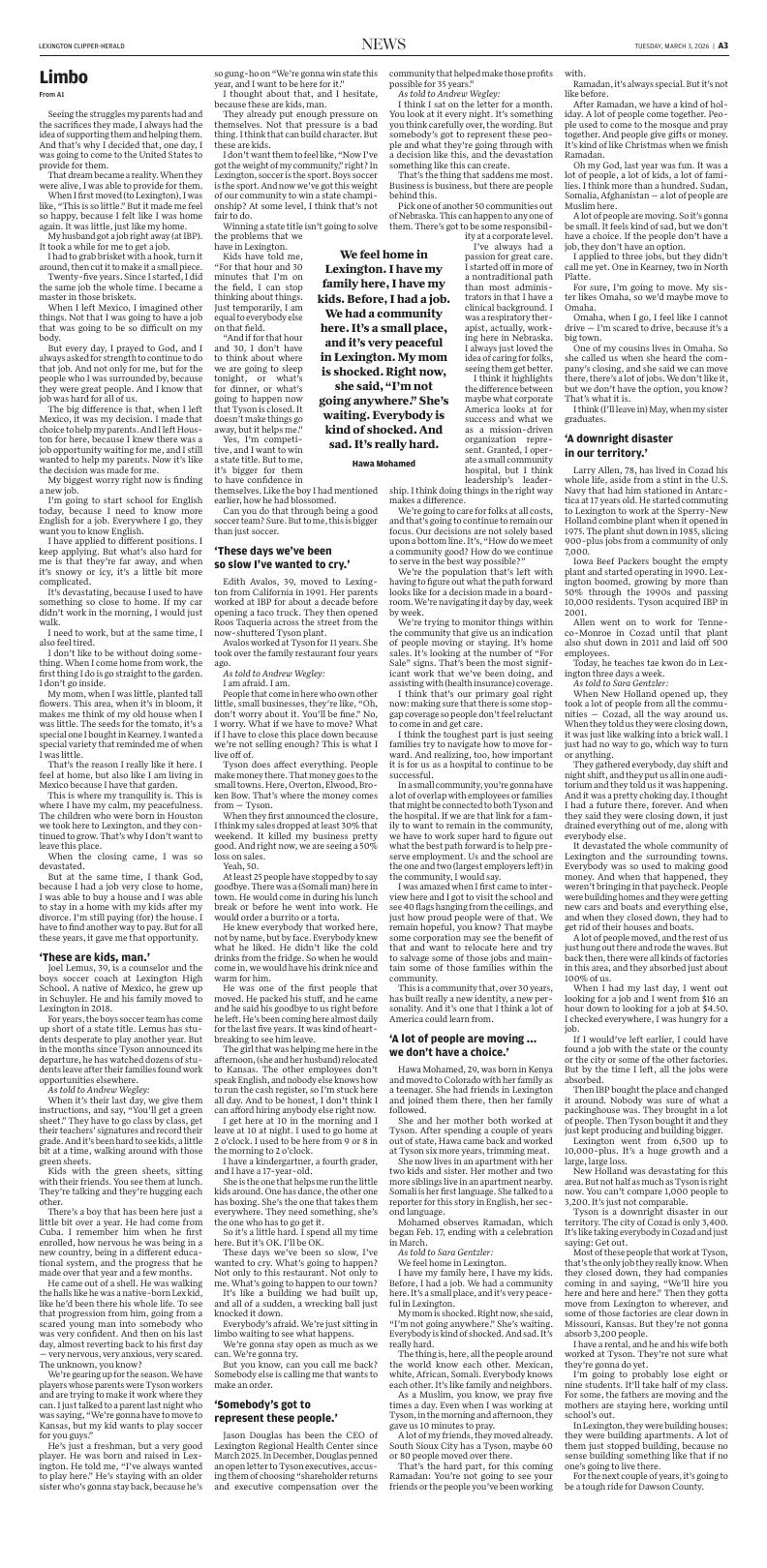
Shauna Shook takes her daughters Lexie Cumberland, left, and Leah Anderson to Vala’s Pumpkin Patch and Apple Orchard.
When a male friend helped Shook move belongings into the apartment, Myers became jealous.
The weekend before she died, Shook told that friend that Myers had hit her. She was planning to find a new place to live.
She never got the chance.
Less than a week later, on Oct. 16, Shook was found in her bedroom, dead from strangulation and stab wounds. Later that night, Myers was found dead from a self-inflicted gunshot wound in his pickup truck parked at a Walmart.
In the aftermath, the similarities between the two cases became hauntingly clear.
Myers preyed on two vulnerable single mothers, Lanny Anderson said.
Leah Anderson said Myers used money to mask his control — he always carried stacks of cash, playing the generous provider to anyone in need.
This worked to Myers' favor in his previous sentencing.
"He does have a lot to offer," Myers' defense attorney said in the 2019 sentencing hearing. "He was caring for the victim’s children in this particular case.”
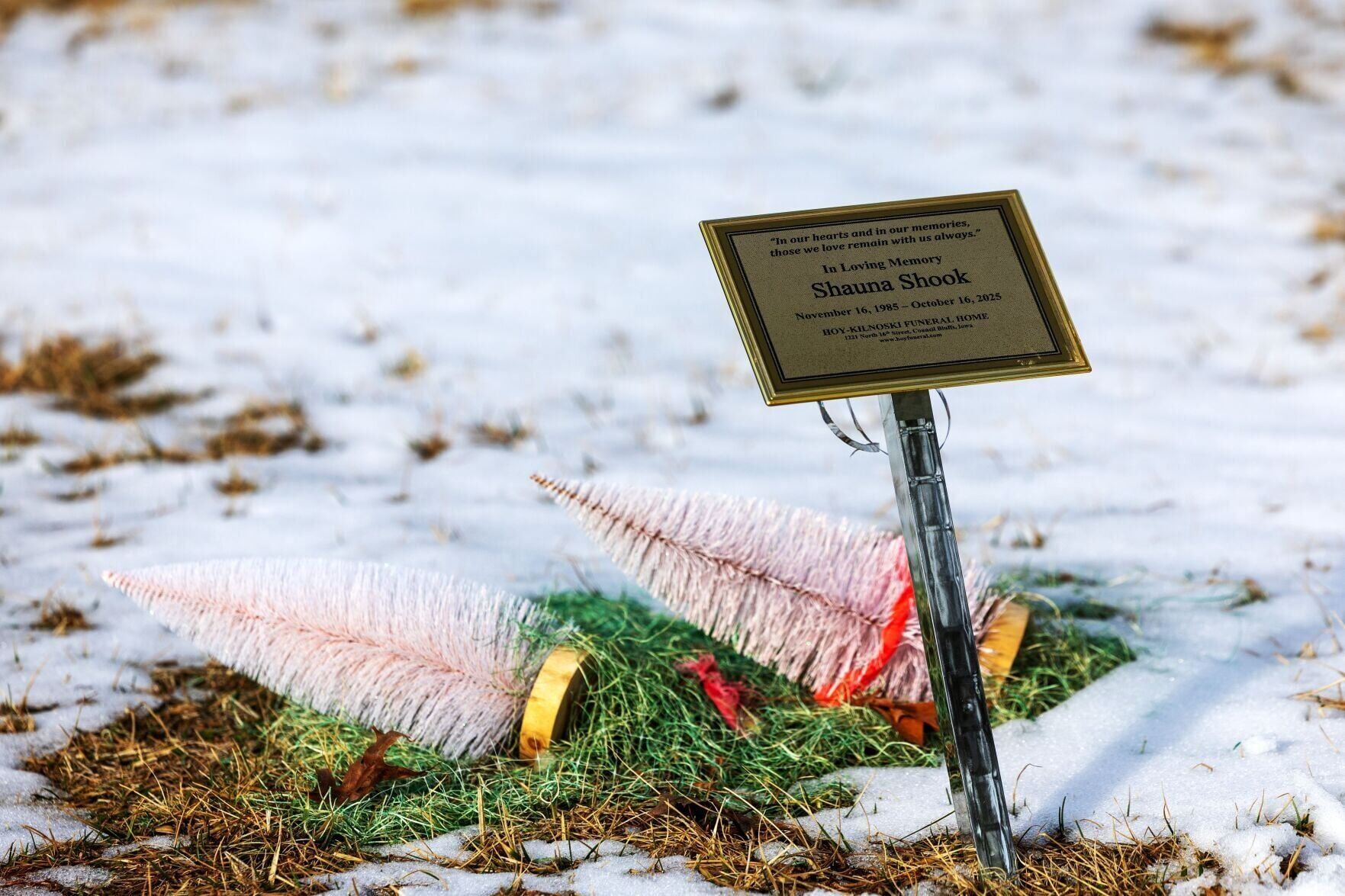
Shauna Shook is buried at Westlawn Hillcrest Cemetery in Omaha photographed on Wednesday, Feb. 25, 2026.
For Clements, the news of Shook’s murder was the realization of her worst fear — a fear she had voiced to prosecutors six years prior.
“It’s exactly what I said,” Clements recalled. “‘He’s going to do this again,’ I kept telling them. ‘This is not just a one-time thing.’”
Mills, the prosecutor, said when tragedy strikes, it is natural to look back and ask what could have been done differently.
But for Clements, it wasn't a matter of hindsight. It was a promise kept.