
Spreading HOPE: Nonprofit Hope Esperanza expands to Lexington, new location to open Dec. 14

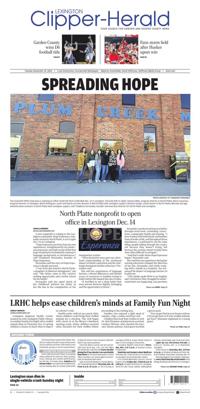
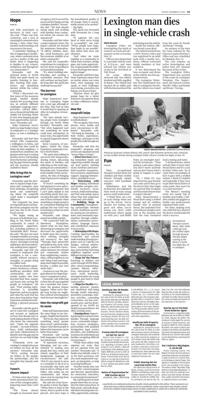
The nonprofit HOPE-Esperanza is opening an office inside the Plum Creek Mall Dec. 14 in Lexington. Pictured (left to right): Jamaica Riley, program director in North Platte; Rocio Casanova, program director in Lexington; Maria Rodriguez, youth and family services director in North Platte with Lexington support; Denisse Zuniga, school liaison in North Platte; Marcela Zarraga, administrative assistant in North Platte with Lexington support; and TinaMaria Fernandez, founder and executive director for North Platte and Lexington.

Rocio Casanova stands next to a HOPE-Esperanza van outside of the Plum Creek Mall in Lexington. The Plum Creek Mall will hold the upcoming office of the nonprofit beginning Dec. 14.


A new nonprofit is coming to the Lexington community. Hope Esperanza, originally started in North Platte, is set to open Dec. 14, in Lexington.
"Hope Esperanza was born from my own experiences, strengthened by my professional journey and built on the belief that hope should never be limited by someone's language, background, or circumstances," said TinaMaria Fernandez, founder of Hope Esperanza.
Fernandez said the story of Hope Esperanza is deeply personal.
"I was born and raised in North Platte, a daughter of Mexican immigrants," she said. "My father came to this country seeking opportunity and a better future for his family."
Fernandez said she spent much of her childhood without her father in her life due to the complexities of the immigration system.
"Those formative years gave me a firsthand understanding of the emotional impact of family separation and the challenges immigrant families often face," Fernandez said.
She said her experiences of language barriers, cultural differences and limited access to resources to families trying to build a better life shaped who she is today.
"It instilled in me a deep belief that every person deserves dignity, belonging and the opportunity to thrive."
Fernandez's professional journey led her through social work, counseling, corrections, community health and nursing. "I have worked with individuals and families from all walks of life, and throughout those experiences, I continued to see the same thing: people falling through the cracks, not because they weren't trying, but because the systems meant to help them were often difficult to navigate."
"And that's really where Hope Esperanza began," Fernandez said.
She said that one experience during her nursing education changed the direction of her life. Fernandez said while working with a family in a hospital, she witnessed the impact of language barriers in healthcare.
"This family spoke little to no English, and I watched as they struggled to understand what was happening, ask questions and fully participate in decisions in their care," she said. "There was fear, confusion, and a lack of meaningful communication during a time when they needed understanding and reassurance the most.
"I remember thinking, if this is happening in healthcare, where communication can be a matter of life and death, what is happening to families in our schools, workplaces and throughout our communities?"
Fernandez said she returned home to North Platte and spent nearly six months listening to families, learning their experiences and identifying barriers within the Latino community.
"What I discovered was that many of the resources people needed already existed, but accessing them was an entirely different challenged. Language, transportation, cultural differences, financial hardship and simply not knowing where to turn were keeping people from opportunities and services," Fernandez said.
Hope Esperanza wasn't built on a large budget a team of employees or a strategic place, or even a building to start.
Fernandez said that they started with compassion, a willingness to listen, and a belief that they could do better for their neighbors. "I realized that sometimes the greatest need wasn't creating another service, but breaking down the barriers and bridging the gaps between people and the resources already available to them."
Why bring this to Lexington now?
Fernandez said the decision to expand Hope Esperanza into Lexington came from listening, recognizing needs and understanding where the nonprofit could make a meaningful difference.
The nonprofit has been serving individuals and families from Lexington over the past year due to the Tyson Foods closure.
"We began seeing an increase of individuals traveling to the North Platte community in search of employment opportunities, including positions at Sustainable Beef," Fernandez said. "We also saw more Lexington families accessing our food pantry and clothing closest, and began receiving additional calls from individuals seeking more support."
Fernandez said that she wanted to emphasize that Lexington is not a community without resources, strengths, or people doing incredible work.
"There are already organizations, businesses, schools, healthcare providers, faith communities, and community leaders who have invested their time, energy, and hearts into serving the people of Lexington," she said. "That existing infrastructure is incredibly important, and we recognize and value the work that has been done long before Hope Esperanza considered establishing a physical presence here."
Fernandez said the goal is not to come into Lexington and recreate or duplicate services that already exist or work independently of those who know the community best. "Quite the opposite actually ... we want to listen, learn, build relationships and work collaboratively to identify were the gaps may be and how we can help bridge them."
"Ultimately, we're not coming to Lexington because we believe we have all the answers," Fernandez said. "We're coming because we believe in the people, the partnerships, and the strengths that already exist here."
Tyson's closure impact
It's been a year since Tyson Foods announced their closure of the Lexington plant, impacting more than 3,200 jobs.
"The Tyson closure brought an increased sense of urgency, but it was not the reason we first began serving Lexington families," Fernandez said. "We were already seeing needs and working with families from Lexington before the closure was announced."
Fernandez said that when a major employer closes, the impact extends far beyond the employees themselves. "It affects children, families, small businesses, and the economic stability of an entire community."
She said the nonprofit's commitment to Lexington is not just about responding to an immediate hardship.
"It's about building relationships and creating a sustainable presence that will continue serving families long after this particular challenge has passed."
The journey to Lexington
Hope Esperanza's journey to Lexington began over a year ago, although at the time, they had no idea it would lead to opening an office in Lexington, Fernandez said.
"We were already serving people from Lexington through our North Platte location," Fernandez said. "But what happened next was something we never could have anticipated, In many ways, the opportunity to expand happened almost overnight.
Rocio Casanova, of Lexington, visited the Hope Esperanza Community Center in North Platte.
"We spent time talking in one of our well-being rooms, sharing stories, discussing the needs of families, and reflecting on the work happening in our communities," Fernandez said. "Somewhere in the middle of that conversation, the idea of bringing Hope Esperanza to Lexington emerged.
"It wasn't something we had planned or even anticipated. It just happened. And I can't quite explain it, but everything about that conversation felt right. It felt like one of those moments when something is simply meant to be. I remember thinking that perhaps this was God's way of showing us where we were needed next."
Fernandez said things moved incredibly quickly.
"We connected with the Sherwood Foundation, shared what we had been witnessing in Lexington and discussed the opportunity to build upon the community's existing strengths and resources," she said. "Through their generosity and belief in this work, what began as a heartfelt conversation between two friends and community leaders from neighboring communities, sitting together in our well-being room and imagining what might be possible, became a reality just four weeks later."
Casanova is now the program director for Hope Esperanza's Lexington location.
Fernandez said reflecting on how this all came together was a reminder that sometimes the greatest impact happens "when we're simply busy loving our neighbors, without worrying about what the next step might be."
How the nonprofit got its name
Hope and Esperanza mean the same thing in two languages, English and Spanish.
"But to me, they represent something much greater than a word," said Fernandez. Hope is what allows people to believe that tomorrow can be better than today."
Fernandez said having both languages in the name was intentional.
"It represents inclusion, belonging, and our commitment to making sure people feel seen, heard and valued, regardless of their background, language or circumstances," she said. "But it's also meant to serve as a reminder to all of us to occasionally step back and look at who is sitting at our tables, who makes up our communities and whose voices may be missing from the conversation."
She said one of her favorite quotes is from Zig Ziglar. "When there is hope in the future, there is power in the present, and since hope is the foundational quality of all change, there is considerable reason to be excited." - Zig Ziglar
The quote has resonated with Fernandez for a long time.
"It captures the very heart of what we're trying to accomplish," she said. "When people have hope, they begin to see possibilities where they once saw obstacles.
"And when we come together as a community to break down barriers, bridge gaps, and create opportunities, we give people the ability to turn that hope into meaningful change."
Fernandez said that to her, Hope Esperanza means that no matter where you come from, what language you speak, or what challenges you're facing, you matter, you belong, you deserve hope.
"Because when we give people hope for a better tomorrow, we empower them to make a difference today," she said.
How the nonprofit helps
Hope Esperanza's support is individualized.
"We recognize that every person, every family and every circumstance is different," Fernandez said. "We being by listening ... to their stories, experiences, challenges, and hopes of the people who walk through our doors."
Fernandez said that the nonprofit's programs and services are organized around "Seven Pillars of Hope."
1. Direct Services: Meeting immediate needs and supporting stability through our food pantry, clothing closet, furniture and household essentials, transportation assistance, employment support, language interpretation, and digital access.
2. Welcoming with Hope: Helping individuals and families navigate community resources, access services, build relationships, and find welcoming spaces where they feel supported, connected, and valued.
3. Building Hope in Community: Strengthening partnerships between schools, healthcare providers, businesses, law enforcement, and community organizations through collaboration, community conversations, language classes, and coordinated responses to local needs.
4. Belonging with Hope: Creating opportunities for connection and cultural understanding through programs such as Cafecito con Amigas, cultural celebrations, community gatherings, and activities that bring neighbors together across different backgrounds.
5. Hope for the Future: Investing in children and youth through HOPE Minis, after-school programming, summer literacy initiatives, educational enrichment, youth leadership, and opportunities for young people to give back to their communities.
6. Hope for Health: Promoting physical, mental, and emotional well-being through health education, preventive screenings, wellness activities, counseling connections, our free community gym, and the development of our HOPE for Health nurse practitioner-led clinic (coming soon).
7. Immigration: Supporting immigrant and newcomer families through language access, community integration, resource navigation, partnerships with qualified immigration legal service providers, and stabilization assistance for individuals and families navigating difficult circumstances.
"While these pillars help organize our work, they are not separate from one another," Fernandez said. "A family may initially come to us for food assistance, but also need employment support, an interpreter, or help accessing healthcare.
"Another family may care for an after-school program and discover opportunities for connection, education, or community involvement."
She said the goal is to meet people where they are, recognize the interconnections of their needs, and walk alongside them toward greater stability, opportunity, and hope.