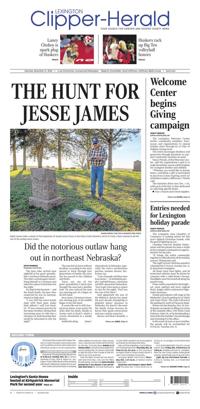

The hunt for Jesse James: Did the notorious outlaw hang out in northeast Nebraska?
The lone rider arrived near nightfall at her great-grandfather’s northeast Nebraska ranch. The rider carried papers identifying himself as a lawman and asked for a place to bed down for the night.
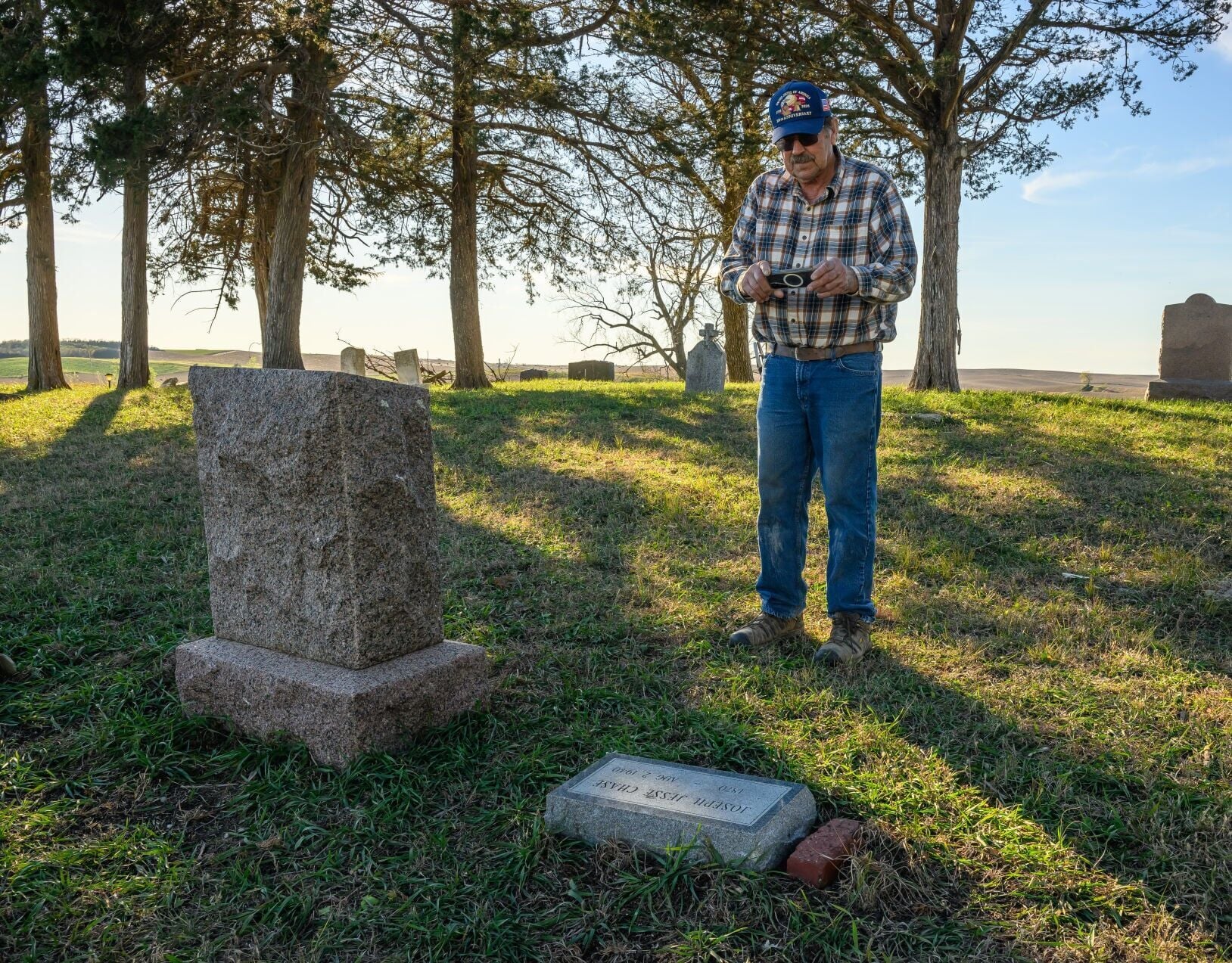
Ralph Jessen takes a photo of the headstone of Joseph Jesse Chase at the Hobu Creek Cemetery north of Lindy. Chase claimed to be the son of the outlaw Jesse James.
He slept in the haymow — and the hired hands, because they suspected he was no lawman, stayed on high alert.
“I was told the ranch hands slept with their guns under their pillows,” said Lois Keck, 93. “It was common practice by the James brothers during their terrorizing years to ride into a safe place at dusk knowing they would be welcomed to stay the night.”
The man left at dawn without incident, according to the story passed to Keck through four generations of family, the story she has passed to her children and theirs.
Turns out one of her great-grandfather’s hired men thought the man had a familiar look. He also noticed the man was missing part of a finger on his left hand.
Jesse James, historians know, was missing part of his middle finger on his left hand.
It seems like we’re still chasing Jesse James, even nearly 150 years after his death, thanks to stories such as Keck’s, which a cousin chronicled in a family history.
Authenticating James’ whereabouts in Nebraska, especially the state’s northeastern portion, remains elusive, historians say.
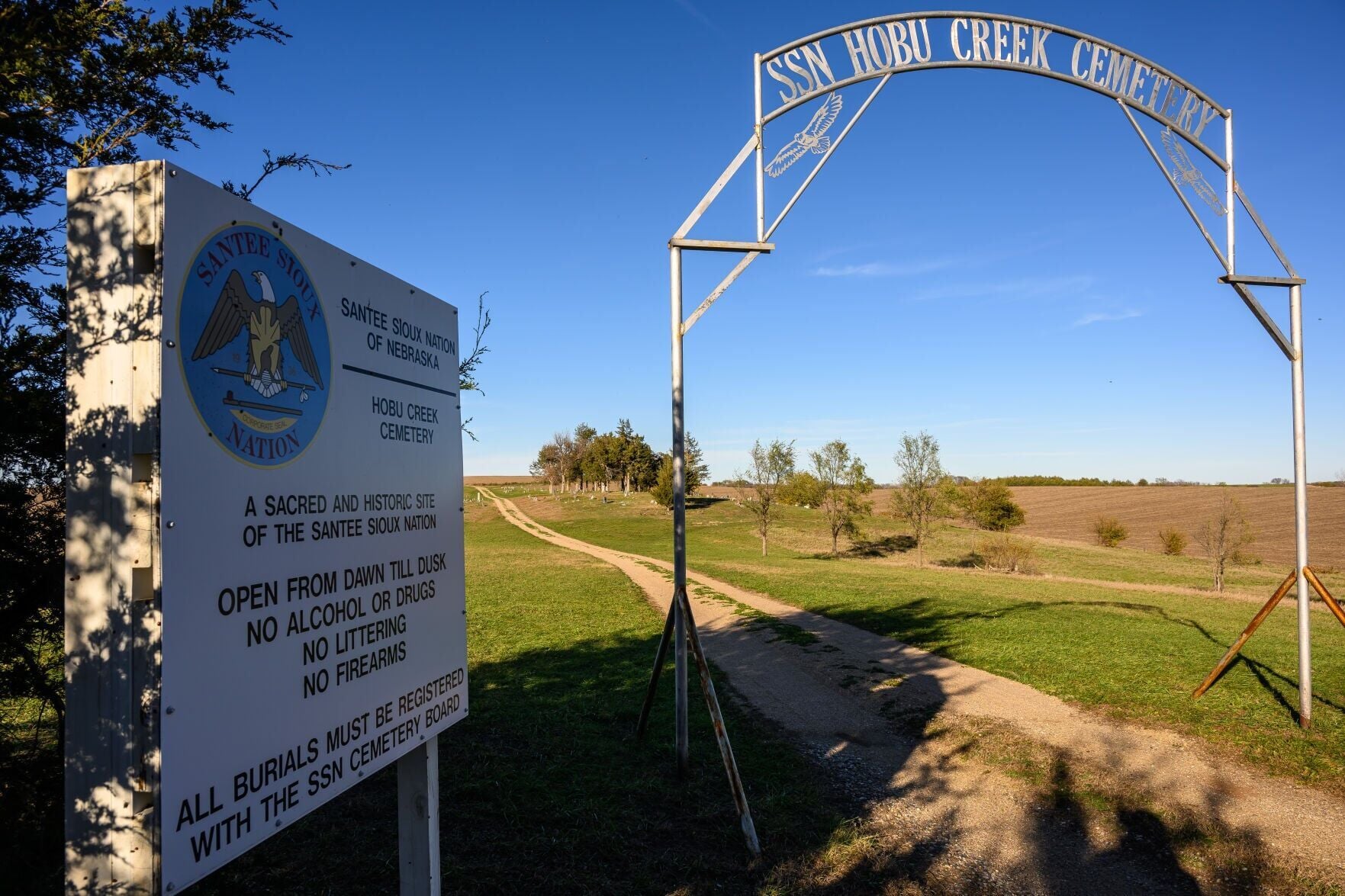
The Hobu Creek Cemetery north of Lindy, which contains the grave of Joseph Jesse Chase. Chase claimed to be the son of the outlaw Jesse James.
“Lots of people said they were Jesse James — to intimidate people,” said Jeff Barnes, a historian and fifth-generation Nebraskan, “just to get a free meal or a place to stay for the night. That was the way of the West.”
And apparently the way of the Midwest. Barnes has spent the past decade attempting to pinpoint James’ presence in Nebraska. He doesn’t discount the family stories because he knows they spark conversation and may contain some fact.
Barnes and Marci Broyhill, a historian and storyteller who also focuses on Nebraska’s outlaws, hedge when pressed about James’ presence in northeast Nebraska.
“I would say, with 75% certainty, he was in northeast Nebraska — but I can’t say with all certainty,” Barnes said. “There is some evidence. And there are the stories.”
This much about Jesse James in Nebraska is certain: His photo was taken in 1875 in Nebraska City, where he was friends with a local banker. The three-quarter-angle shot remains as the most recognizable photo taken of James.
Barnes also knows that James — using the alias, Tho. Howard — responded to a newspaper advertisement in February 1882 about land for sale in Franklin County. His wife, Zee James, later testified after her husband’s death that James “was in Nebraska somewhere looking to see if he could get a better place. He wanted to go to farming. Wanted to find some place to work to make a living.”
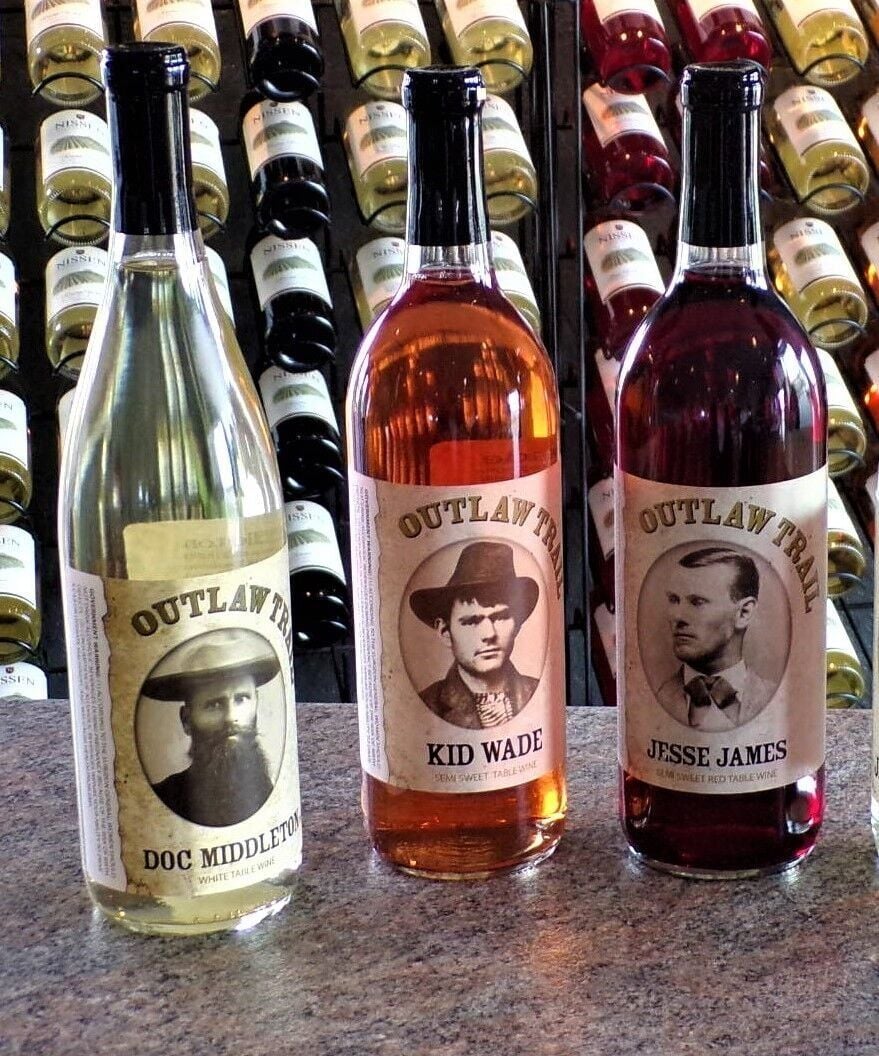
Nissen Family Vineyards, which is north of Hartington, celebrates Nebraska’s outlaw connection with a wine series that includes a nod to Nebraska’s notorious characters and to the Outlaw Trail.
Broyhill suggests looking elsewhere when it comes to tales of Jesse James. “Jesse is more of a Minnesota and Missouri story,” she said. “We should be talking about Doc Middleton and Kid Wade. They were just as bad, and we know they were here.”
Broyhill, who gives talks about Nebraska’s outlaws for Nebraska Humanities, concedes that Jesse James draws the most attention. Nebraska Tourism tapped into the appeal of Nebraska’s outlaws — fact and fiction — when it launched the Outlaw Trail Scenic Byway — which spans about 230 miles along Nebraska Highway 12 from South Sioux City to Valentine. The byway follows the paths where these notorious outlaws once roamed.
The stories of James passed down follow three themes: 1) James hid from lawmen in the Devils Nest area; 2) James’ association with rancher Bill Harm; and 3) James’ relationship with the relative of a Santee Sioux chief.
Pat Kuhl, a volunteer with the Bloomfield Historical Society, said she has heard talk of Jesse James’ presence in northeast Nebraska throughout her life. “You add to this tale and to that tale,” she said. “There just has to be something to it.”
Bonnie Paulsen tells the story, passed on by her grandfather, Old Bill Mayberry, that James carved his initials in either a cave or overhanging bluff in the Devils Nest area. The spot was long gone by the time Gavins Point Dam was built: “Grandpa claimed to have seen it.”
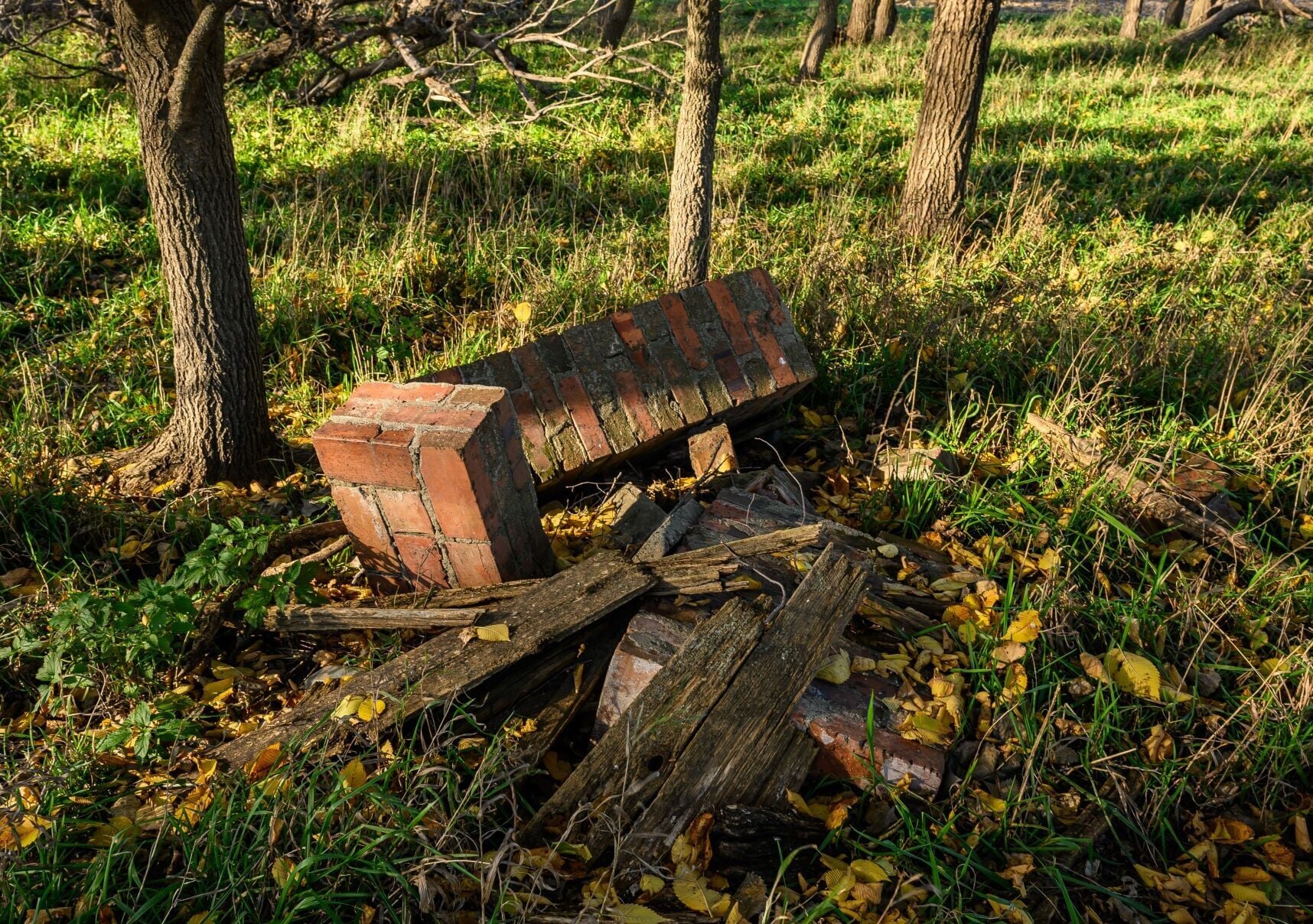
Ralph Jessen’s parents told him that Jesse James stayed at least several nights in a house that once stood in the middle of a cornfield near Lindy. Jessen recently found the remnants of a fireplace and a foundation in a clump of trees in the field.
Paulsen, of Niobrara, and her sister-in-law now own 1,000 acres of land near Devils Nest, known for its ravines, crevices and bluffs.
“They say he (James) robbed a bank maybe in Sioux City and a posse forced them west. That he ended up in Devils Nest. He could have stayed in one ravine and moved to another ravine. It would be a great place to hide out.”
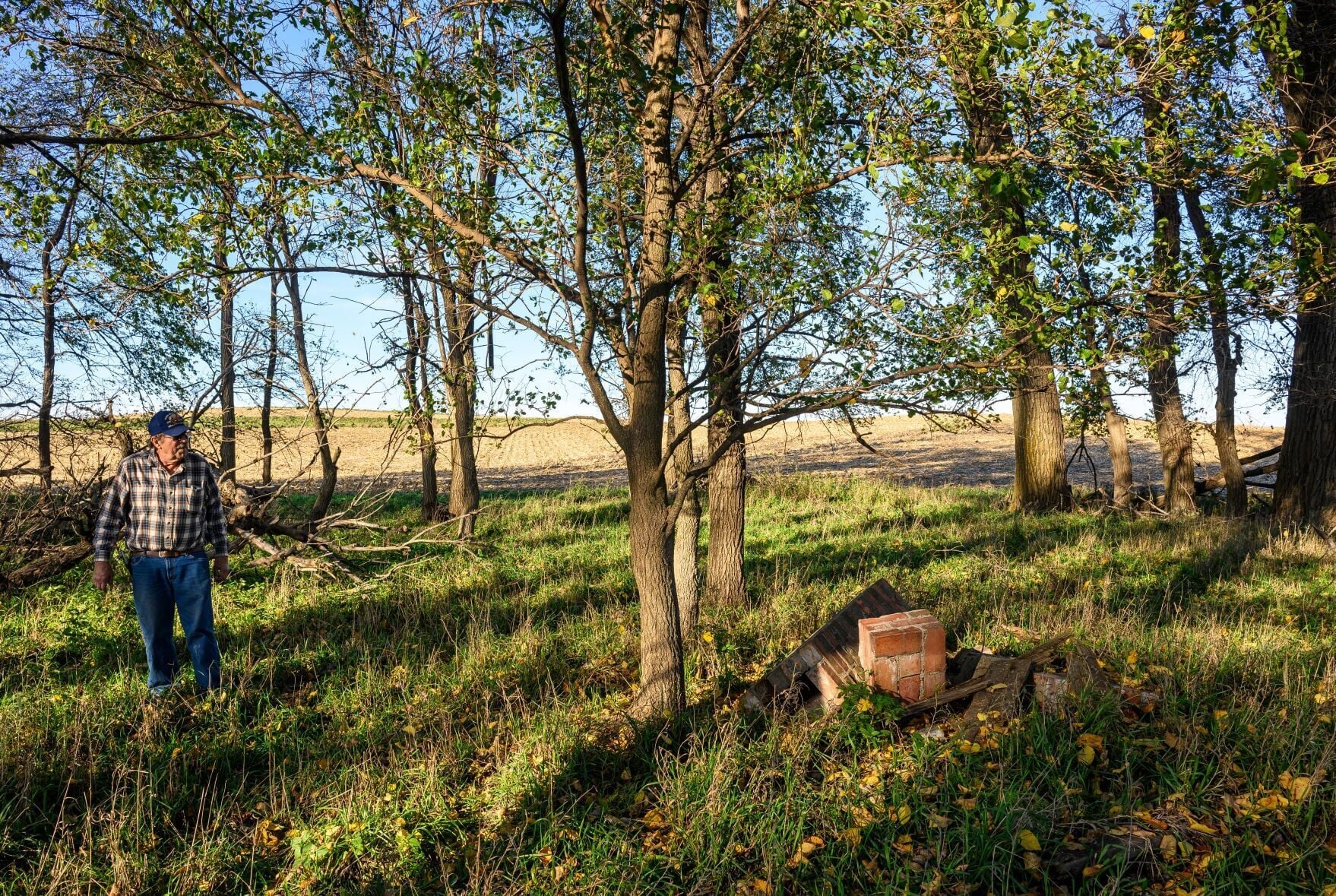
Ralph Jessen looks over remnants of a chimney from a house in a grove of trees that outlaw Jesse James possibly stayed at north of Lindy. Jessen said he remembers a house being there.
Ralph Jessen of Bloomfield offers a family story, shared with him by his parents: James stayed at least several nights in a house that once stood in the middle of a cornfield on tribal land northeast of unincorporated Lindy that Jessen’s nephew now farms. Jessen recently explored a clump of trees in the field where the house once stood. He found the remnants of the fireplace and a foundation for some type of outbuilding.
Bloomfield pharmacist John Nagengast has heard the stories. He and his brothers now own the land in the Devils Nest area where Bill Harm once had a ranch. His mother told her sons stories, during hikes in the Devils Nest area as children, that James buried his stolen loot there. “We always kept our eyes open on those walks,” Nagengast said.
James’ connection to Harm, a rancher, is reinforced by a saddle on display in the Niobrara Museum. The story displayed with the saddle says James stole the saddle in about 1876 and later gave it to Harm.
Mona Weatherwax, Niobrara Village clerk and local historical society volunteer, said she believes the saddle is authentic. “Why would they save it all these years if it wasn’t?”
She also has seen the photo in the Bloomfield Diamond Jubilee book, published in 1965 and available in the Bloomfield community library, that features Jesse James and Harm.
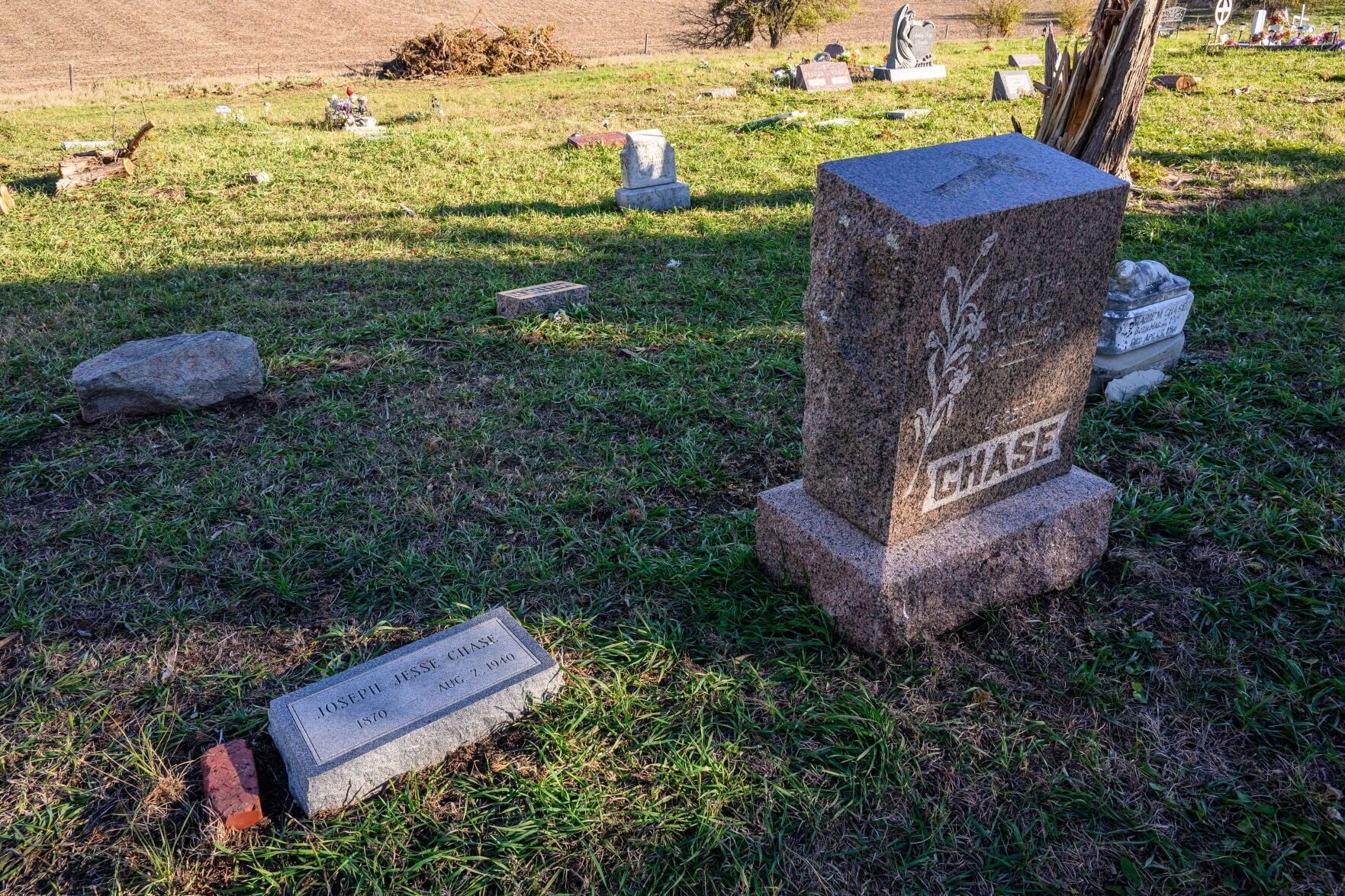
The headstone of Joseph Jesse Chase at the Hobu Creek Cemetery north of Lindy, which is between Niobrara State Park and Crofton in northeast Nebraska.
Finally, there is the story of Joseph Jesse Chase, who in his later years publicly claimed he was Jesse James’ son — the result of the relationship, maybe a marriage, with a relative of Chief Thomas Wabasha III, a Santee Sioux. Chase told a Niobrara druggist he had a story to tell and asked to be connected to a newspaperman.
The World-Herald obliged. A story ran in the Nov. 6, 1938, edition of The World-Herald’s Sunday magazine.
This story added a chapter when a woman walked into the Niobrara Times newspaper office in 2012 and asked editor Valorie Zach if she could see the paper’s archives. The woman, who introduced herself as Grace Hopkins, told Zach she was Joe Jesse Chase’s great-granddaughter, meaning she would be Jesse James’ great-great-granddaughter.
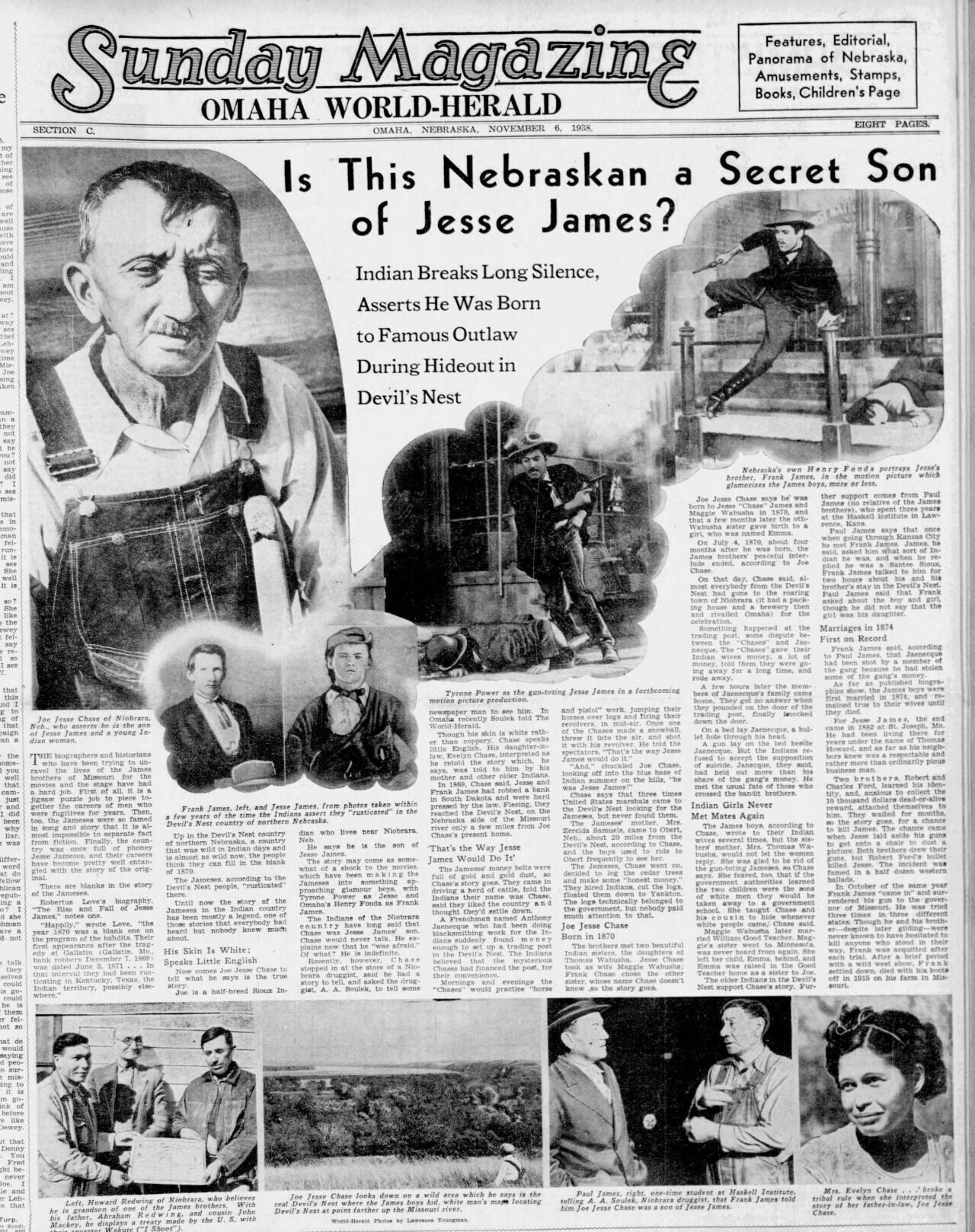
This story on Joseph Jesse Chase ran in the Omaha World-Herald on Nov. 6, 1938.
Zach said she couldn’t pass up a good story, and included the woman’s search for her family roots in the next edition of the Times. “I grew up hearing some people say he wasn’t ever here,” Zach said. “Some people say he was. I grew up thinking he (James) was.”
Barnes, the historian, shares Chase’s account during presentations on the James brothers that he gives through Humanities Nebraska. He shows side-by-side photos of Joseph Jesse Chase and Jesse James’ brother, Frank James, from when they both were in their 50s — and lets his audiences look for a potential family resemblance.
It’s his way of keeping the stories alive.
Nissen Family Vineyards, north of Hartington, does the same. The winery celebrates Nebraska’s outlaw connection with a wine series that includes a nod to Nebraska’s notorious characters and to the Outlaw Trail. Cheryl Rupiper, who works at the business, has heard stories and conducted her own research about Jesse James. She shares them with winery customers.
Rupiper said the vineyard’s Jesse James wine, a blend with bing cherry overtones, is the most popular in the outlaw series, which also includes wines featuring photos of Middleton and Wade on their labels.
“They were all bad guys,” she said, “but they were like Robin Hoods. That’s why we find them so interesting.”
The Flatwater Free Press is Nebraska’s first independent, nonprofit newsroom focused on investigations and feature stories that matter.

See our best Omaha staff photos & videos from November 2026